Makiej Aleksandra, Hochór Zofia, Smułek Wojciech, Kaczorek Ewa
Institute of Chemical Technology and Engineering, Poznan University of Technology, Berdychowo 4, 60-695 Poznan, Poland.
Foods. 2023 Dec 22;13(1):62. doi: 10.3390/foods13010062.
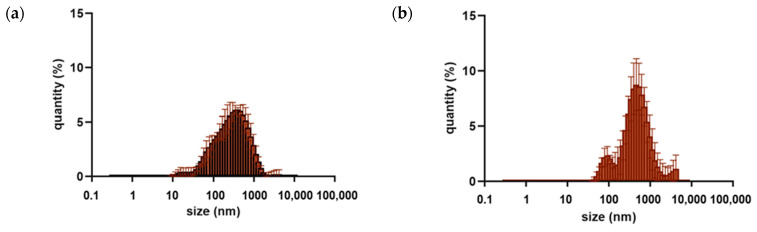
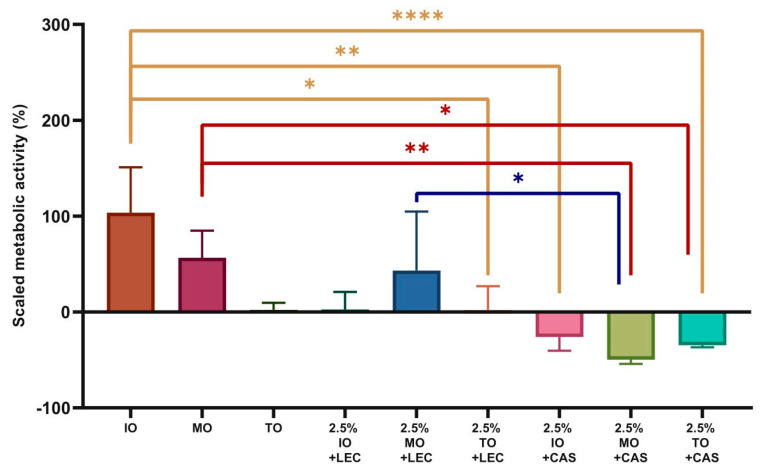
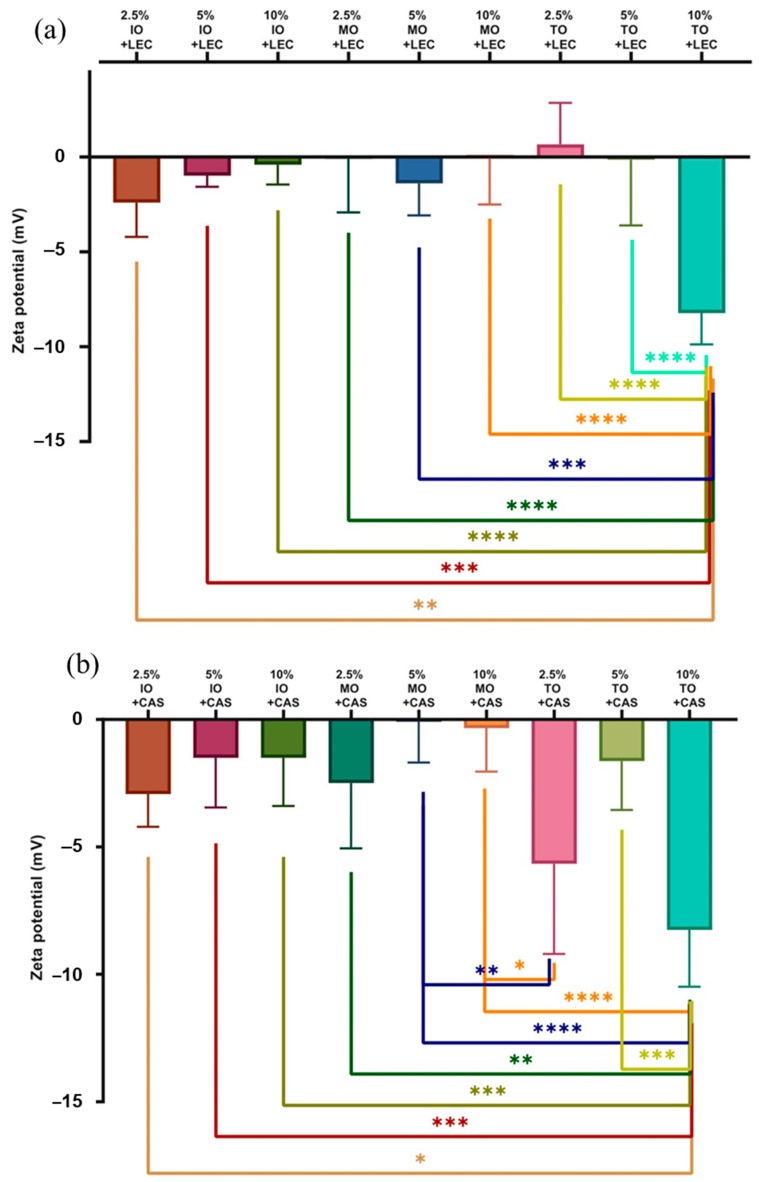
With increasing bacterial resistance to antibiotics, novel strategies for protection against microbial infections are crucial. Emulsions enhance the solubility of natural antibacterial oils and their uptake, making them promising drug delivery systems. However, it is important to find the right emulsifier to ensure that the oil has the right dispersion and does not adversely affect its antibacterial properties. Hence, this study investigated emulsions created from three vegetable oils: moringa oil from seeds, inca inchi oil from seeds, and tamanu oil from the fruit. Emulsions were formed using two natural emulsifiers, lecithin and casein, at concentrations of 2.5%, 5%, and 10% (/). The study assessed the oil and emulsions' characteristics, including the zeta potential, creaming index, and particle size distribution. The antimicrobial properties of these oils and the most stable emulsions were examined. Gas chromatography was used to analyze the oil compositions. The potential antimicrobial properties of emulsions formulated with natural oils was proved. Particularly noteworthy were emulsions containing a 2.5% inca inchi or tamanu oil, stabilized with casein. The particle size ranged between 100 nm and 900 nm with the average size 300 nm. These emulsions also showed antibacterial activity against selected strains, and the strongest effect was observed for the system with inca inchi oil, which reduced bacterial activity by more than 60%. Therefore, it can be expected that the completed research will allow the development of antibacterial systems based on inca inchi or tamanu oils for use in the food industry.
随着细菌对抗生素的耐药性不断增强,抵御微生物感染的新策略至关重要。乳液可提高天然抗菌油的溶解度及其吸收性,使其成为有前景的药物递送系统。然而,找到合适的乳化剂以确保油具有正确的分散度且不会对其抗菌性能产生不利影响非常重要。因此,本研究调查了由三种植物油制成的乳液:种子中的辣木油、种子中的印加果油和果实中的塔马努油。使用两种天然乳化剂卵磷脂和酪蛋白,以2.5%、5%和10%(/)的浓度形成乳液。该研究评估了油和乳液的特性,包括zeta电位、乳析指数和粒度分布。检测了这些油和最稳定乳液的抗菌性能。使用气相色谱法分析油的成分。证明了用天然油配制的乳液具有潜在的抗菌性能。特别值得注意的是含有2.5%印加果油或塔马努油并用酪蛋白稳定的乳液。粒度在100纳米至900纳米之间,平均粒径为300纳米。这些乳液对选定菌株也显示出抗菌活性,对于印加果油体系观察到最强的效果,其将细菌活性降低了60%以上。因此,可以预期,完整的研究将有助于开发基于印加果油或塔马努油的抗菌系统,用于食品工业。