Tanabe Koichi, Hayashi Honoka, Murakami Natsuki, Yoshiyama Yoko, Shima Jun, Shoda Shinya
Faculty of Agriculture, Ryukoku University, 1-5 Yokotani, Seta Oe-cho, Otsu 520-2194, Shiga, Japan.
Research Center for Fermentation and Brewing, Ryukoku University, 1-5 Yokotani, Seta Oe-cho, Otsu 520-2194, Shiga, Japan.
Foods. 2023 Dec 29;13(1):121. doi: 10.3390/foods13010121.
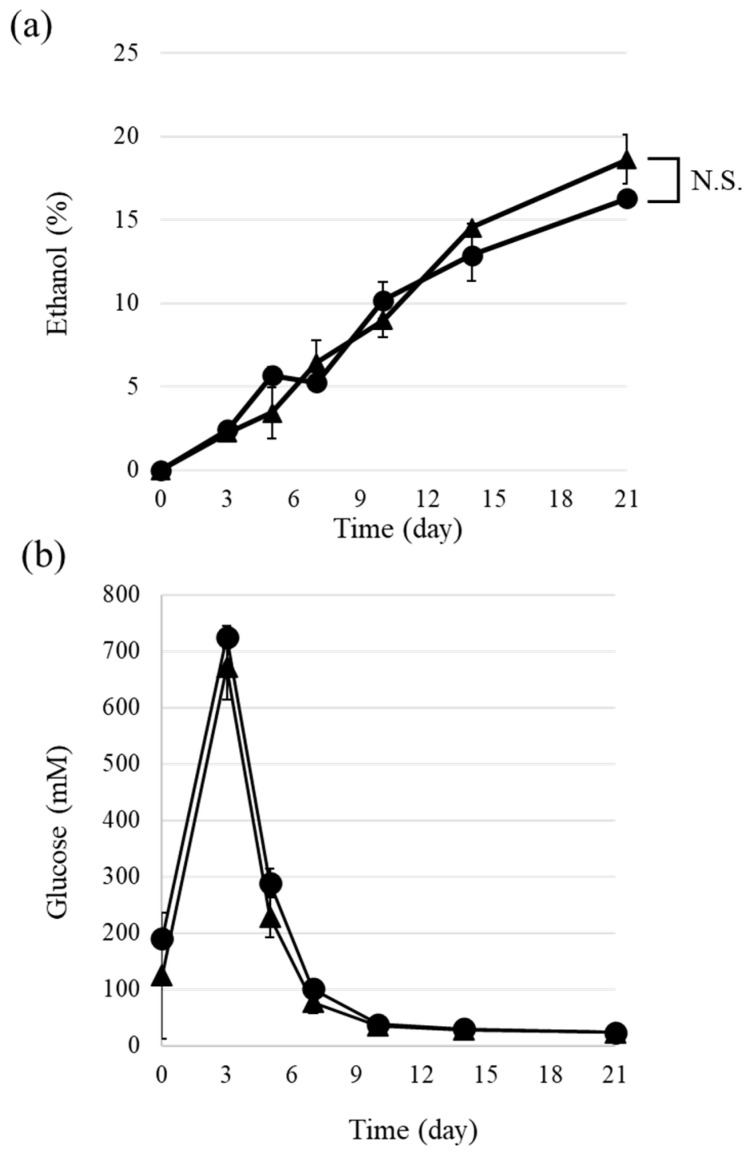
Sake (Japanese rice wine) was fermented in pottery for more than a millennium before wooden barrels were adopted to obtain a greater brewing capacity. Although a recently conducted analysis of sake brewed in pottery indicated that sake brewed in unglazed pottery contains more ethanol than that brewed in glazed pottery, little is known about the characteristics of sake brewed in pottery. In this study, we used two types of ceramic containers of identical size, one glazed and one unglazed, for small-scale sake brewing to evaluate the effects of glazing on fermentation properties. The following parameters were measured continuously in the sake samples over 3 weeks of fermentation: temperature, weight, ethanol concentration, and glucose concentration in sake mash. Taste-sensory values, minerals, and volatile components were also quantified in the final fermented sake mash. The results show that, in the unglazed containers, the temperature of the sake mash was lower and the weight loss was higher compared to the sake mash in the glazed containers. The quantity of ethanol and the levels of Na, Fe, and Al tended to be higher in the sake brewed in the unglazed pottery. A taste-sensory analysis revealed that umami and saltiness were also higher in the samples brewed in the unglazed pottery. These results suggest that glazing affects multiple fermentation parameters and the flavor of sake brewed in pottery. They may also suggest that the materials of the containers used in sake brewing generally affect the fermentation properties.
在采用木桶以获得更大酿造能力之前,清酒(日本米酒)在陶器中发酵了一千多年。尽管最近对用陶器酿造的清酒进行的一项分析表明,用无釉陶器酿造的清酒比用有釉陶器酿造的清酒含有更多的乙醇,但人们对用陶器酿造的清酒的特性知之甚少。在本研究中,我们使用了两种尺寸相同的陶瓷容器,一种有釉,一种无釉,用于小规模清酒酿造,以评估上釉对发酵特性的影响。在发酵的3周内,对清酒样品连续测量以下参数:温度、重量、乙醇浓度和清酒醪中的葡萄糖浓度。还对最终发酵的清酒醪中的味觉感官值、矿物质和挥发性成分进行了定量分析。结果表明,在无釉容器中,清酒醪的温度较低,与有釉容器中的清酒醪相比,重量损失较高。在无釉陶器中酿造的清酒中,乙醇含量以及钠、铁和铝的含量往往更高。味觉感官分析表明,在无釉陶器中酿造的样品中鲜味和咸味也更高。这些结果表明,上釉会影响多个发酵参数以及用陶器酿造的清酒的风味。它们还可能表明,清酒酿造中使用的容器材料通常会影响发酵特性。