Higgason Noel, Nguyen Linh, Le Yen-Chi, Juliet Ezeigwe Ogochukwu, Han Chung Tong, Williams Natalia, Olguin Xochitl K, Zamorano Abigail S
McGovern Medical School, The University of Texas Health Science Center at Houston, Houston, TX, USA.
Department of Healthcare Transformation Initiatives, McGovern Medical School, The University of Texas Health Science Center at Houston, Houston, TX, USA.
Gynecol Oncol Rep. 2023 Dec 18;51:101315. doi: 10.1016/j.gore.2023.101315. eCollection 2024 Feb.
Cervical cancer has markedly declined due to widespread use of screening, but Hispanic women continue to bear a disproportionate amount of the cervical cancer burden due to under-screening. Previous studies have explored barriers to screening but have failed to identify targetable facilitators in this group. We aimed to assess facilitators to cervical cancer screening among a predominantly urban, Hispanic population who presented to a no-cost, community-based clinic.
Patients completed demographic and health information, a validated social determinants of health (SDOH) screen, and a self-reported facilitators survey on factors which enabled them to present to clinic. Descriptive statistics were conducted to assess patients' sociodemographic characteristics, SDOH, and perceived facilitators.
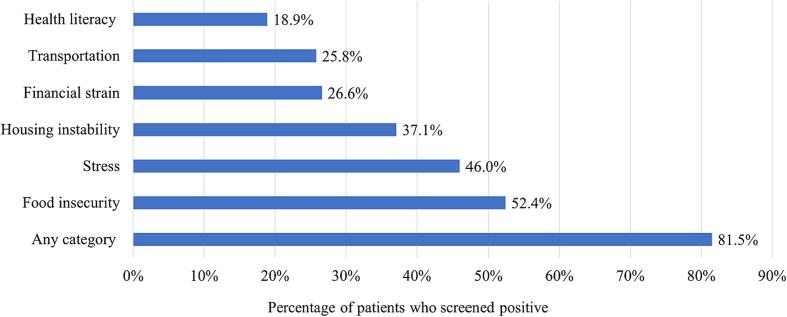
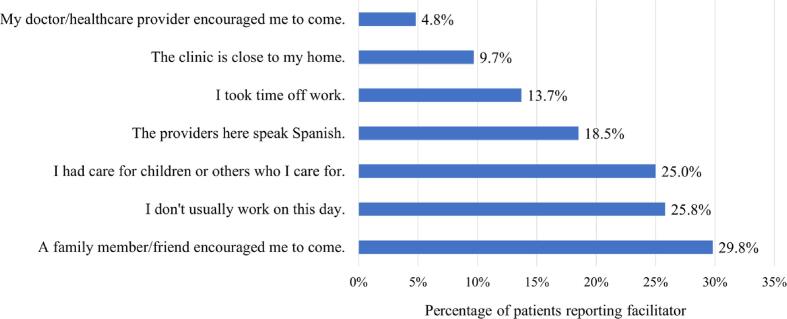
124 patients were included. 98 % were Hispanic, 90 % identified Spanish as their preferred language, and 94 % had no insurance. Median age was 41. 31 % of patients reported a history of abnormal screening. On SDOH, over 80 % of patients screened positive in at least one domain, with the most common being food insecurity (53 %) and stress (46 %). The most frequently reported facilitator was encouragement from a family member/friend (30 %). 26 % of patients reported time off from work and 25 % reported availability of child/elder care as facilitators.
Identifying facilitators among patients who present for cervical cancer screening is critical to designing care plans to reach all populations. Our survey showed that the single greatest facilitator to patients presenting for cervical cancer screening was encouragement from a family member/friend. These findings suggest that increasing community involvement and awareness may help to improve cervical cancer screening in a minority, urban, underserved population.
由于广泛开展筛查,宫颈癌发病率已显著下降,但西班牙裔女性因筛查不足,仍承担着不成比例的宫颈癌负担。既往研究探讨了筛查的障碍,但未能确定该群体中可作为目标的促进因素。我们旨在评估在一家提供免费服务的社区诊所就诊的、以城市为主的西班牙裔人群中宫颈癌筛查的促进因素。
患者完成了人口统计学和健康信息、经过验证的健康社会决定因素(SDOH)筛查,以及一项关于促使他们前来就诊的因素的自我报告促进因素调查。进行描述性统计以评估患者的社会人口学特征、SDOH和感知到的促进因素。
纳入124例患者。98%为西班牙裔,90%选择西班牙语作为首选语言,94%没有保险。中位年龄为41岁。31%的患者报告有异常筛查史。在SDOH方面,超过80%的患者在至少一个领域筛查呈阳性,最常见的是粮食不安全(53%)和压力(46%)。最常报告的促进因素是家庭成员/朋友的鼓励(30%)。26%的患者报告因就诊而请假,25%的患者报告有儿童/老人护理服务作为促进因素。
识别前来进行宫颈癌筛查的患者中的促进因素对于设计覆盖所有人群的护理计划至关重要。我们的调查显示,促使患者前来进行宫颈癌筛查的最大单一促进因素是家庭成员/朋友的鼓励。这些发现表明,增加社区参与和提高意识可能有助于改善少数族裔、城市、医疗服务不足人群的宫颈癌筛查情况。