Guo Monica, Brar Prayaga Rena, Levitz Carly E, Kuo Elena S, Ruiz Esmeralda, Torres-Ozadali Evelyn, Escaron Anne
Institute for Health Equity, AltaMed, Los Angeles, CA, United States.
mPulse Mobile Inc., Encino, CA, United States.
JMIR Cancer. 2023 Aug 10;9:e43024. doi: 10.2196/43024.
Appropriate annual screenings for colorectal cancer (CRC) are an essential preventive measure for the second-leading cause of cancer-related death in the United States. Studies have shown that CRC screening rates are influenced by various social determinants of health (SDOH) factors, including race, ethnicity, and geography. According to 2018 national data, participation in screening is lowest among Hispanic or Latinx individuals (56.1%). At an urban Federally Qualified Health Center, a quality improvement project was conducted to evaluate a texting program with a motivational fotonovela-a short narrative comic. Fotonovelas have previously been used in programs to improve knowledge of cervical cancer and human papillomavirus, vaccinations, and treatments for depression.
This study aimed to encourage compliance with fecal immunochemical test (FIT) screening. Patient engagement involved a texting program with fotonovelas informed by behavior change techniques. This study sought to understand the qualitative characteristics of patient motivation, intention, and barriers to completing their screening.
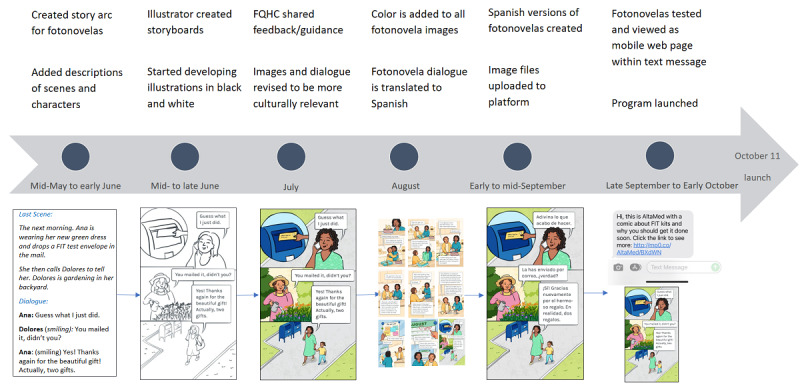
A total of 5241 English-speaking or Spanish-speaking Federally Qualified Health Center patients aged 50 to 75 years were randomized to either intervention (a 4-week tailored 2-way texting program with a fotonovela comic) or usual care (an SMS text message reminder and patient navigator phone call). The texting vendor used a proprietary algorithm to categorize patients in the intervention group into SDOH bands based on their home addresses (high impact=high social needs and low impact=low social needs). Over 4 weeks, patients were texted questions about receiving and returning their FIT, what barriers they may be experiencing, and their thoughts about the fotonovela.
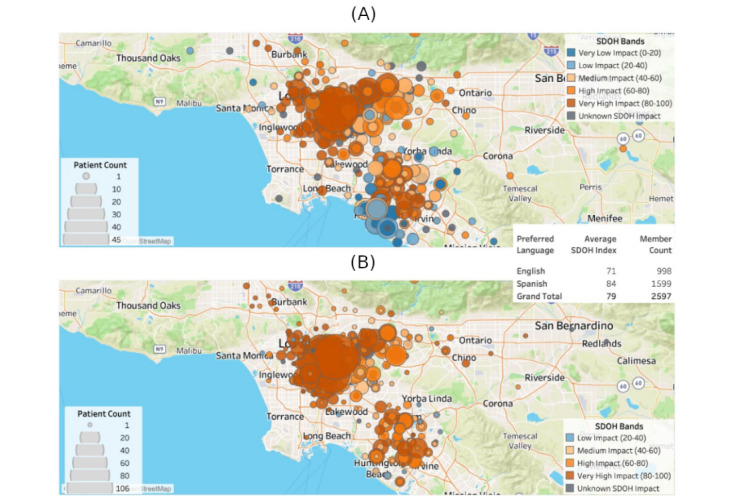
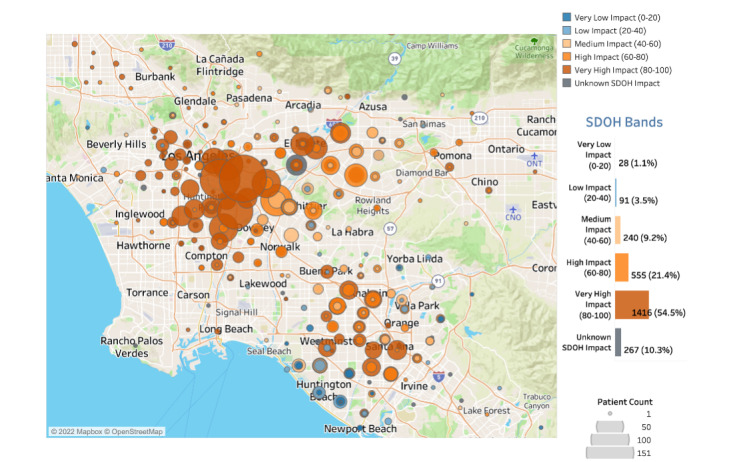
The SDOH index analysis showed that most of the patient population was in the SDOH band categories of high impact (555/2597, 21.37%) and very high impact (1416/2597, 54.52%). Patients sent 1969 total responses to the texting system. Thematic analysis identified 3 major themes in these responses: messages as a reminder, where patients reported that they were motivated to return the FIT and had already done so or would do so as soon as possible; increasing patients' understanding of screening importance, where patients expressed an increased knowledge about the purpose and importance of the FIT; and expressing barriers, where patients shared reasons for not completing the FIT.
The texting program and fotonovela engaged a subset of patients in each SDOH band, including the high and very high impact bands. Creating culturally tailored messages can encourage patient engagement for accepting the content of the messaging, confirming intentions to complete their FIT, and sharing insights about barriers to behavior change. To better support all patients across the continuum of care with CRC screening, it is important to continue to develop and assess strategies that engage patients who did not return their home-mailed FIT.
适当的结直肠癌(CRC)年度筛查是美国癌症相关死亡第二大原因的一项重要预防措施。研究表明,CRC筛查率受到各种健康的社会决定因素(SDOH)的影响,包括种族、民族和地理位置。根据2018年的全国数据,西班牙裔或拉丁裔个体的筛查参与率最低(56.1%)。在一家城市联邦合格健康中心,开展了一项质量改进项目,以评估一项带有激励性图文小说(一种简短的叙事漫画)的短信项目。图文小说此前已用于提高宫颈癌和人乳头瘤病毒知识、疫苗接种以及抑郁症治疗的项目中。
本研究旨在鼓励患者遵守粪便免疫化学检测(FIT)筛查。患者参与包括一项由行为改变技术提供信息的带有图文小说的短信项目。本研究试图了解患者动机、意愿以及完成筛查的障碍的定性特征。
共有5241名年龄在50至75岁之间、说英语或西班牙语的联邦合格健康中心患者被随机分为干预组(一个为期4周的定制双向短信项目,配有图文小说漫画)或常规护理组(一条短信提醒和患者导航员电话)。短信供应商使用专有算法根据患者的家庭住址将干预组患者分为SDOH类别(高影响=高社会需求,低影响=低社会需求)。在4周时间里,向患者发送有关接收和返还FIT、他们可能遇到的障碍以及他们对图文小说的看法的问题。
SDOH指数分析表明,大多数患者群体属于高影响(555/2597,21.37%)和非常高影响(1416/2597,54.52%)的SDOH类别。患者共向短信系统发送了1969条回复。主题分析在这些回复中确定了3个主要主题:作为提醒的信息,患者报告说他们有动力返还FIT,并且已经这样做了或者会尽快这样做;增加患者对筛查重要性的理解,患者表达了对FIT目的和重要性的认识有所提高;以及表达障碍,患者分享了未完成FIT的原因。
短信项目和图文小说吸引了每个SDOH类别中的一部分患者,包括高影响和非常高影响类别。创建文化上量身定制的信息可以鼓励患者参与接受信息内容、确认完成FIT的意愿并分享行为改变障碍的见解。为了在CRC筛查的连续护理过程中更好地支持所有患者,继续开发和评估吸引未返还邮寄到家的FIT的患者的策略很重要。