Department of Medical Sciences, School of Medicine, Walailak University, Nakhon Si Thammarat, Thailand.
Research Center in Tropical Pathobiology, Walailak University, Nakhon Si Thammarat, Thailand.
PLoS One. 2024 Jan 11;19(1):e0296756. doi: 10.1371/journal.pone.0296756. eCollection 2024.
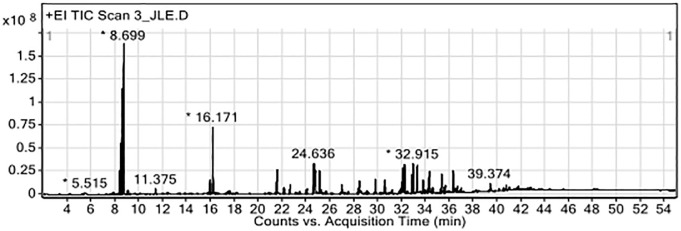
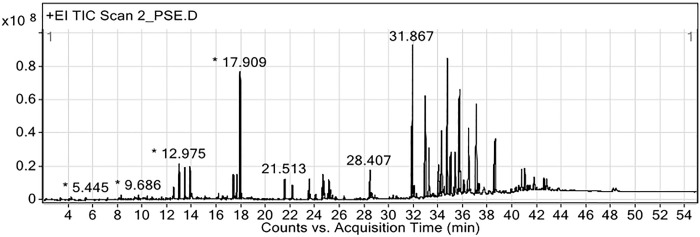
The emergence and spread of antimalarial drug resistance have become a significant problem worldwide. The search for natural products to develop novel antimalarial drugs is challenging. Therefore, this study aimed to assess the antimalarial and toxicological effects of Chan-Ta-Lee-La (CTLL) and Pra-Sa-Chan-Dang (PSCD) formulations and their plant ingredients. The crude extracts of CTLL and PSCD formulations and their plant ingredients were evaluated for in vitro antimalarial activity using Plasmodium lactate dehydrogenase enzyme and toxicity to Vero and HepG2 cells using the tetrazolium salt method. An extract from the CTLL and PSCD formulations exhibiting the highest selectivity index value was selected for further investigation using Peter's 4-day suppressive test, curative test, prophylactic test, and acute oral toxicity in mice. The phytochemical constituents were characterized using gas chromatography-mass spectrometry (GC-MS). Results showed that ethanolic extracts of CTLL and PSCD formulations possessed high antimalarial activity (half maximal inhibitory concentration = 4.88, and 4.19 g/mL, respectively) with low cytotoxicity. Ethanolic extracts of the CTLL and PSCD formulations demonstrated a significant dose-dependent decrease in parasitemia in mice. The ethanolic CTLL extract showed the greatest suppressive effect after 4 days of suppressive (89.80%) and curative (35.94%) testing at a dose of 600 mg/kg. Moreover, ethanolic PSCD extract showed the highest suppressive effect in the prophylactic test (65.82%) at a dose of 600 mg/kg. There was no acute toxicity in mice treated with ethanolic CTLL and PSCD extracts at 2,000 mg/kg bodyweight. GC-MS analysis revealed that the most abundant compounds in the ethanolic CTLL extract were linderol, isoborneol, eudesmol, linoleic acid, and oleic acid, whereas ethyl 4-methoxycinnamate was the most commonly found compound in the ethanolic PSCD extract, followed by 3-hydroxy-2-(4-hydroxy-3-methoxyphenyl)-4H-chromen-4-one, flamenol, oleic acid amide, linoleic acid, and oleic acid. In conclusions, ethanolic CTLL and PSCD extracts exhibited high antimalarial efficacy in vitro. The ethanolic CTLL extract at a dose of 600 mg/kg exhibited the highest antimalarial activity in the 4-day suppressive and curative tests, whereas the ethanolic PSCD extract at a dose of 600 mg/kg showed the highest antimalarial activity in the prophylactic test.
抗疟药物耐药性的出现和传播已成为全球的重大问题。寻找天然产物来开发新型抗疟药物具有挑战性。因此,本研究旨在评估 Chan-Ta-Lee-La (CTLL) 和 Pra-Sa-Chan-Dang (PSCD) 配方及其植物成分的抗疟和毒理学作用。使用乳酸脱氢酶酶和四唑盐法评估 CTLL 和 PSCD 配方及其植物成分的粗提取物的体外抗疟活性和对 Vero 和 HepG2 细胞的毒性。选择 CTLL 和 PSCD 配方中显示出最高选择性指数值的提取物进行进一步研究,方法是使用 Peter 的 4 天抑制试验、治愈试验、预防试验和小鼠急性口服毒性试验。使用气相色谱-质谱联用 (GC-MS) 对植物化学成分进行了表征。结果表明,CTLL 和 PSCD 配方的乙醇提取物具有高抗疟活性(半最大抑制浓度分别为 4.88 和 4.19 g/mL)和低细胞毒性。CTLL 和 PSCD 配方的乙醇提取物在小鼠体内表现出剂量依赖性的寄生虫减少。在 600 mg/kg 剂量下,4 天抑制(89.80%)和治愈(35.94%)试验后,乙醇 CTLL 提取物显示出最大的抑制作用。此外,在 600 mg/kg 剂量下,乙醇 PSCD 提取物在预防试验中显示出最高的抑制作用(65.82%)。在 2000 mg/kg 体重下,用乙醇 CTLL 和 PSCD 提取物治疗的小鼠没有急性毒性。GC-MS 分析表明,乙醇 CTLL 提取物中最丰富的化合物是 linderol、异龙脑、桉叶醇、亚油酸和油酸,而乙醇 PSCD 提取物中最常见的化合物是乙基 4-甲氧基肉桂酸,其次是 3-羟基-2-(4-羟基-3-甲氧基苯基)-4H-色烯-4-酮、flamenol、油酸酰胺、亚油酸和油酸。总之,乙醇 CTLL 和 PSCD 提取物在体外表现出高抗疟活性。在 600 mg/kg 剂量下,乙醇 CTLL 提取物在 4 天抑制和治愈试验中表现出最高的抗疟活性,而在 600 mg/kg 剂量下,乙醇 PSCD 提取物在预防试验中表现出最高的抗疟活性。