Department of Medical Oncology, Kasturba Medical College, Manipal Academy of Higher Education, Manipal, India.
Department of Medical Oncology, Tata Memorial Center, Homi Bhabha National Institute, Mumbai, India.
JCO Glob Oncol. 2024 Jan;10:e2300205. doi: 10.1200/GO.23.00205.
The treatment outcomes of adolescent and young adult (AYA) cancers have improved with advanced oncology care. Hence, fertility preservation (FP) and post-therapy pregnancies (PTPs) become vital issues.
An online survey link with 17 questions regarding oncofertility and PTPs was circulated among oncologists to assess the knowledge, understand the oncofertility care patterns, and seek suggestions to improve oncofertility services.
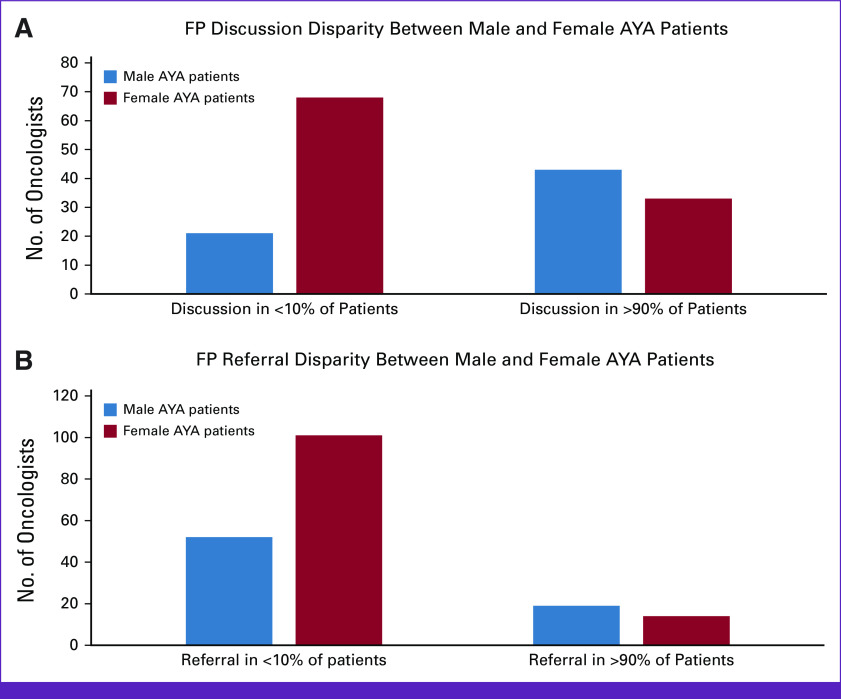
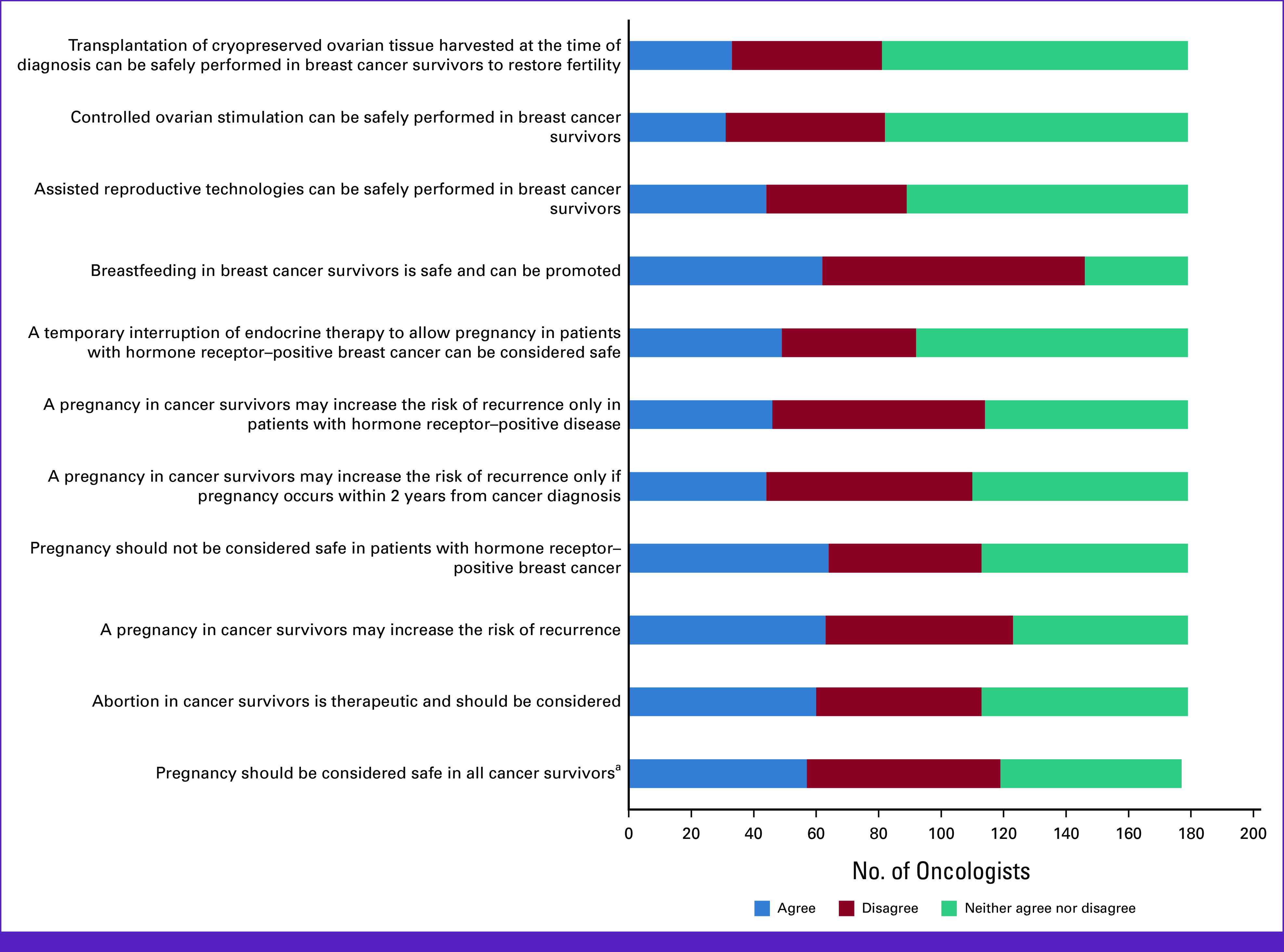
The median age of 179 respondents, predominantly medical oncologists (68.7%), was 37 years (IQR, 10; range, 29-74), working in academic centers (39%) having a median experience of 4 years (IQR, 4; range, 1-42); 23 (12.8%) had dedicated AYA cancer units. Although a quarter (19%-24%) of respondents discussed fertility issues in >90% of AYA patients with cancer, only a tenth (8%-11%) refer >90% for FP, with significantly higher ( < .05) discussions and referrals in males and by more experienced oncologists ( < .05). Forty-six (25.6%) were not well versed with international guidelines for FP. Most (122, 68.1%) oncologists knew about the referral path for semen cryopreservation; however, only 46% were knowledgeable about additional complex procedures. One hundred and ten (61.5%) oncologists never or rarely altered the systemic treatment for FP. Prominent barriers to FP were ignorance, lack of collaboration, and fear of delaying cancer treatment. Lead thrust areas identified to improve FP practices are education, and enhanced and affordable access to FP facilities. Seventy-four (41.3%) respondents knew about international guidelines for PTPs; however, only half (20%) of them often monitored fertility outcomes in survivors. Oncologists have conflicting opinions and uncertainties regarding pregnancy safety, assisted reproductive techniques, breastfeeding, and pregnancy outcomes among survivors.
Oncologists are uncertain about the guidelines, FP practices, referral pathways, and PTPs. Multipronged approaches to improve awareness and provision for affordable oncofertility facilities are needed to enhance AYA cancer outcomes in India, which will be applicable to other low- and middle-income countries too.
随着肿瘤学治疗水平的提高,青少年和年轻成人(AYA)癌症的治疗效果得到了改善。因此,生育力保存(FP)和治疗后妊娠(PTP)成为重要问题。
我们向肿瘤学家发送了一份包含 17 个问题的在线调查链接,内容涉及肿瘤生育力和 PTP,以评估他们的知识水平,了解肿瘤生育力护理模式,并寻求改善肿瘤生育力服务的建议。
179 名受访者的中位年龄为 37 岁(IQR,10;范围,29-74),主要为医学肿瘤学家(68.7%),工作于学术中心(39%),中位经验为 4 年(IQR,4;范围,1-42);23 名(12.8%)受访者设有专门的 AYA 癌症病房。尽管有四分之一(19%-24%)的受访者在超过 90%的 AYA 癌症患者中讨论了生育问题,但只有十分之一(8%-11%)会推荐患者进行 FP,而且男性和经验更丰富的肿瘤学家进行的讨论和推荐明显更高( <.05)。46 名(25.6%)受访者对 FP 的国际指南不熟悉。大多数(122,68.1%)肿瘤学家了解精液冷冻保存的转诊途径;然而,只有 46%的受访者了解其他复杂程序。110 名(61.5%)肿瘤学家从未或很少因 FP 而改变系统治疗。FP 的主要障碍是无知、缺乏合作和担心延误癌症治疗。为了改善 FP 实践,确定了几个重点领域,包括教育以及提高和负担得起的 FP 设施获取途径。74 名(41.3%)受访者了解国际 PTP 指南;然而,只有一半(20%)受访者经常监测幸存者的生育结局。肿瘤学家对妊娠安全性、辅助生殖技术、母乳喂养和幸存者妊娠结局的看法存在分歧和不确定性。
肿瘤学家对指南、FP 实践、转诊途径和 PTP 不确定。需要采取多管齐下的方法来提高认识,并提供负担得起的肿瘤生育力设施,以改善印度 AYA 癌症的治疗效果,这也适用于其他中低收入国家。