Institute of Metabolism and Systems Research, College of Medical and Dental Sciences, University of Birmingham, Birmingham, B15 2TT, UK.
Centre for Endocrinology, Diabetes and Metabolism, Birmingham Health Partners, Birmingham, B15 2TH, UK.
Eye (Lond). 2024 May;38(7):1374-1379. doi: 10.1038/s41433-023-02908-y. Epub 2024 Jan 11.
Cognitive function can be affected in conditions with raised intracranial pressure (ICP) such as idiopathic intracranial hypertension (IIH). Drugs used off label to treat raised ICP also have cognitive side effects, underscoring the unmet need for effective therapeutics which reduce ICP without worsening cognition. The Glucagon Like Peptide-1 (GLP-1) receptor agonist, exenatide, has been shown to significantly reduce ICP in IIH, therefore this study aimed to determine the effects of exenatide on cognition in IIH.
This was an exploratory study of the IIH:Pressure trial (ISTCRN 12678718). Women with IIH and telemetric ICP monitors (n = 15) were treated with exenatide (n = 7) or placebo (n = 8) for 12 weeks. Cognitive function was tested using the National Institute of Health Toolbox Cognitive Battery at baseline and 12 weeks.
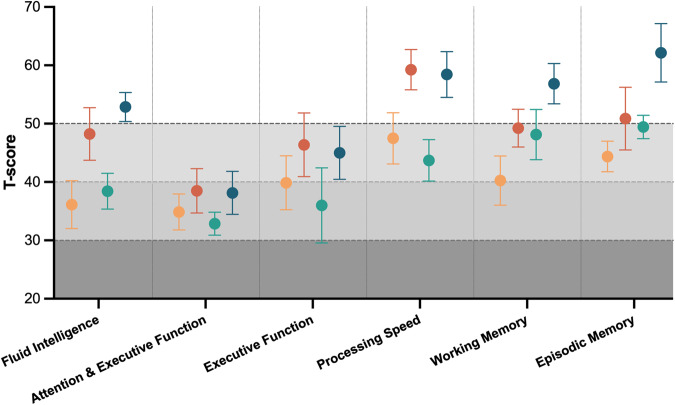
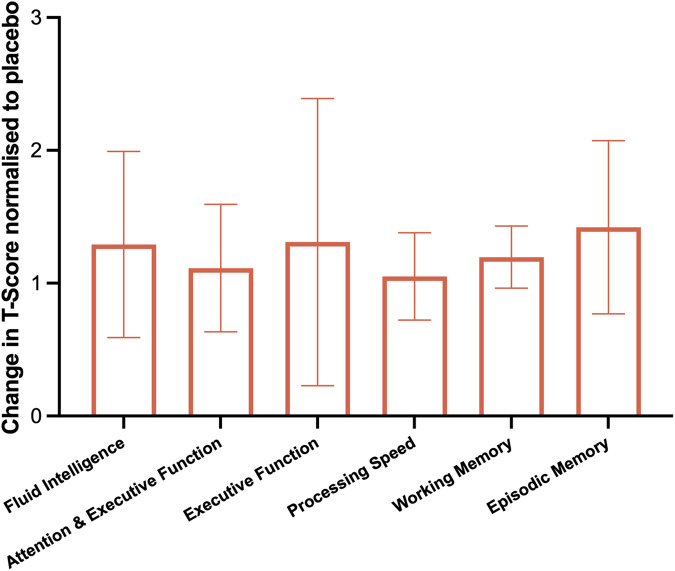
Cognitive performance was impaired in fluid intelligence ((T-score of 50 = population mean), mean (SD) 37.20 (9.87)), attention (33.93 (7.15)) and executive function (38.07 (14.61)). After 12-weeks there was no evidence that exenatide compromised cognition (no differences between exenatide and placebo). Cognition improved in exenatide treated patients in fluid intelligence (baseline 38.4 (8.2), 12 weeks 52.9 (6.6), p = 0.0005), processing speed (baseline 43.7 (9.4), 12 weeks 58.4 (10.4), p = 0.0058) and episodic memory (baseline 49.4 (5.3), 12 weeks 62.1 (13.2), p = 0.0315).
In patients with raised ICP due to IIH, exenatide, a drug emerging as an ICP lowering agent, does not adversely impact cognition. This is encouraging and has potential to be relevant when considering prescribing choices to lower ICP.
颅内压升高(ICP)可影响认知功能,如特发性颅内高压(IIH)。用于治疗升高的 ICP 的标签外药物也具有认知副作用,这突显了需要有效的治疗方法来降低 ICP 而不恶化认知功能。胰高血糖素样肽-1(GLP-1)受体激动剂 exenatide 已被证明可显著降低 IIH 中的 ICP,因此本研究旨在确定 exenatide 对 IIH 认知的影响。
这是一项 IIH:压力试验(ISTCRN 12678718)的探索性研究。使用遥测 ICP 监测仪的 IIH 女性患者(n=15)接受 exenatide(n=7)或安慰剂(n=8)治疗 12 周。在基线和 12 周时使用国家卫生研究院工具包认知电池测试认知功能。
液体智力((T 评分 50=人群平均值),平均值(标准差)37.20(9.87))、注意力(33.93(7.15))和执行功能(38.07(14.61))受损。经过 12 周,没有证据表明 exenatide 损害认知(exenatide 与安慰剂之间无差异)。在接受 exenatide 治疗的患者中,液体智力(基线 38.4(8.2),12 周 52.9(6.6),p=0.0005)、处理速度(基线 43.7(9.4),12 周 58.4(10.4),p=0.0058)和情景记忆(基线 49.4(5.3),12 周 62.1(13.2),p=0.0315)有所改善。
在因 IIH 而导致 ICP 升高的患者中,作为 ICP 降低剂的新兴药物 exenatide 不会对认知产生不利影响。这令人鼓舞,在考虑降低 ICP 的处方选择时可能具有相关性。