Ma Lei, Huang Ke, Zhang Haibo, Kim Eungyung, Kim Hyeonjin, Liu Zhibin, Kim Chae Yeon, Park Kanghyun, Raza Muhammad Atif, Kim Kirim, Yi Junkoo, Sung Yonghun, Ryoo Zae Young, Kim Yong-Gun, Kim Myoung Ok
Department of Animal Science and Biotechnology, Research Center for Horse Industry, Kyungpook National University, Sangju, Gyeongsangbuk-do 37224, Republic of Korea.
College of Pharmacy, Henan University of Chinese Medicine, Zhengzhou, 450046, China.
J Cancer. 2024 Jan 1;15(3):659-670. doi: 10.7150/jca.88555. eCollection 2024.
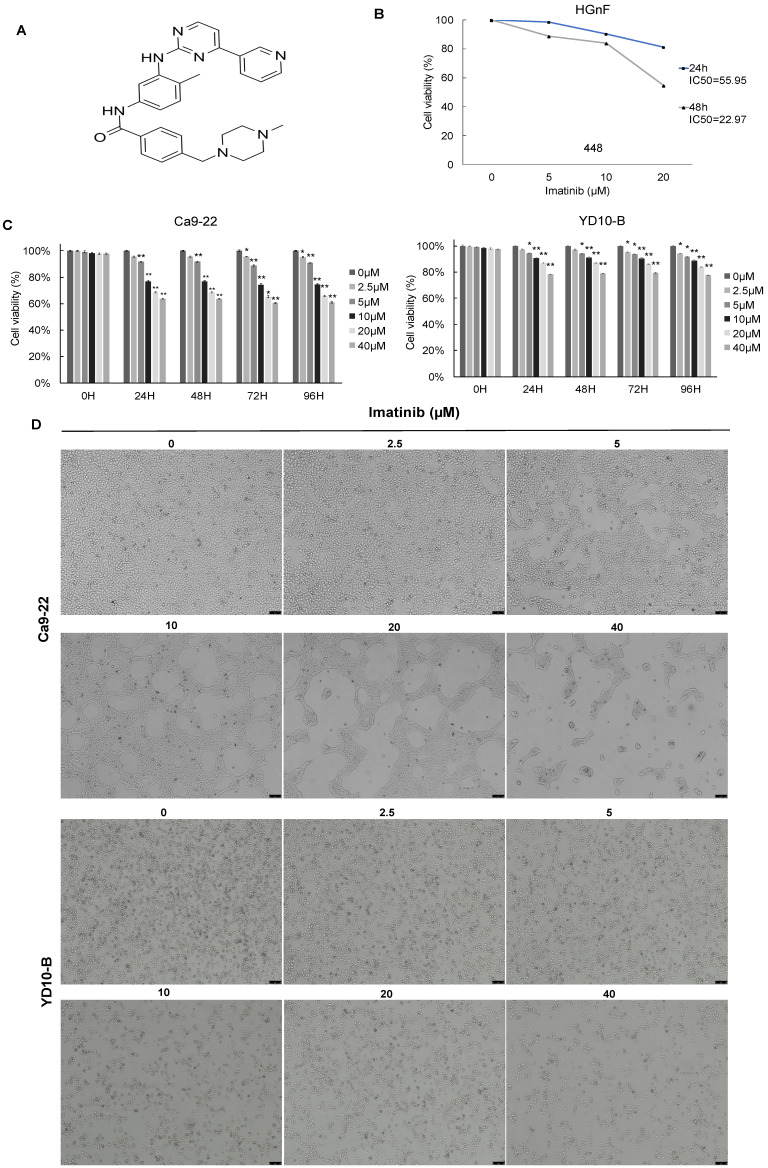
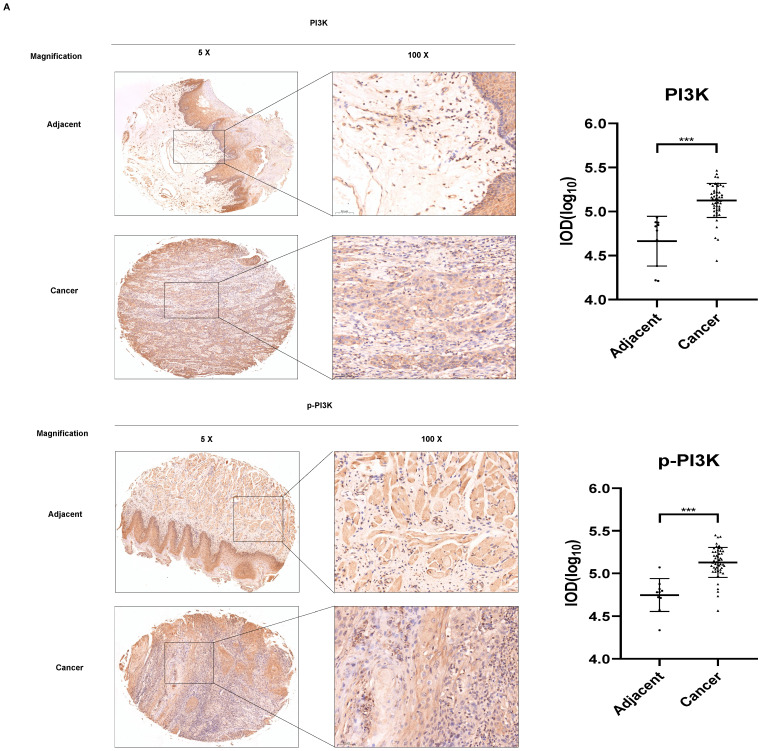
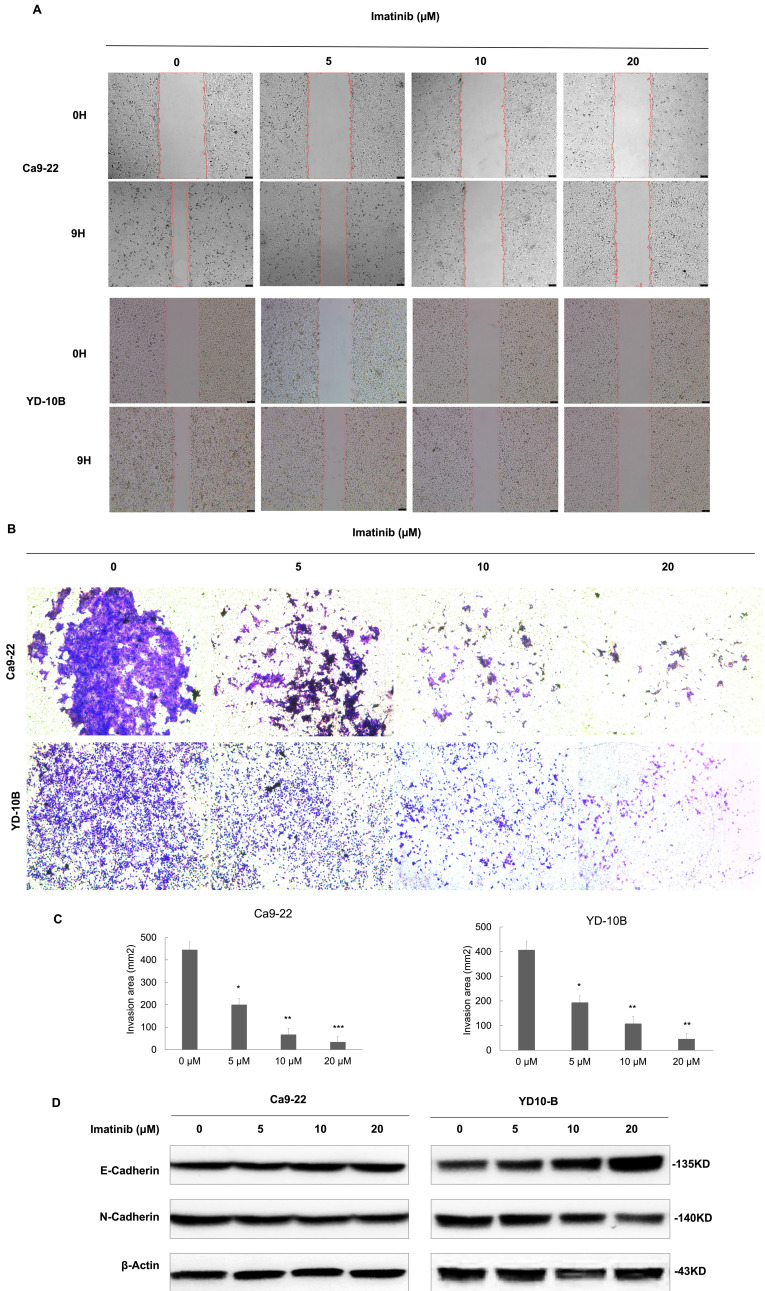
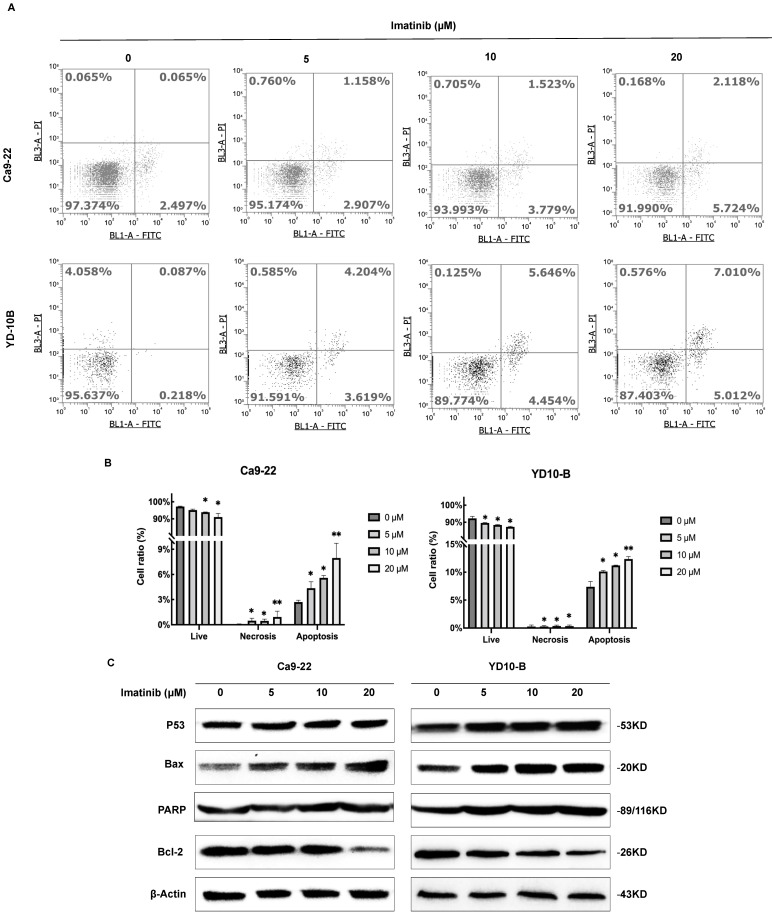
Oral squamous cell carcinoma (OSCC) is a prevalent oral and maxillofacial cancer with high mortality as OSCC cells readily invade tissues and metastasize to cervical lymph nodes. Although imatinib exhibits potential anticancer and remarkable clinical activities that therapeutically affect several cancer types, its specific impact on OSCC has yet to be fully explored. Therefore, this study investigated the potential anticancer effect of imatinib on OSCC cells and the underlying mechanisms. The Cell Counting Kit-8 was used to determine the impact of imatinib on cell viability. Then, morphological cell proliferation analysis was conducted to examine how imatinib impacted OSCC cell growth. Moreover, OSCC cell migration was determined through wound-healing assays, and colony formation abilities were investigated through the soft agar assay. Lastly, the effect of imatinib on OSCC cell apoptosis was verified with flow cytometry, and its inhibitory mechanism was confirmed through Western blot. Our results demonstrate that imatinib effectively inhibited OSCC cell proliferation and significantly curtailed OSCC cell viability in a time- and concentration-dependent manner. Furthermore, imatinib suppressed migration and colony formation while promoting OSCC cell apoptosis by enhancing p53, Bax, and PARP expression levels and reducing Bcl-2 expression. Imatinib also inhibited the PI3K/AKT/mTOR signaling pathway and induced OSCC cell apoptosis, demonstrating the potential of imatinib as a treatment for oral cancer.
口腔鳞状细胞癌(OSCC)是一种常见的口腔颌面癌,死亡率很高,因为OSCC细胞很容易侵入组织并转移至颈部淋巴结。尽管伊马替尼具有潜在的抗癌作用,且在治疗多种癌症类型时具有显著的临床活性,但其对OSCC的具体影响尚未得到充分研究。因此,本研究调查了伊马替尼对OSCC细胞的潜在抗癌作用及其潜在机制。使用细胞计数试剂盒-8来确定伊马替尼对细胞活力的影响。然后,进行细胞增殖形态学分析,以研究伊马替尼如何影响OSCC细胞的生长。此外,通过伤口愈合试验确定OSCC细胞的迁移能力,并通过软琼脂试验研究集落形成能力。最后,用流式细胞术验证伊马替尼对OSCC细胞凋亡的影响,并通过蛋白质免疫印迹法确认其抑制机制。我们的结果表明,伊马替尼能有效抑制OSCC细胞增殖,并以时间和浓度依赖性方式显著降低OSCC细胞活力。此外,伊马替尼通过提高p53、Bax和PARP的表达水平并降低Bcl-2的表达,抑制了迁移和集落形成,同时促进了OSCC细胞凋亡。伊马替尼还抑制PI3K/AKT/mTOR信号通路并诱导OSCC细胞凋亡,证明了伊马替尼作为口腔癌治疗药物的潜力。