Shahid Aniqa, MacLennan Signe, Jones Bradley R, Sudderuddin Hanwei, Dang Zhong, Cobarrubias Kyle, Duncan Maggie C, Kinloch Natalie N, Dapp Michael J, Archin Nancie M, Fischl Margaret A, Ofotokun Igho, Adimora Adaora, Gange Stephen, Aouizerat Bradley, Kuniholm Mark H, Kassaye Seble, Mullins James I, Goldstein Harris, Joy Jeffrey B, Anastos Kathryn, Brumme Zabrina L
Faculty of Health Sciences, Simon Fraser University, Burnaby, British Columbia, Canada.
British Columbia Centre for Excellence in HIV/AIDS, Vancouver, British Columbia, Canada.
J Virol. 2024 Feb 20;98(2):e0165523. doi: 10.1128/jvi.01655-23. Epub 2024 Jan 12.
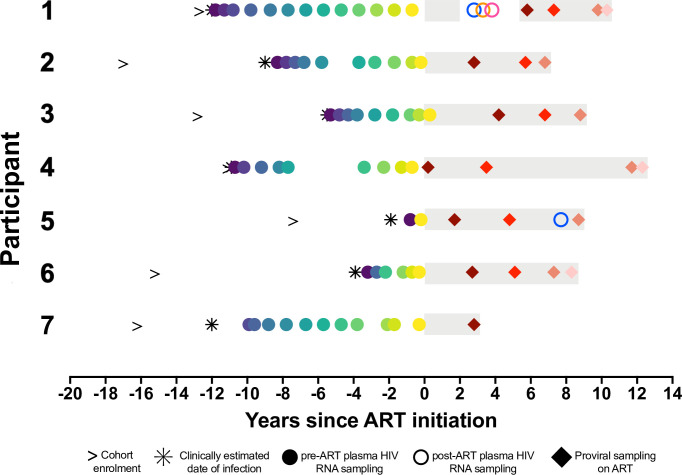
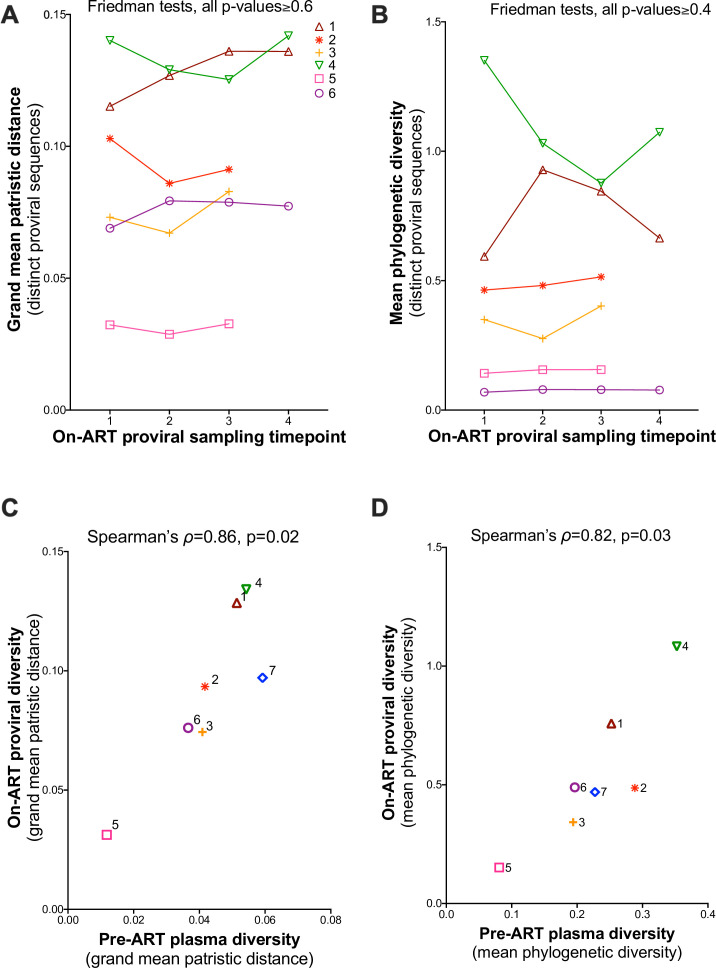
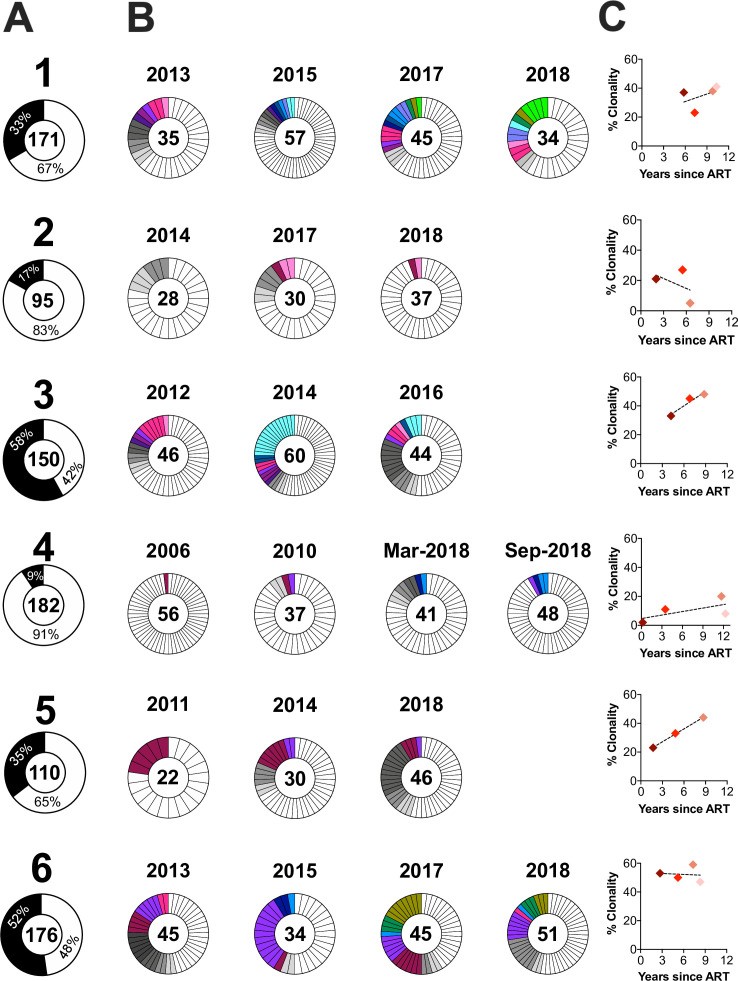
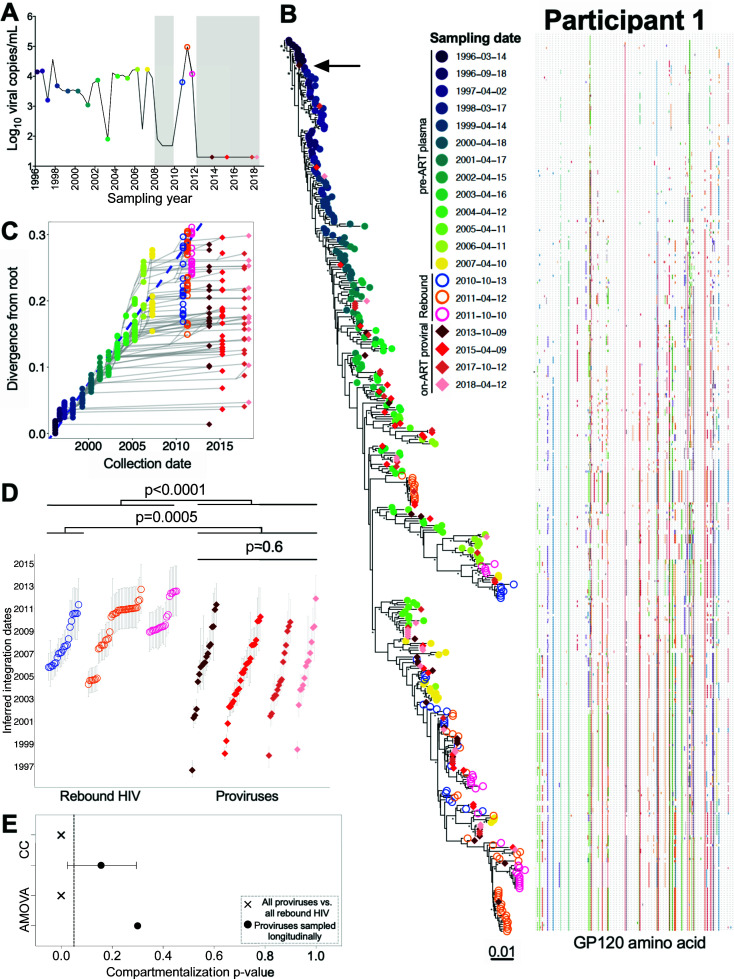
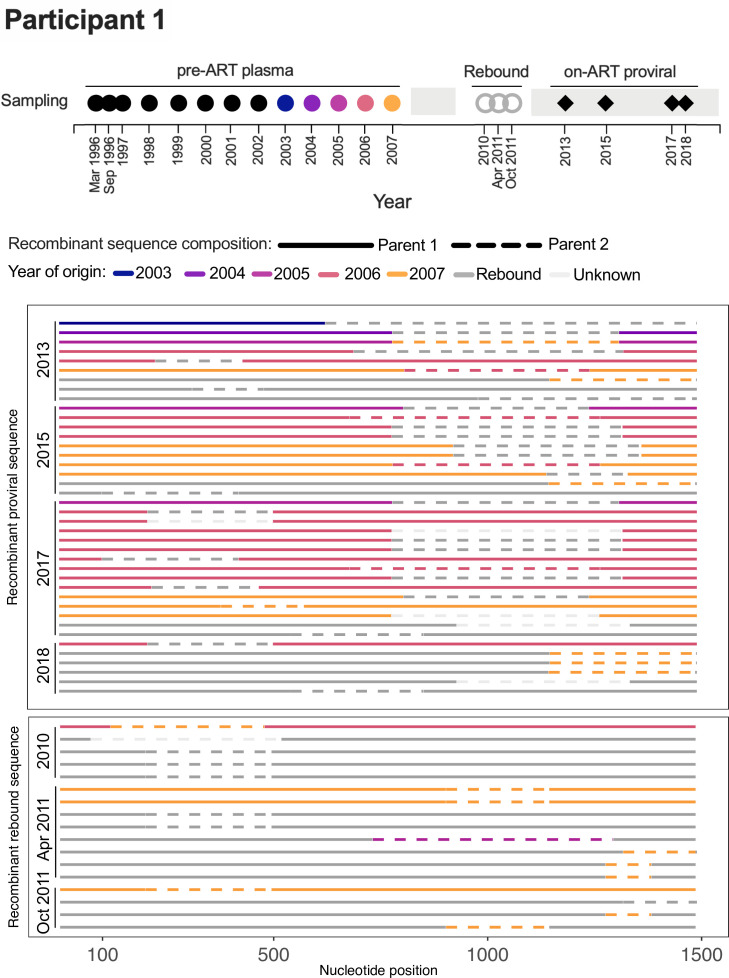
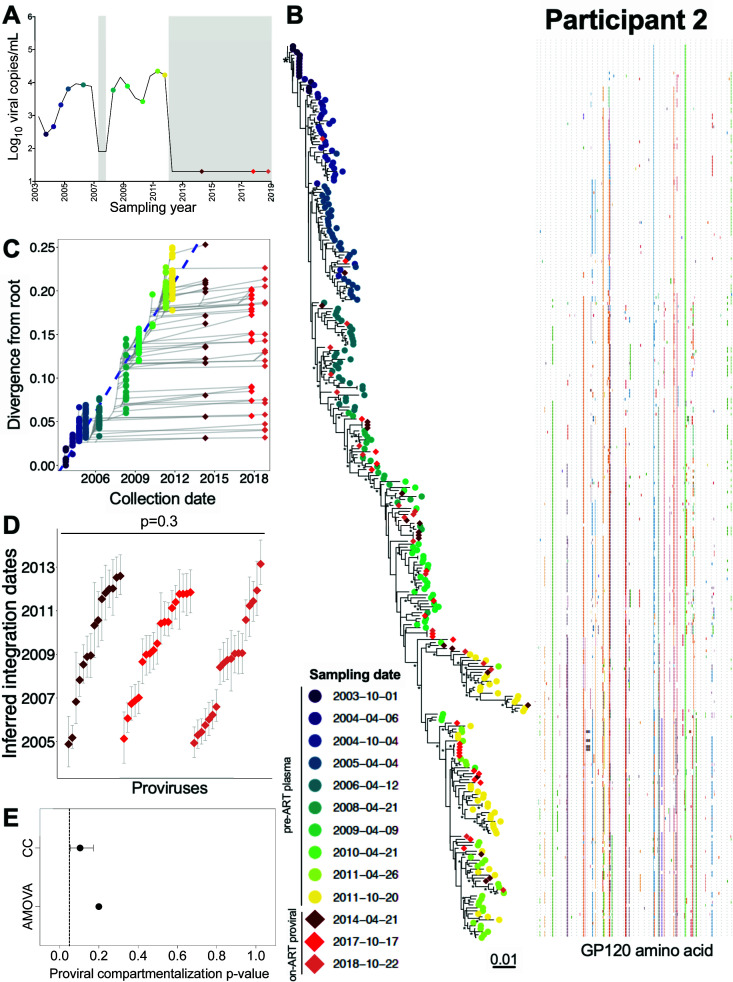
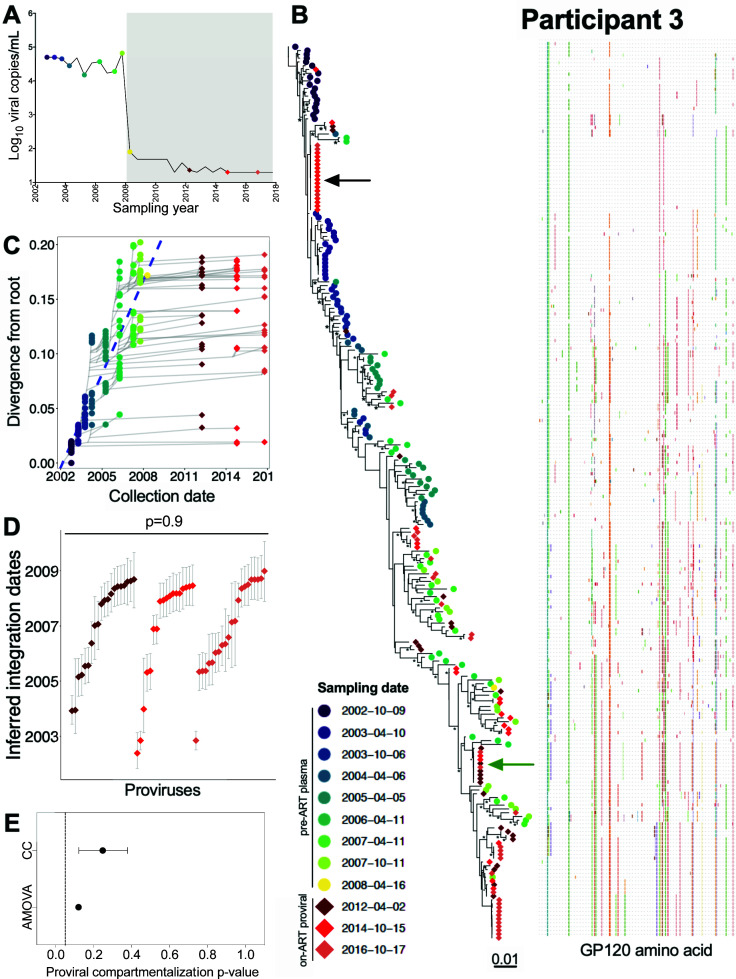
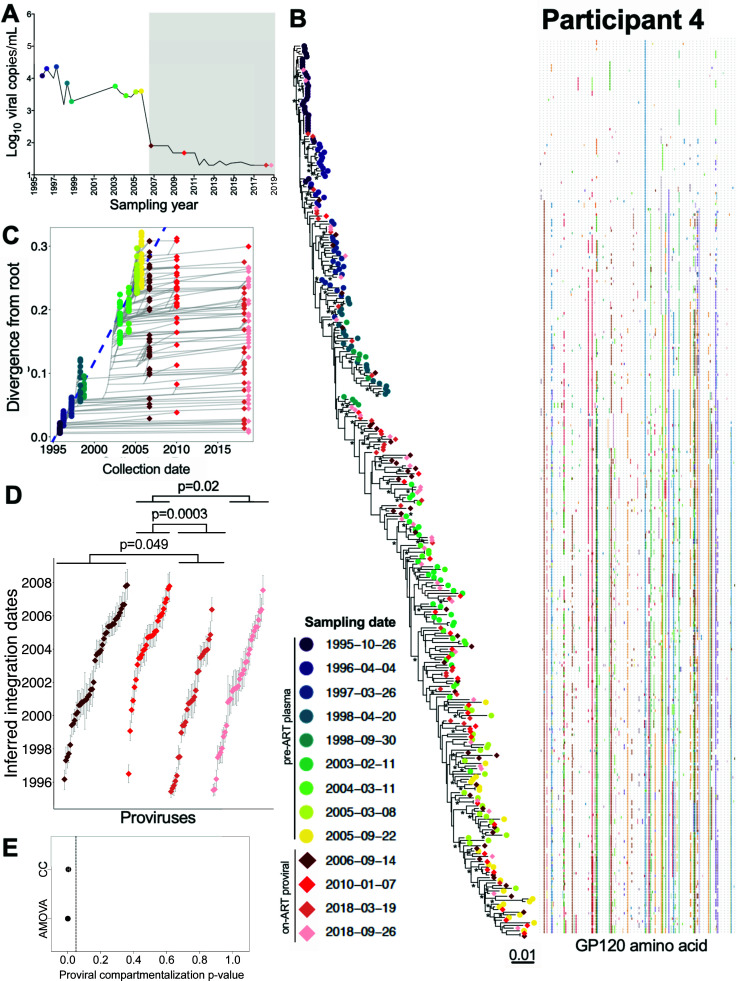
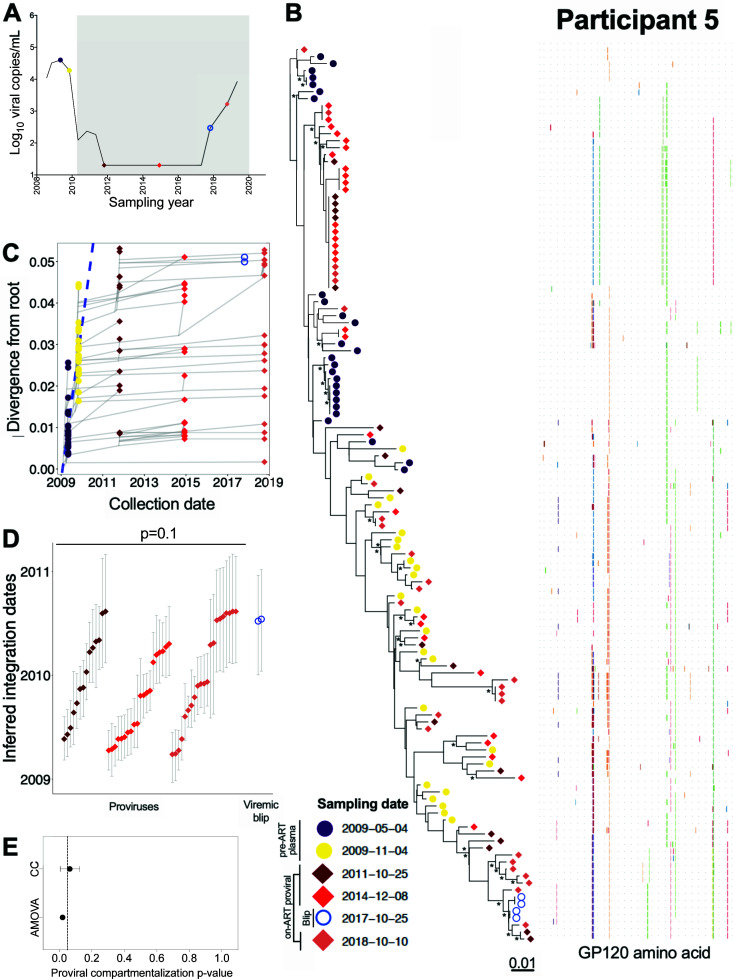
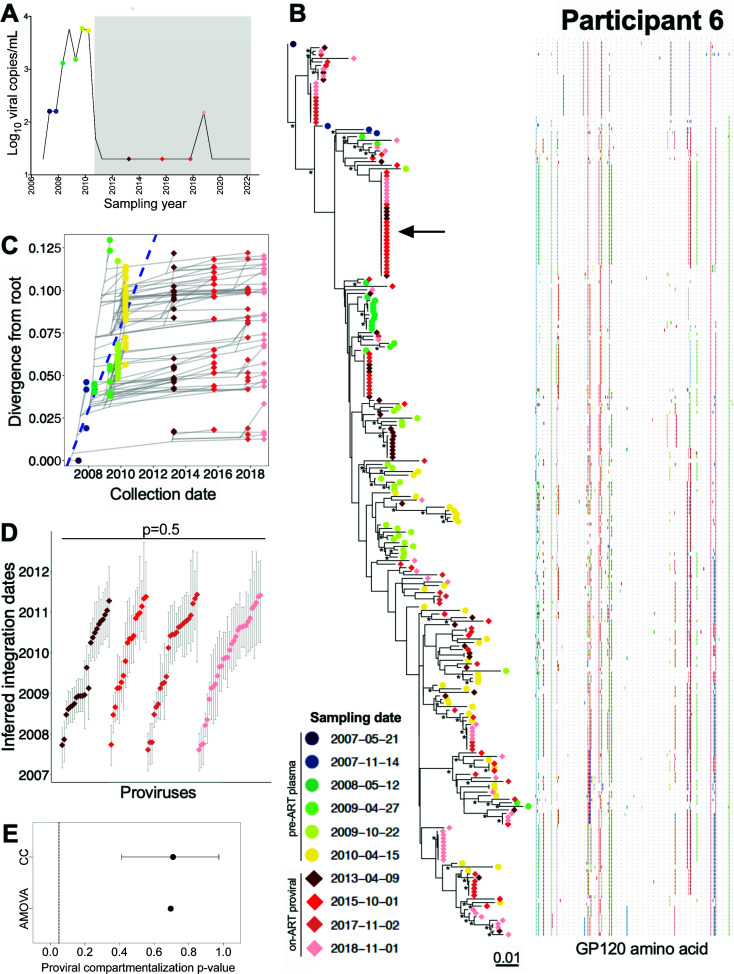
Within-host HIV populations continually diversify during untreated infection, and this diversity persists within infected cell reservoirs during antiretroviral therapy (ART). Achieving a better understanding of on-ART proviral evolutionary dynamics, and a better appreciation of how the overall persisting pool of (largely genetically defective) proviruses differs from the much smaller replication-competent HIV reservoir, is critical to HIV cure efforts. We reconstructed within-host HIV evolutionary histories in blood from seven participants of the Women's Interagency HIV Study who experienced HIV seroconversion, and used these data to characterize the diversity, lineage origins, and ages of proviral sequences sampled longitudinally up to 12 years on ART. We also studied HIV sequences emerging from the reservoir in two participants. We observed that proviral clonality generally increased over time on ART, with clones frequently persisting long term. While on-ART proviral integration dates generally spanned the duration of untreated infection, HIV emerging in plasma was exclusively younger (i.e., dated to the years immediately pre-ART). The genetic and age distributions of distinct proviral sequences remained stable during ART in all but one participant, in whom there was evidence that younger proviruses had been preferentially eliminated after 12 years on ART. Analysis of the region in three participants corroborated our -based observations, indicating that our observations are not influenced by the HIV region studied. Our results underscore the remarkable genetic stability of the distinct proviral sequences that persist in blood during ART. Our results also suggest that the replication-competent HIV reservoir is a genetically restricted, younger subset of this overall proviral pool.IMPORTANCECharacterizing the genetically diverse HIV sequences that persist in the reservoir despite antiretroviral therapy (ART) is critical to cure efforts. Our observations confirm that proviruses persisting in blood on ART, which are largely genetically defective, broadly reflect the extent of within-host HIV evolution pre-ART. Moreover, on-ART clonal expansion is not appreciably accompanied by the loss of distinct proviral lineages. In fact, on-ART proviral genetic composition remained stable in all but one participant, in whom, after 12 years on ART, proviruses dating to around near ART initiation had been preferentially eliminated. We also identified recombinant proviruses between parental sequence fragments of different ages. Though rare, such sequences suggest that reservoir cells can be superinfected with HIV from another infection era. Overall, our finding that the replication-competent reservoir in blood is a genetically restricted, younger subset of all persisting proviruses suggests that HIV cure strategies will need to eliminate a reservoir that differs in key respects from the overall proviral pool.
在未经治疗的感染期间,宿主体内的HIV群体不断多样化,并且这种多样性在抗逆转录病毒疗法(ART)期间在受感染的细胞储存库中持续存在。更好地理解ART期间前病毒的进化动态,以及更好地认识(主要是基因缺陷的)前病毒的整体持续库与小得多的具有复制能力的HIV储存库有何不同,对于HIV治愈工作至关重要。我们重建了女性机构间HIV研究的7名经历HIV血清转化的参与者血液中的宿主体内HIV进化史,并利用这些数据来表征在ART上长达12年纵向采样的前病毒序列的多样性、谱系起源和年龄。我们还研究了两名参与者储存库中出现的HIV序列。我们观察到,在ART期间,前病毒克隆性通常随时间增加,克隆经常长期持续存在。虽然ART期间前病毒整合日期通常跨越未经治疗的感染持续时间,但血浆中出现的HIV只来自较新的(即,可追溯到ART前几年)。除一名参与者外,在所有参与者中,不同前病毒序列的遗传和年龄分布在ART期间保持稳定,在该参与者中,有证据表明在ART治疗12年后,较新的前病毒被优先清除。对三名参与者的[具体区域]分析证实了我们基于[前文提及的分析方法等]的观察结果,表明我们的观察结果不受所研究的HIV区域影响。我们的结果强调了在ART期间血液中持续存在的不同前病毒序列具有显著的遗传稳定性。我们的结果还表明,具有复制能力的HIV储存库是这个整体前病毒库中基因受限、较新的子集。
表征尽管有抗逆转录病毒疗法(ART)但仍存在于储存库中的基因多样的HIV序列对于治愈工作至关重要。我们的观察结果证实,在ART期间血液中持续存在的前病毒,其大部分在基因上有缺陷,广泛反映了ART前宿主体内HIV进化的程度。此外,ART期间的克隆扩增并没有明显伴随着不同前病毒谱系的丢失。事实上,除一名参与者外,在所有参与者中,ART期间前病毒的基因组成保持稳定,在该参与者中,在ART治疗12年后,可追溯到ART开始前后的前病毒被优先清除。我们还鉴定了不同年龄亲本序列片段之间的重组前病毒。尽管罕见,但这些序列表明储存库细胞可以被来自另一个感染时期的HIV超感染。总体而言,我们发现血液中具有复制能力的储存库是所有持续存在的前病毒中基因受限、较新的子集,这表明HIV治愈策略将需要清除一个在关键方面与整体前病毒库不同的储存库。