Brooks Kelsie, Omondi F Harrison, Liang Richard H, Sudderuddin Hanwei, Jones Bradley R, Joy Jeffrey B, Brumme Chanson J, Hunter Eric, Brumme Zabrina L
Emory Vaccine Center, Emory University, Atlanta, GA, United States.
Faculty of Health Sciences, Simon Fraser University, Burnaby, BC, Canada.
Front Microbiol. 2021 Aug 19;12:719153. doi: 10.3389/fmicb.2021.719153. eCollection 2021.
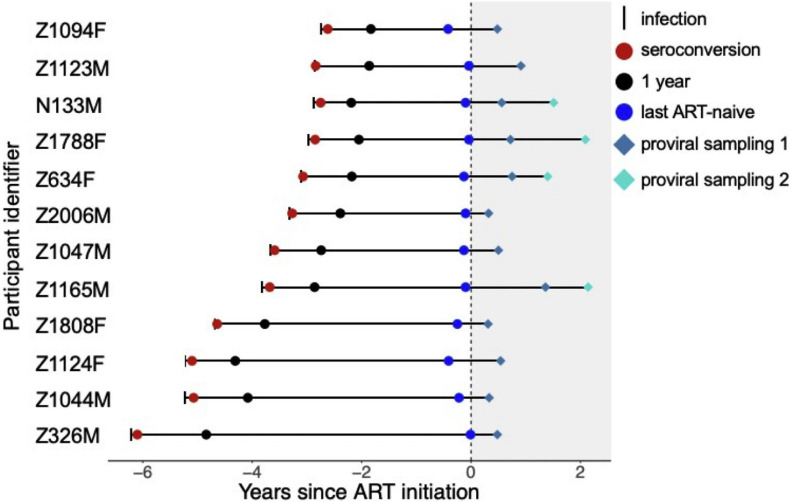
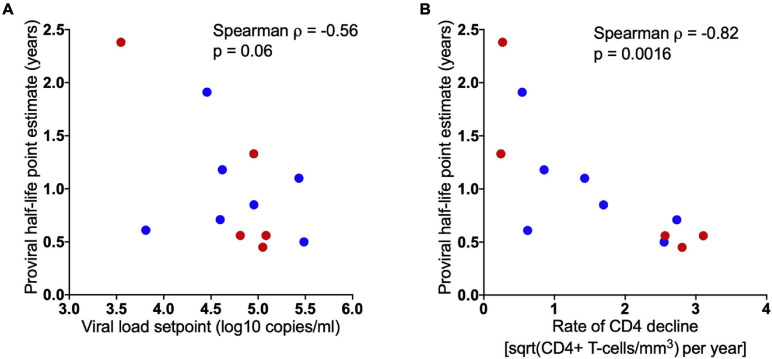
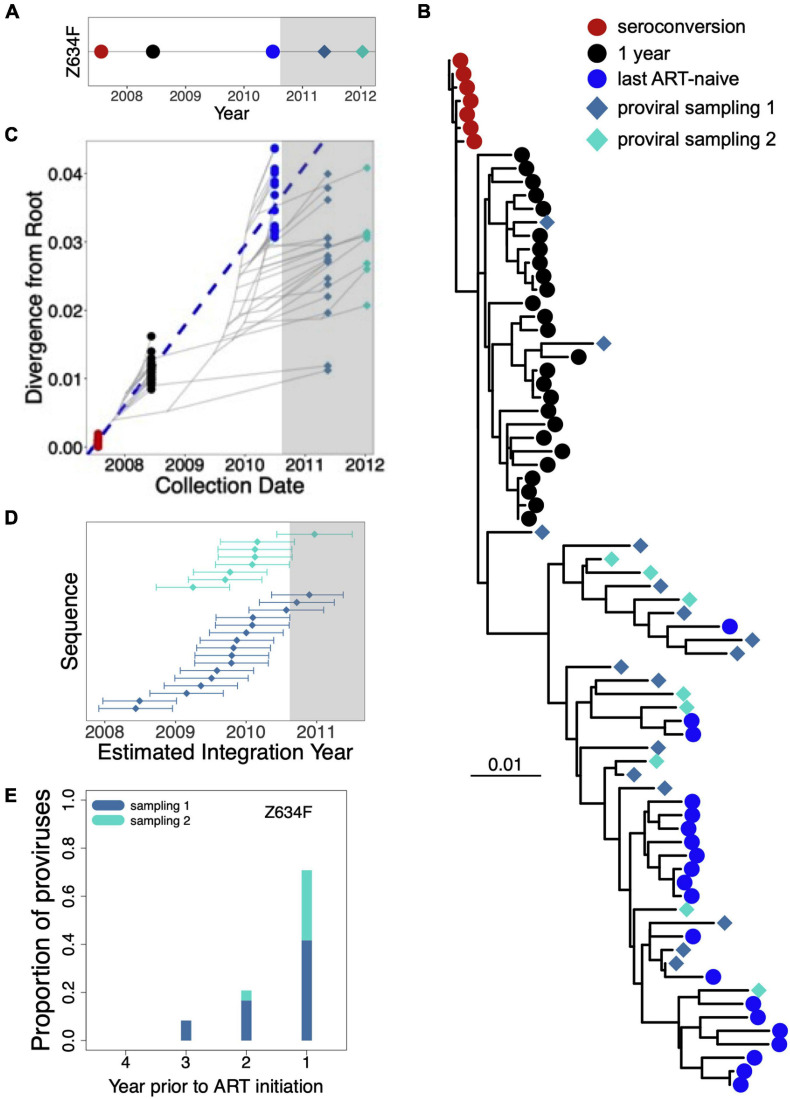
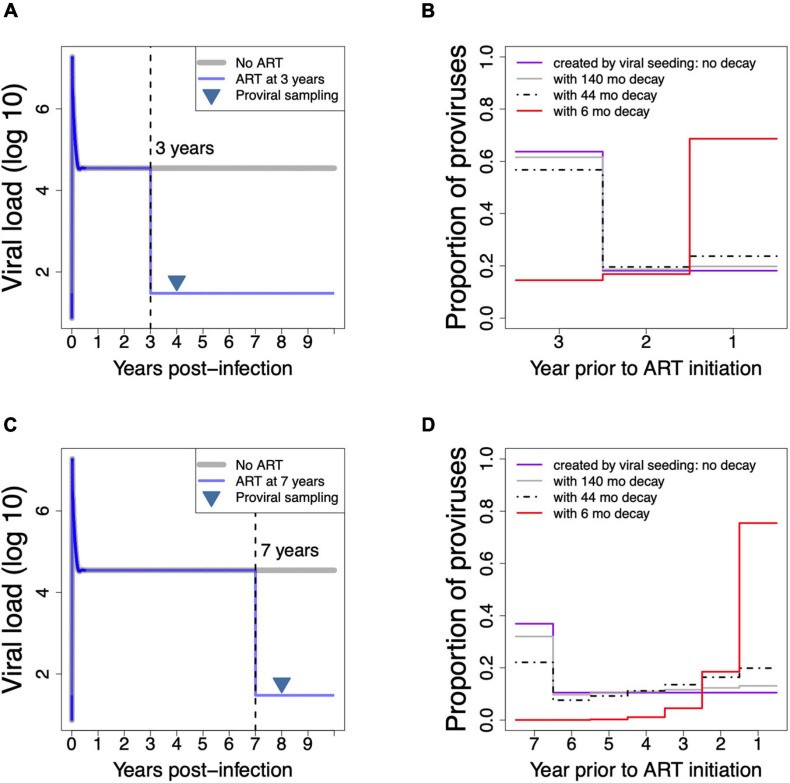
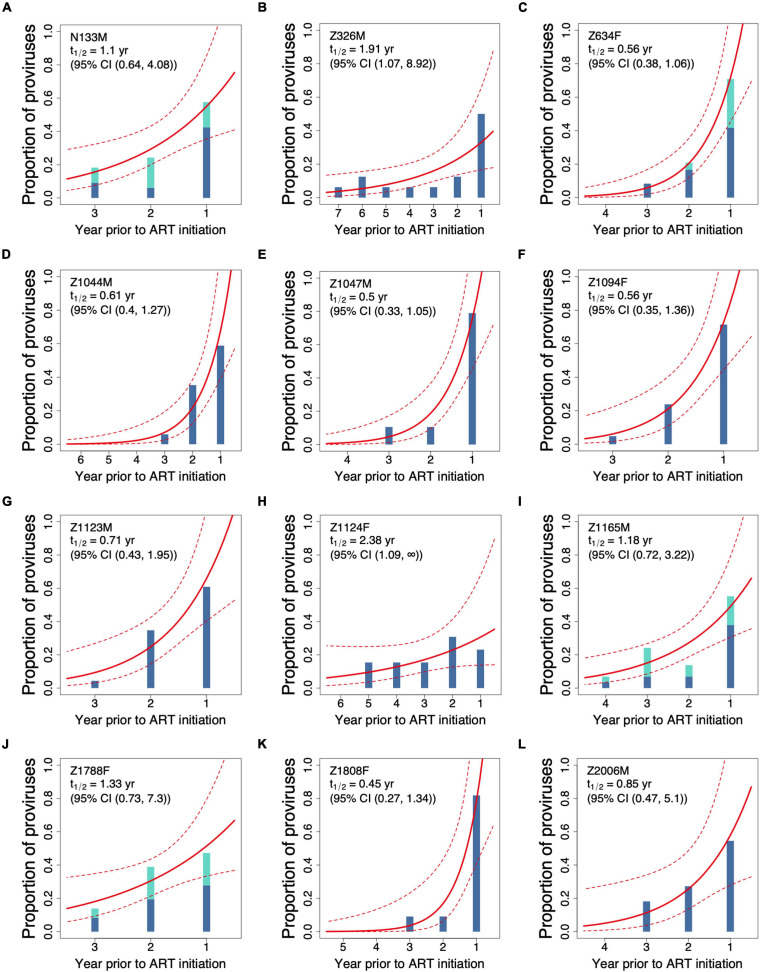
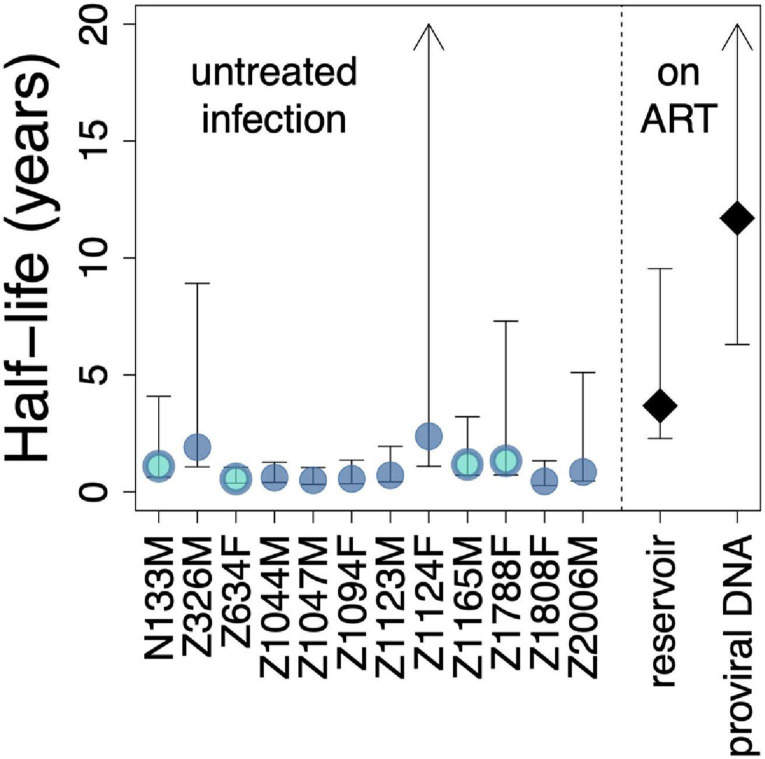
Human immunodeficiency virus (HIV) can persist as an integrated provirus, in a transcriptionally repressed state, within infected cells. This small yet enduring pool of cellular reservoirs that harbor replication-competent HIV is the main barrier to cure. Entry of viral sequences into cellular reservoirs begins shortly after infection, and cells containing integrated proviral DNA are extremely stable once suppressive antiretroviral therapy (ART) is initiated. During untreated HIV infection however, reservoir turnover is likely to be more dynamic. Understanding these dynamics is important because the longevity of the persisting proviral pool during untreated infection dictates reservoir composition at ART initiation. If the persisting proviral pool turns over slowly pre-ART, then HIV sequences seeded into it during early infection would have a high likelihood of persisting for long periods. However, if pre-ART turnover was rapid, the persisting proviral pool would rapidly shift toward recently circulating HIV sequences. One-way to estimate this turnover rate is from the age distributions of proviruses sampled shortly after therapy initiation: this is because, at the time of sampling, the majority of proviral turnover would have already occurred prior to ART. Recently, methods to estimate a provirus' age from its sequence have made this possible. Using data from 12 individuals with HIV subtype C for whom proviral ages had been determined phylogenetically, we estimated that the average proviral half-life during untreated infection was 0.78 (range 0.45-2.38) years, which is >15 times faster than that of proviral DNA during suppressive ART. We further show that proviral turnover during untreated infection correlates with both viral setpoint and rate of CD4+ T-cell decline during this period. Overall, our results support dynamic proviral turnover pre-ART in most individuals, which helps explain why many individuals' reservoirs are skewed toward younger HIV sequences. Broadly, our findings are consistent with the notion that active viral replication creates an environment less favorable to proviral persistence, while viral suppression creates conditions more favorable to persistence, where ART stabilizes the proviral pool by dramatically slowing its rate of decay. Strategies to inhibit this stabilizing effect and/or to enhance reservoir turnover during ART could represent additional strategies to reduce the HIV reservoir.
人类免疫缺陷病毒(HIV)可作为整合型前病毒,以转录抑制状态在受感染细胞内持续存在。这个虽小但持久的细胞储存库群体中含有具有复制能力的HIV,是治愈的主要障碍。病毒序列在感染后不久就开始进入细胞储存库,一旦开始进行抑制性抗逆转录病毒疗法(ART),含有整合型前病毒DNA的细胞就极其稳定。然而,在未经治疗的HIV感染期间,储存库的更新可能更具动态性。了解这些动态情况很重要,因为未经治疗感染期间持续存在的前病毒库的寿命决定了开始ART时储存库的组成。如果未经治疗时持续存在的前病毒库更新缓慢,那么在早期感染期间植入其中的HIV序列就很有可能长期持续存在。然而,如果未经治疗时的更新速度很快,持续存在的前病毒库就会迅速转向最近流行的HIV序列。一种估计这种更新率的方法是根据治疗开始后不久采样的前病毒的年龄分布:这是因为在采样时,大多数前病毒更新在ART之前就已经发生。最近,从病毒序列估计前病毒年龄的方法使这成为可能。利用来自12名C型HIV感染者的数据,这些感染者的前病毒年龄已通过系统发育分析确定,我们估计未经治疗感染期间前病毒的平均半衰期为0.78(范围为0.45 - 2.38)年,这比抑制性ART期间前病毒DNA的半衰期快15倍以上。我们进一步表明,未经治疗感染期间前病毒的更新与该期间的病毒载量设定点和CD4 + T细胞下降速率均相关。总体而言,我们的结果支持大多数个体在未经治疗时前病毒的动态更新,这有助于解释为什么许多个体的储存库偏向于较年轻的HIV序列。广泛地说,我们的发现与以下观点一致:活跃的病毒复制创造了一个不利于前病毒持续存在的环境,而病毒抑制则创造了更有利于持续存在的条件,其中ART通过显著减缓其衰减速率来稳定前病毒库。在ART期间抑制这种稳定作用和/或增强储存库更新的策略可能代表了减少HIV储存库的额外策略。