Department of Pharmaceutics and Pharmaceutical Industries, College of Pharmacy, Taibah University, Madinah, Al-Madinah Al-Munawwarah, Saudi Arabia.
Department of Pharmaceutics, Faculty of Pharmacy, Assiut University, Assiut, Egypt.
Int J Nanomedicine. 2024 Jan 10;19:209-230. doi: 10.2147/IJN.S438564. eCollection 2024.
Repaglinide (REP) is an antidiabetic drug with limited oral bioavailability attributable to its low solubility and considerable first-pass hepatic breakdown. This study aimed to develop a biodegradable chitosan-based system loaded with REP-solid lipid nanoparticles (REP-SLNs) for controlled release and bioavailability enhancement via transdermal delivery.
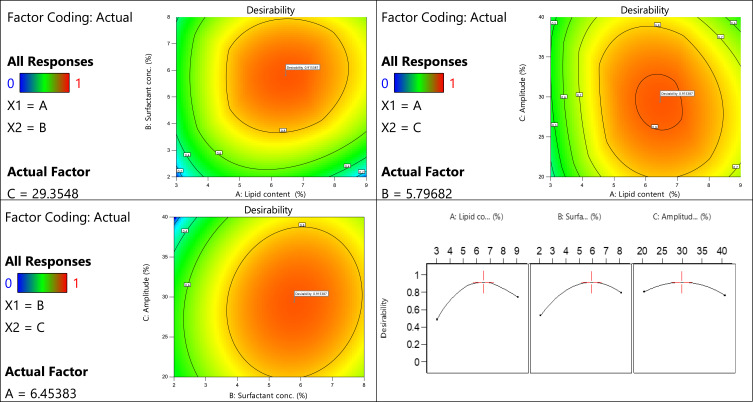
REP-SLNs were fabricated by ultrasonic hot-melt emulsification. A Box-Behnken design (BBD) was employed to explore and optimize the impacts of processing variables (lipid content, surfactant concentration, and sonication amplitude) on particle size (PS), and entrapment efficiency (EE). The optimized REP-SLN formulation was then incorporated within a chitosan solution to develop a transdermal delivery system (REP-SLN-TDDS) and evaluated for physicochemical properties, drug release, and ex vivo permeation profiles. Pharmacokinetic and pharmacodynamic characteristics were assessed using experimental rats.
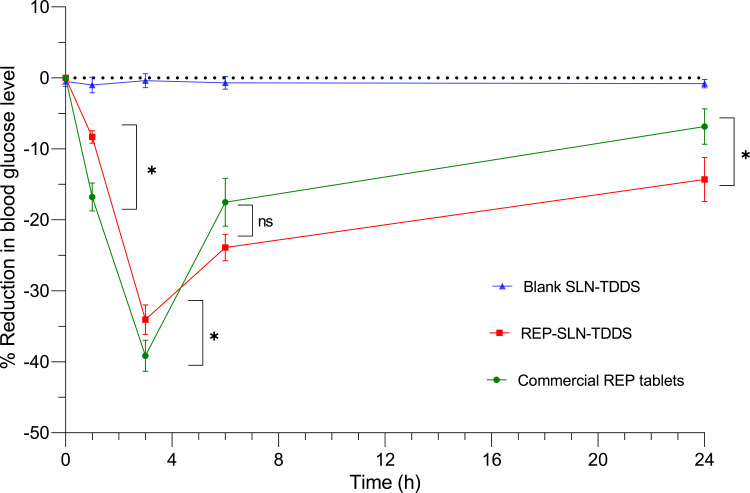
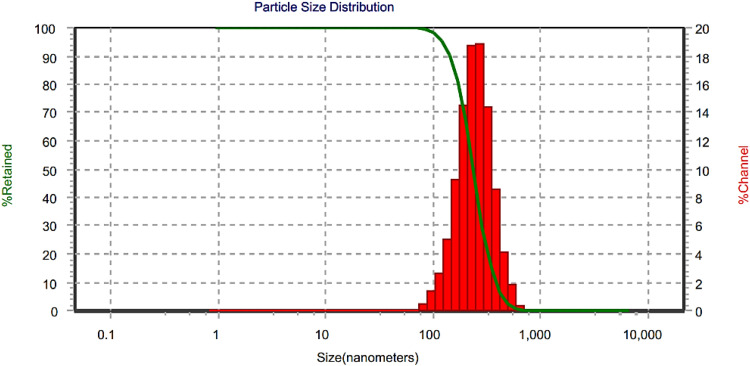
The optimized REP-SLNs had a PS of 249±9.8 nm and EE of 78%±2.3%. The developed REP-SLN-TDDS demonstrated acceptable characteristics without significant aggregation of REP-SLNs throughout the casting and drying processes. The REP-SLN-TDDS exhibited a biphasic release pattern, where around 36% of the drug load was released during the first 2 h, then the drug release was sustained at around 80% at 24 h. The computed flux across rat skin for the REP-SLN-TDDS was 2.481±0.22 μg/cm/h in comparison to 0.696±0.07 μg/cm/h for the unprocessed REP, with an enhancement ratio of 3.56. The REP-SLN-TDDS was capable of sustaining greater REP plasma levels over a 24 h period (<0.05). The REP-SLN-TDDS also reduced blood glucose levels compared to unprocessed REP and commercial tablets (<0.05) in experimental rats.
Our REP-SLN-TDDS can be considered an efficient therapeutic option for REP administration.
瑞格列奈(REP)是一种抗糖尿病药物,由于其低溶解度和相当大的首过肝分解,其口服生物利用度有限。本研究旨在开发一种基于可生物降解壳聚糖的系统,该系统负载有 REP-固体脂质纳米粒(REP-SLNs),通过透皮给药实现控制释放和生物利用度的提高。
通过超声热熔乳化法制备 REP-SLNs。采用 Box-Behnken 设计(BBD)来探索和优化加工变量(脂质含量、表面活性剂浓度和超声幅度)对粒径(PS)和包封效率(EE)的影响。然后将优化后的 REP-SLN 配方纳入壳聚糖溶液中,开发一种透皮给药系统(REP-SLN-TDDS),并评估其理化性质、药物释放和体外渗透曲线。使用实验大鼠评估药代动力学和药效学特征。
优化后的 REP-SLNs 的 PS 为 249±9.8nm,EE 为 78%±2.3%。所开发的 REP-SLN-TDDS 表现出可接受的特性,在铸造和干燥过程中没有明显的 REP-SLN 聚集。REP-SLN-TDDS 表现出双相释放模式,约 36%的药物负荷在最初的 2 小时内释放,然后在 24 小时内持续释放约 80%的药物。与未处理的 REP 相比,REP-SLN-TDDS 计算的大鼠皮肤通量为 2.481±0.22μg/cm/h,而未处理的 REP 为 0.696±0.07μg/cm/h,增强比为 3.56。REP-SLN-TDDS 能够在 24 小时内维持更高的 REP 血浆水平(<0.05)。与未处理的 REP 和商业片剂相比,REP-SLN-TDDS 还能降低实验大鼠的血糖水平(<0.05)。
我们的 REP-SLN-TDDS 可以被认为是 REP 给药的一种有效治疗选择。