Alwuqaysi Bdour, Abdul-Rahman Alfie, Borgo Rita
King's College London, London, United Kingdom.
JMIR Form Res. 2024 Jan 16;8:e44923. doi: 10.2196/44923.
In recent years, increasing numbers of parents, activists, and decision-makers have raised concerns about the potential adverse effects of social media use on both mental health and family functioning. Although some studies have indicated associations between social media use and negative mental health outcomes, others have found no evidence of mental health harm.
This correlation study investigated the interplay between social media use, mental health, and family functioning. Analyzing data from 314 users, this study explores diverse mental health outcomes. The study places particular emphasis on the Saudi Arabian sample, providing valuable insights into the cultural context and shedding light on the specific dynamics of social media's impact on mental well-being and family dynamics in this demographic context.
We collected data through a subsection of an anonymous web-based survey titled "The Effect of COVID-19 on Social Media Usage, Mental Health, and Family Functioning." The survey was distributed through diverse web-based platforms in Saudi Arabia, emphasizing the Saudi sample. The participants indicated their social media accounts and estimated their daily use. Mental health was assessed using the General Health Questionnaire and family functioning was evaluated using the Family Assessment Device Questionnaire. In addition, 6 mental health conditions (anxiety, self-esteem, depression, body dysmorphia, social media addiction, and eating disorders) were self-reported by participants.
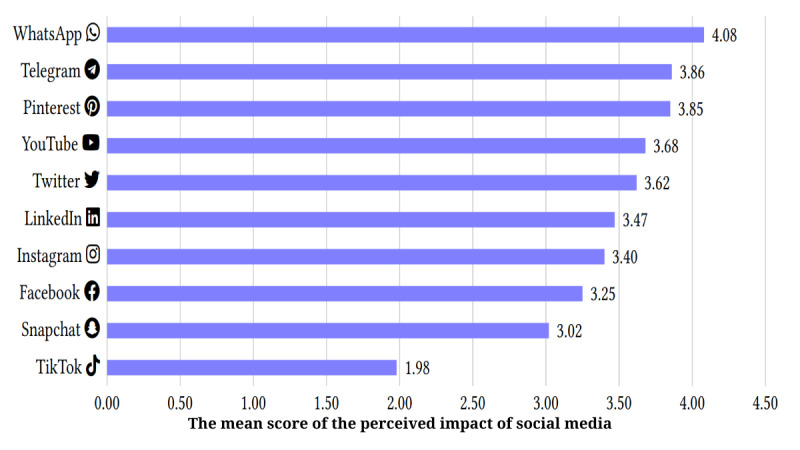
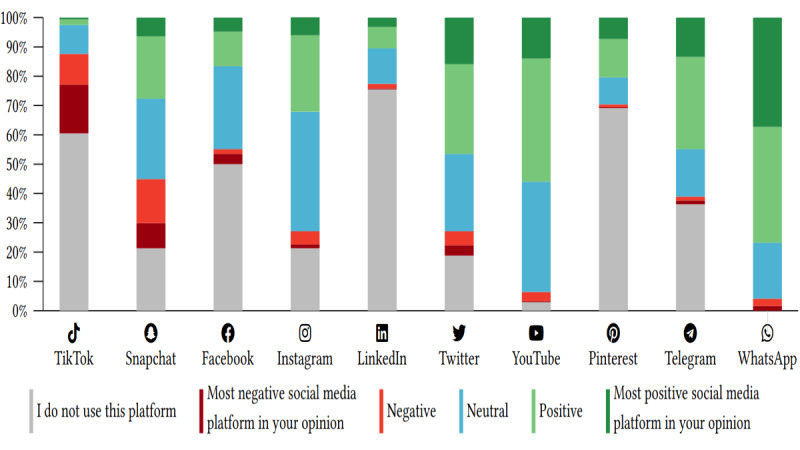
The study demonstrates a pattern of frequent social media use, with a significant portion dedicating 3-5 hours daily for web-based activities, and most of the sample accessed platforms multiple times a day. Despite concerns about social media addiction and perceived unhealthiness, participants cited staying connected with friends and family as their primary motivation for social media use. WhatsApp was perceived as the most positively impactful, whereas TikTok was considered the most negative for our Saudi sample. YouTube, Instagram, and Snapchat users reported poorer mental health compared with nonusers of these platforms. Mental health effects encompassed anxiety and addiction, with age and gender emerging as significant factors. Associations between social media use and family functioning were evident, with higher social media quartiles correlating with a greater likelihood of mental health and unhealthy family functioning. Logistic regression identified age and gender as factors linked to affected mental health, particularly noting that female participants aged 25-34 years were found to be more susceptible to affected mental health. In addition, multivariable analysis identified age and social media use quartiles as factors associated with poor family functioning.
This study examined how social media affects mental health and family functioning in Saudi Arabia. These findings underscore the need for culturally tailored interventions to address these challenges, considering diverse demographic needs. Recognizing these nuances can guide the development of interventions to promote digital well-being, acknowledging the importance of familial connections in Saudi society.
近年来,越来越多的家长、活动人士和决策者对社交媒体使用对心理健康和家庭功能的潜在不利影响表示担忧。尽管一些研究表明社交媒体使用与负面心理健康结果之间存在关联,但其他研究并未发现心理健康受到损害的证据。
这项相关性研究调查了社交媒体使用、心理健康和家庭功能之间的相互作用。本研究分析了314名用户的数据,探讨了多种心理健康结果。该研究特别强调了沙特阿拉伯样本,为文化背景提供了有价值的见解,并揭示了在这一人口背景下社交媒体对心理健康和家庭动态影响的具体机制。
我们通过一项名为“COVID-19对社交媒体使用、心理健康和家庭功能的影响”的匿名网络调查的一个子部分收集数据。该调查通过沙特阿拉伯的各种网络平台分发,重点是沙特样本。参与者指出了他们的社交媒体账户,并估计了他们的每日使用时间。使用一般健康问卷评估心理健康,使用家庭评估设备问卷评估家庭功能。此外,参与者自行报告了6种心理健康状况(焦虑、自尊、抑郁、身体变形障碍、社交媒体成瘾和饮食失调)。
该研究显示了频繁使用社交媒体的模式,很大一部分人每天花3 - 5小时进行网络活动,并且大多数样本每天多次访问平台。尽管担心社交媒体成瘾和认为其不健康,但参与者将与朋友和家人保持联系作为使用社交媒体的主要动机。对于我们的沙特样本,WhatsApp被认为具有最积极的影响,而TikTok被认为具有最消极的影响。与这些平台的非用户相比,YouTube、Instagram和Snapchat的用户报告的心理健康状况较差。心理健康影响包括焦虑和成瘾,年龄和性别是重要因素。社交媒体使用与家庭功能之间的关联很明显,社交媒体四分位数越高,心理健康和不健康家庭功能的可能性就越大。逻辑回归确定年龄和性别是与受影响的心理健康相关的因素,特别指出25 - 34岁的女性参与者更容易受到心理健康影响。此外,多变量分析确定年龄和社交媒体使用四分位数是与不良家庭功能相关的因素。
本研究考察了社交媒体如何影响沙特阿拉伯的心理健康和家庭功能。这些发现强调了需要针对文化定制干预措施来应对这些挑战,考虑到不同的人口需求。认识到这些细微差别可以指导促进数字健康的干预措施的制定,承认家庭联系在沙特社会中的重要性。