Department of Biotechnology and Life Science, Tokyo University of Agriculture and Technology, 2-24-16 Naka-cho, Koganei-shi, Tokyo185-8588, Japan.
School of Life Science and Technology, Tokyo Institute of Technology, Ookayama 2-12-1, Meguro-Ku, Tokyo 152-8550, Japan.
Lab Chip. 2024 Feb 27;24(5):996-1029. doi: 10.1039/d3lc00860f.
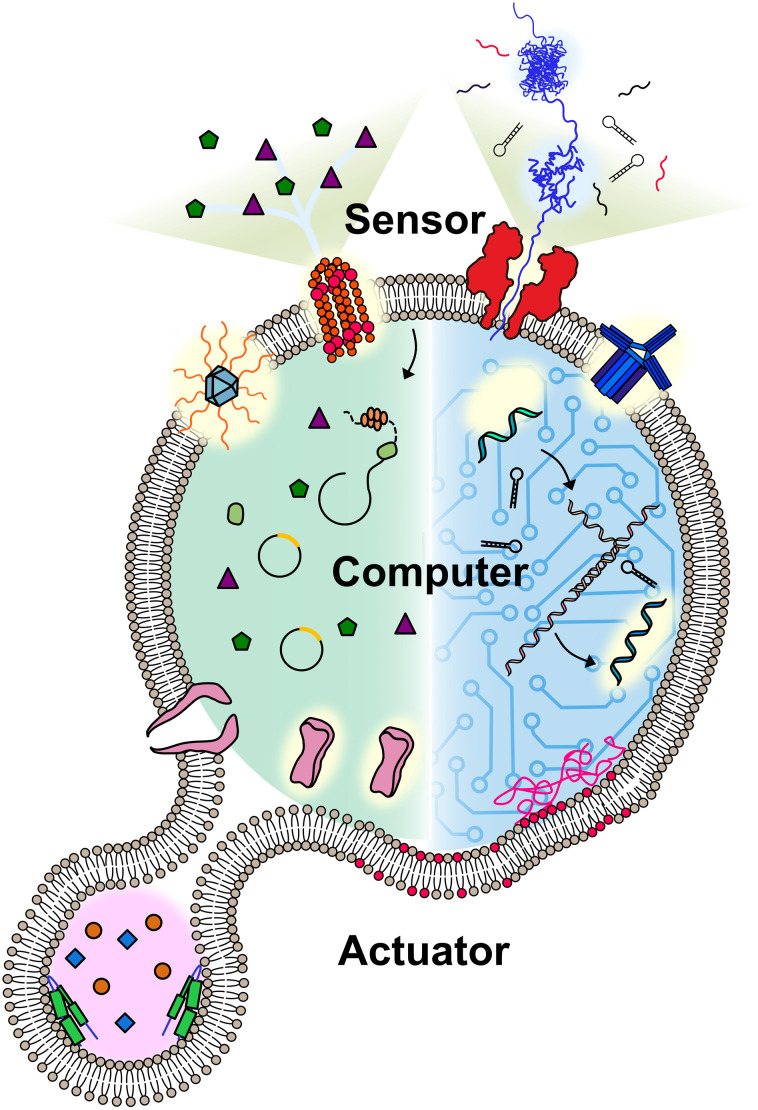
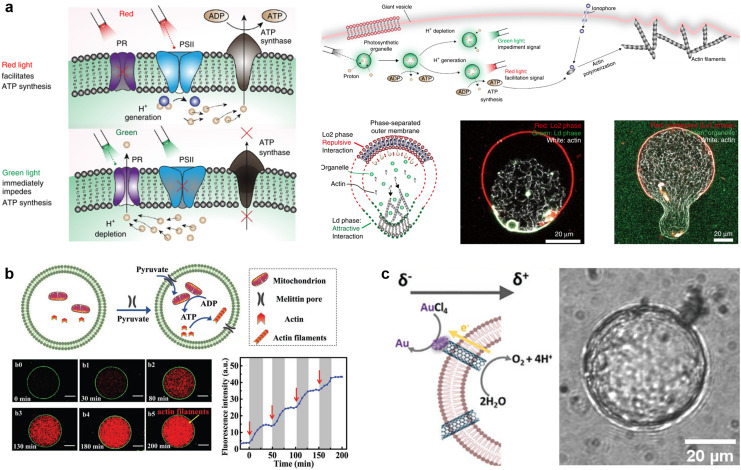
A molecular robot, which is a system comprised of one or more molecular machines and computers, can execute sophisticated tasks in many fields that span from nanomedicine to green nanotechnology. The core parts of molecular robots are fairly consistent from system to system and always include (i) a body to encapsulate molecular machines, (ii) sensors to capture signals, (iii) computers to make decisions, and (iv) actuators to perform tasks. This review aims to provide an overview of approaches and considerations to develop molecular robots. We first introduce the basic technologies required for constructing the core parts of molecular robots, describe the recent progress towards achieving higher functionality, and subsequently discuss the current challenges and outlook. We also highlight the applications of molecular robots in sensing biomarkers, signal communications with living cells, and conversion of energy. Although molecular robots are still in their infancy, they will unquestionably initiate massive change in biomedical and environmental technology in the not too distant future.
分子机器人是由一个或多个分子机器和计算机组成的系统,它可以执行从纳米医学到绿色纳米技术等多个领域的复杂任务。分子机器人的核心部件在不同系统中相当一致,总是包括(i)封装分子机器的主体,(ii)捕捉信号的传感器,(iii)做出决策的计算机,以及(iv)执行任务的执行器。本综述旨在概述开发分子机器人的方法和考虑因素。我们首先介绍构建分子机器人核心部件所需的基本技术,描述实现更高功能的最新进展,随后讨论当前的挑战和展望。我们还强调了分子机器人在生物标志物传感、与活细胞的信号通信以及能量转换方面的应用。尽管分子机器人仍处于起步阶段,但它们无疑将在不久的将来引发生物医学和环境技术的巨大变革。