Zhu Chunhao, Lan Xiaobing, Wei Zhiqiang, Yu Jianqiang, Zhang Jian
School of Pharmacy, Ningxia Medical University, Yinchuan 750004, China.
School of Basic Medical Science, Ningxia Medical University, Yinchuan 750004, China.
Acta Pharm Sin B. 2024 Jan;14(1):67-86. doi: 10.1016/j.apsb.2023.07.020. Epub 2023 Jul 21.
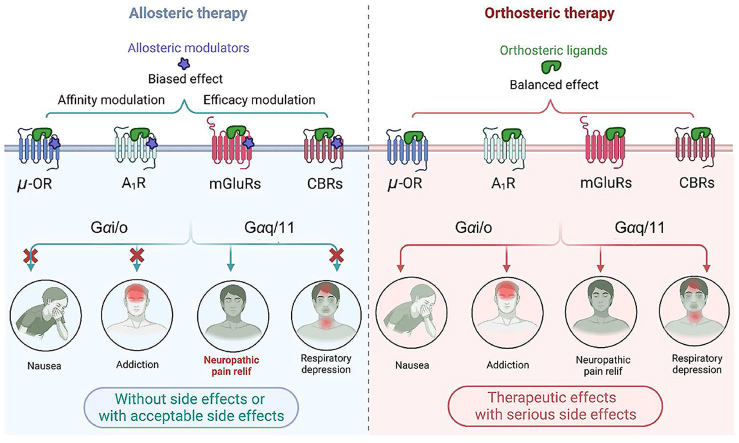
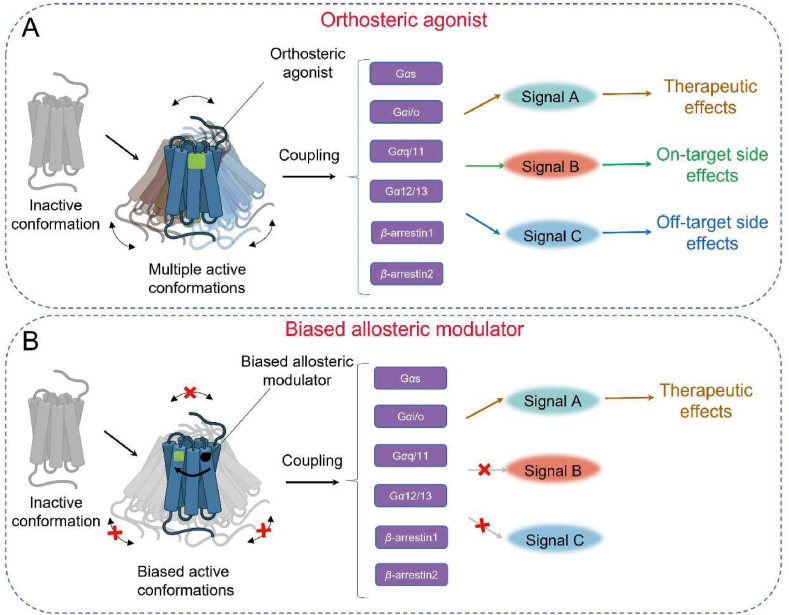
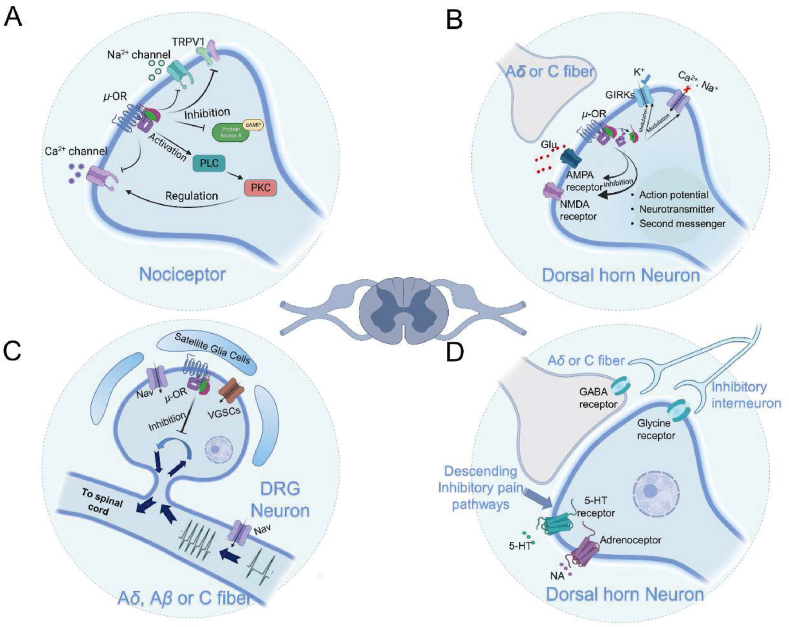
Neuropathic pain is a debilitating pathological condition that presents significant therapeutic challenges in clinical practice. Unfortunately, current pharmacological treatments for neuropathic pain lack clinical efficacy and often lead to harmful adverse reactions. As G protein-coupled receptors (GPCRs) are widely distributed throughout the body, including the pain transmission pathway and descending inhibition pathway, the development of novel neuropathic pain treatments based on GPCRs allosteric modulation theory is gaining momentum. Extensive research has shown that allosteric modulators targeting GPCRs on the pain pathway can effectively alleviate symptoms of neuropathic pain while reducing or eliminating adverse effects. This review aims to provide a comprehensive summary of the progress made in GPCRs allosteric modulators in the treatment of neuropathic pain, and discuss the potential benefits and adverse factors of this treatment. We will also concentrate on the development of biased agonists of GPCRs, and based on important examples of biased agonist development in recent years, we will describe universal strategies for designing structure-based biased agonists. It is foreseeable that, with the continuous improvement of GPCRs allosteric modulation and biased agonist theory, effective GPCRs allosteric drugs will eventually be available for the treatment of neuropathic pain with acceptable safety.
神经性疼痛是一种使人衰弱的病理状态,在临床实践中带来了重大的治疗挑战。不幸的是,目前用于治疗神经性疼痛的药物缺乏临床疗效,且常常导致有害的不良反应。由于G蛋白偶联受体(GPCRs)广泛分布于全身,包括疼痛传导通路和下行抑制通路,基于GPCRs变构调节理论开发新型神经性疼痛治疗方法的研究正在兴起。广泛的研究表明,针对疼痛通路中GPCRs的变构调节剂可以有效缓解神经性疼痛症状,同时减少或消除不良反应。本综述旨在全面总结GPCRs变构调节剂在治疗神经性疼痛方面取得的进展,并讨论这种治疗方法的潜在益处和不利因素。我们还将专注于GPCRs偏向激动剂的开发,并基于近年来偏向激动剂开发的重要实例,描述基于结构设计偏向激动剂的通用策略。可以预见,随着GPCRs变构调节和偏向激动剂理论的不断完善,有效的GPCRs变构药物最终将可用于治疗神经性疼痛,且安全性可接受。