Richter Caroline G, Li Celine Mylx, Turnbull Adam, Haft Stephanie L, Schneider Deborah, Luo Jie, Lima Denise Pinheiro, Lin Feng Vankee, Davidson Richard J, Hoeft Fumiko
Department of Psychology, University of Alabama at Birmingham, Birmingham, AL, United States.
Department of Psychological Sciences, University of Connecticut, Storrs, CT, United States.
Front Psychol. 2024 Jan 5;14:1328523. doi: 10.3389/fpsyg.2023.1328523. eCollection 2023.
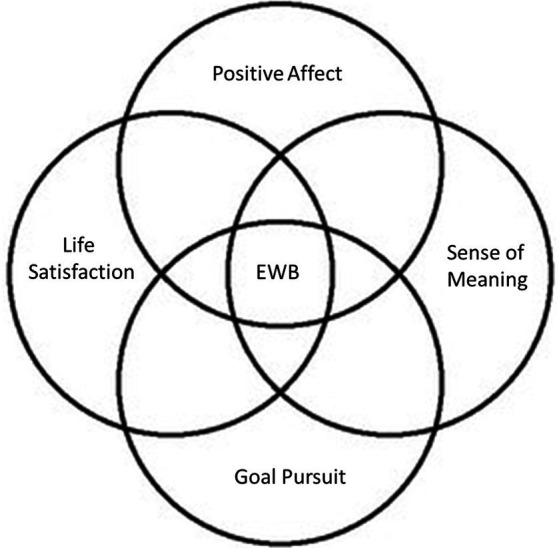
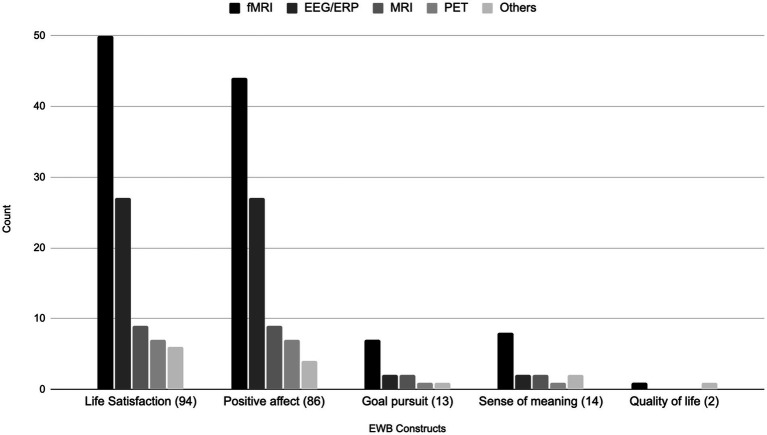
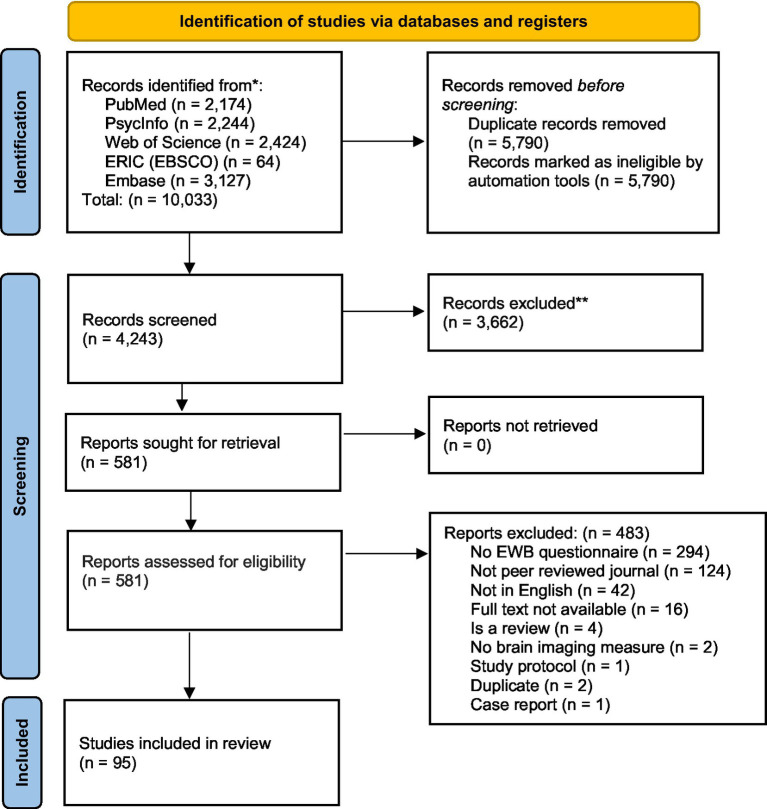
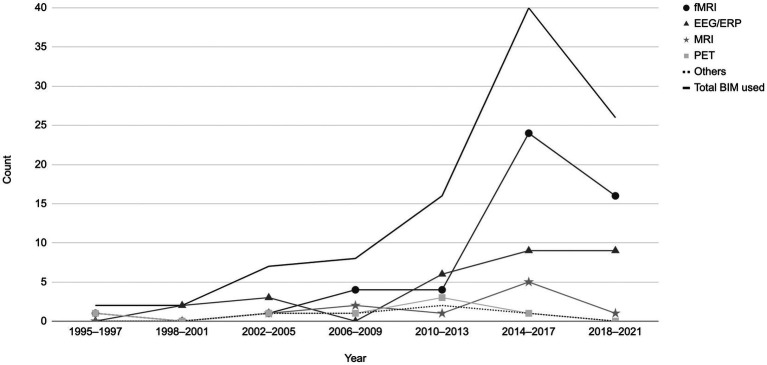
This scoping review provides an overview of previous empirical studies that used brain imaging techniques to investigate the neural correlates of emotional well-being (EWB). We compiled evidence on this topic into one accessible and usable document as a foundation for future research into the relationship between EWB and the brain. PRISMA 2020 guidelines were followed. We located relevant articles by searching five electronic databases with 95 studies meeting our inclusion criteria. We explored EWB measures, brain imaging modalities, research designs, populations studied, and approaches that are currently in use to characterize and understand EWB across the literature. Of the key concepts related to EWB, the vast majority of studies investigated positive affect and life satisfaction, followed by sense of meaning, goal pursuit, and quality of life. The majority of studies used functional MRI, followed by EEG and event-related potential-based EEG to study the neural basis of EWB (predominantly experienced affect, affective perception, reward, and emotion regulation). It is notable that positive affect and life satisfaction have been studied significantly more often than the other three aspects of EWB (i.e., sense of meaning, goal pursuit, and quality of life). Our findings suggest that future studies should investigate EWB in more diverse samples, especially in children, individuals with clinical disorders, and individuals from various geographic locations. Future directions and theoretical implications are discussed, including the need for more longitudinal studies with ecologically valid measures that incorporate multi-level approaches allowing researchers to better investigate and evaluate the relationships among behavioral, environmental, and neural factors.
本综述概述了以往使用脑成像技术研究情绪幸福感(EWB)神经关联的实证研究。我们将关于该主题的证据汇编成一份易于获取和使用的文档,作为未来EWB与大脑关系研究的基础。遵循PRISMA 2020指南。我们通过搜索五个电子数据库找到了相关文章,有95项研究符合我们的纳入标准。我们探讨了EWB的测量方法、脑成像模式、研究设计、研究人群以及目前用于在文献中表征和理解EWB的方法。在与EWB相关的关键概念中,绝大多数研究调查了积极情绪和生活满意度,其次是意义感、目标追求和生活质量。大多数研究使用功能磁共振成像,其次是脑电图和基于事件相关电位的脑电图来研究EWB的神经基础(主要是体验到的情绪、情感感知、奖励和情绪调节)。值得注意的是,积极情绪和生活满意度的研究明显多于EWB的其他三个方面(即意义感、目标追求和生活质量)。我们的研究结果表明,未来的研究应该在更多样化的样本中调查EWB,特别是在儿童、患有临床疾病的个体以及来自不同地理位置的个体中。讨论了未来的方向和理论意义,包括需要进行更多采用生态有效测量方法的纵向研究,这些研究应采用多层次方法,使研究人员能够更好地研究和评估行为、环境和神经因素之间的关系。