Sobel Jack D, Vempati Yogitha Sai
C.S. Mott Center for Growth and Human Development, 275 E. Hancock St, Detroit, MI 48201, USA.
Department of Internal Medicine, Wayne State University School of Medicine, Detroit, MI 48201, USA.
Microorganisms. 2024 Jan 5;12(1):108. doi: 10.3390/microorganisms12010108.
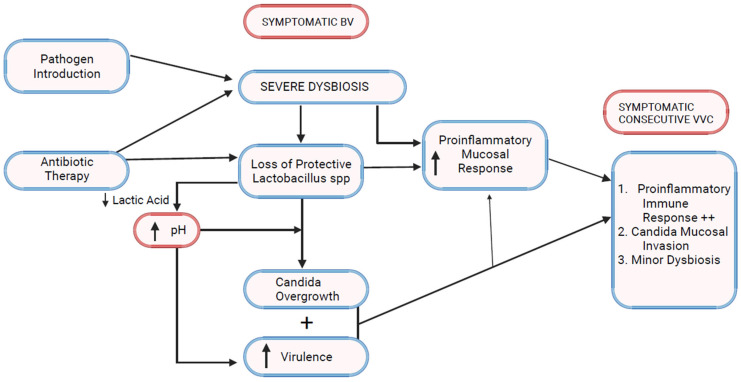
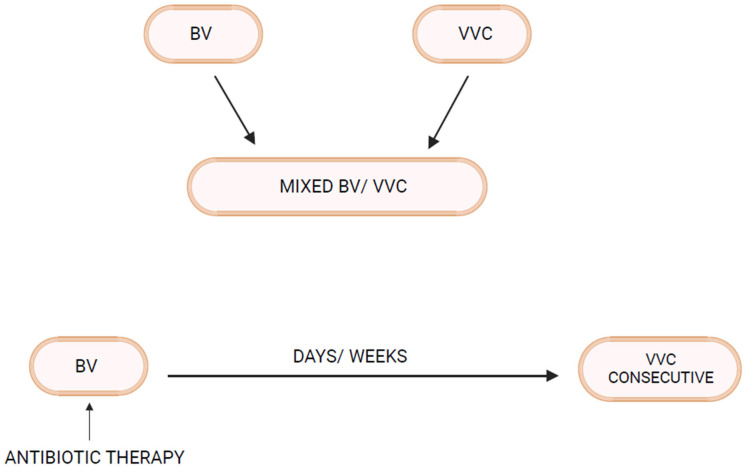
Among the infectious causes of vulvovaginal symptoms, bacterial vaginosis (BV) and vulvovaginal candidiasis (VVC) dominate. Apart from infrequent mixed infections, both are considered independent and caused by unrelated pathogenic mechanisms. Clinical experience, however, is strongly suggestive that in some populations these infections are linked with recurrent BV (RBV) serving as the dominant etiopathogenic trigger for development of recurrent VVC (RVVC) with profound clinical and therapeutic consequences. The biologic basis for this critical interrelationship is discussed and suggests that as a consequence of BV dysbiosis, and not necessarily because of antibiotics prescribed, immune defenses are compromised, neutralizing vaginal yeast tolerance. The consequent BV-induced vaginal proinflammatory environment predisposes to mixed infection or consecutive episodes of post-treatment VVC. Recurrent BV and repeated antimicrobial drug exposure also predispose to acquired fluconazole resistance in isolates, contributing to refractory vulvovaginal candidiasis.
在外阴阴道症状的感染性病因中,细菌性阴道病(BV)和外阴阴道念珠菌病(VVC)最为常见。除了罕见的混合感染外,这两种疾病都被认为是独立的,由不相关的致病机制引起。然而,临床经验强烈表明,在某些人群中,这些感染与复发性BV(RBV)有关,RBV是复发性VVC(RVVC)发生的主要病因触发因素,具有深远的临床和治疗后果。本文讨论了这种关键相互关系的生物学基础,并表明由于BV生态失调,而不一定是因为使用了抗生素,免疫防御功能受到损害,从而中和了阴道对酵母菌的耐受性。由此产生的BV诱导的阴道促炎环境易引发混合感染或治疗后VVC的连续发作。复发性BV和反复接触抗菌药物也易导致分离株获得氟康唑耐药性,从而导致难治性外阴阴道念珠菌病。