Department of Obstetrics and Gynecology, Peking University First Hospital, Beijing, China.
Front Cell Infect Microbiol. 2022 Mar 8;12:860589. doi: 10.3389/fcimb.2022.860589. eCollection 2022.
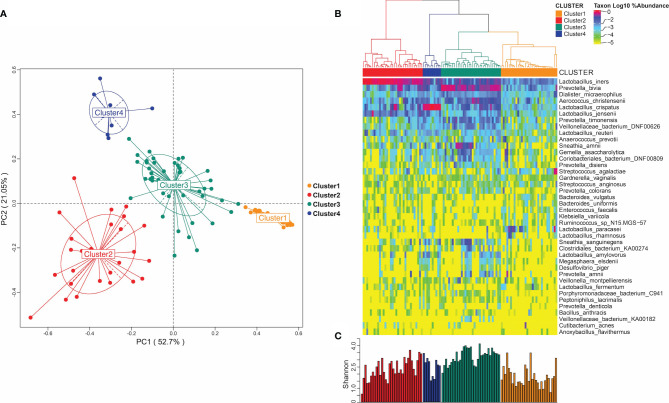
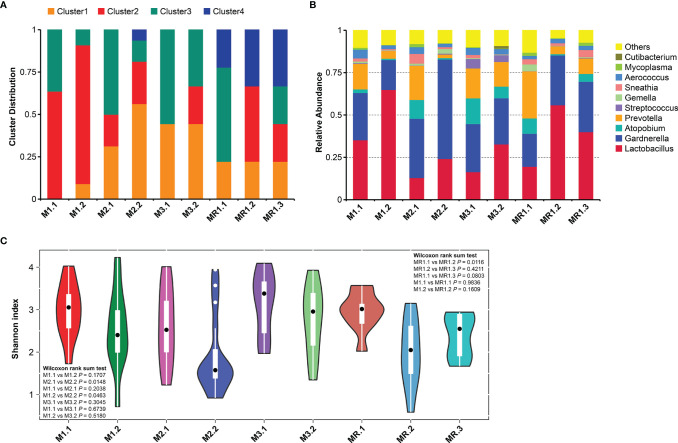
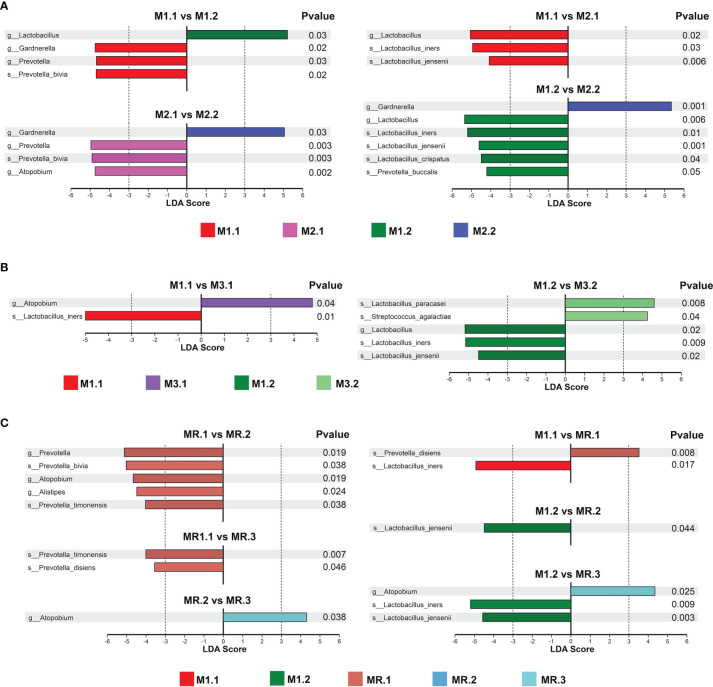
Mixed vaginitis is the result of the simultaneous presence of different pathogenic processes mediated by at least two types of vaginal pathogens. Among the various types of mixed vaginitis presentations, bacterial vaginosis (BV) plus vulvovaginal candidiasis (VVC) presents to be the most prevalent form. Mixed vaginitis affects the health of women of all ages worldwide. However, few studies have focused on clinical manifestations, pathogenesis, diagnostic criteria, or therapy of mixed vaginitis. We recruited 48 symptomatic patients with clinical diagnoses of VVC complicated with BV, they were treated with oral metronidazole combined with local clotrimazole and followed to assess the drug efficacy and vaginal microbiome alterations before and after treatment. The vaginal microbiome in BV+VVC mixed vaginitis patients was altered significantly after the combined drug treatment within a unique form different from a simple overlay mode of BV and VVC, the key bacteria including and , . The combined drug therapy for the mixed vaginitis in this study was effective and enhanced treatment for BV may be more favorable because of more difficulty in dealing with BV according to the treatment outcome. The abundance of in patients with mixed vaginitis affects the recovery of the vaginal microbiome as well as the prognosis, and the abundance should be actively restored. This is the first study to investigate the composition, diversity, and other characteristics of the vaginal microbiome in patients with BV+VVC mixed vaginitis before and after drug treatment, our results provide clues to improving the cure rate and reducing recurrences.
混合性阴道炎是由至少两种类型的阴道病原体介导的不同致病过程同时存在的结果。在各种混合性阴道炎表现中,细菌性阴道炎(BV)加外阴阴道念珠菌病(VVC)的表现最为常见。混合性阴道炎影响着全世界所有年龄段女性的健康。然而,很少有研究关注混合性阴道炎的临床表现、发病机制、诊断标准或治疗方法。我们招募了 48 名有临床诊断为 VVC 合并 BV 的症状患者,他们接受口服甲硝唑联合局部克霉唑治疗,并在治疗前后评估药物疗效和阴道微生物组变化。BV+VVC 混合性阴道炎患者的阴道微生物组在联合药物治疗后发生了显著变化,形成了一种独特的形式,不同于 BV 和 VVC 的简单叠加模式,关键细菌包括 和 。本研究中联合药物治疗混合性阴道炎有效,由于根据治疗结果,BV 更难处理,因此增强对 BV 的治疗可能更为有利。混合性阴道炎患者中 的丰度影响阴道微生物组的恢复和预后,应积极恢复其丰度。这是第一项研究,调查了 BV+VVC 混合性阴道炎患者在药物治疗前后阴道微生物组的组成、多样性和其他特征,我们的研究结果为提高治愈率和降低复发率提供了线索。