Department of Public Health, Environments and Society, London School of Hygiene and Tropical Medicine, 15-17 Tavistock Place, London, WC1H 9SH, UK.
Centre for Academic Primary Care, Bristol Medical School, University of Bristol, Canynge Hall, Bristol, BS8 2PS, UK.
Harm Reduct J. 2024 Jan 23;21(1):19. doi: 10.1186/s12954-024-00938-7.
Over 180,000 people use crack cocaine in England, yet provision of smoking equipment to support safer crack use is prohibited under UK law. Pipes used for crack cocaine smoking are often homemade and/or in short supply, leading to pipe sharing and injuries from use of unsafe materials. This increases risk of viral infection and respiratory harm among a marginalised underserved population. International evaluations suggest crack pipe supply leads to sustained reductions in pipe sharing and use of homemade equipment; increased health risk awareness; improved service access; reduction in injecting and crack-related health problems. In this paper, we introduce the protocol for the NIHR-funded SIPP (Safe inhalation pipe provision) project and discuss implications for impact.
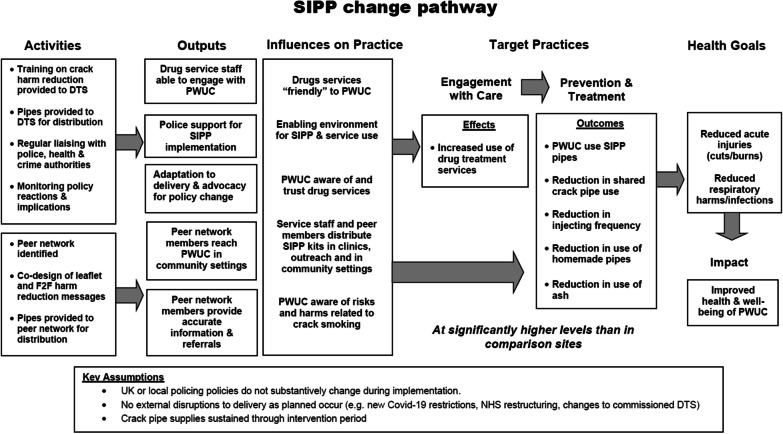
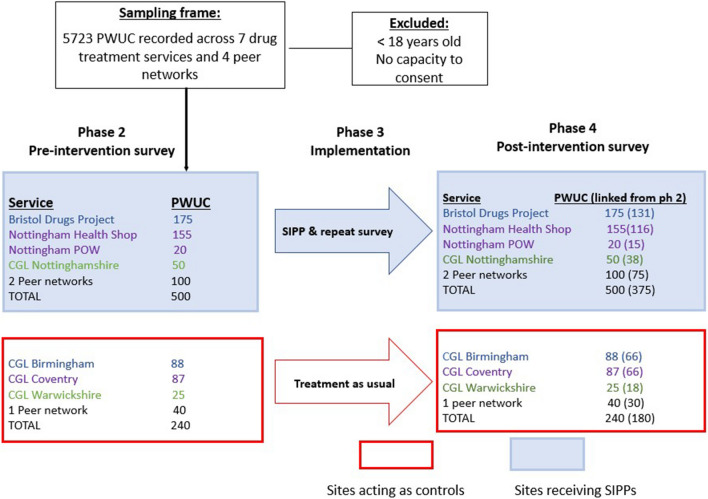
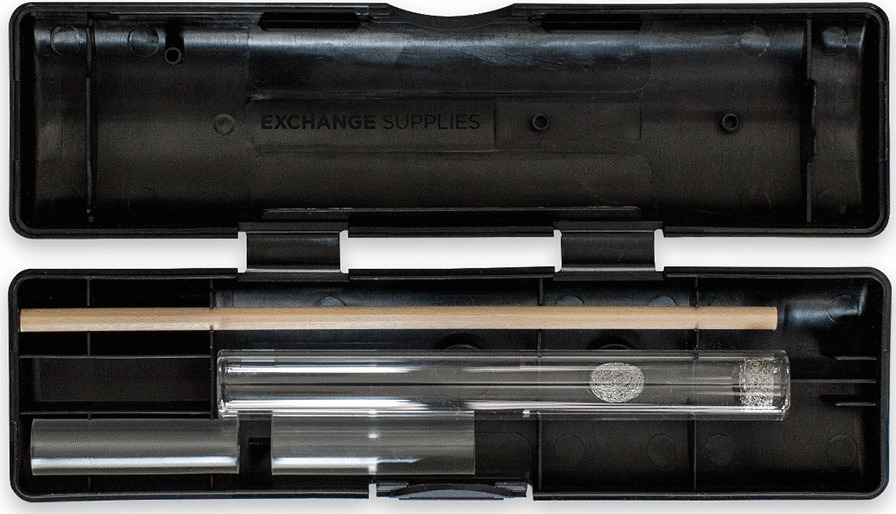
The SIPP study will develop, implement and evaluate a crack smoking equipment and training intervention to be distributed through peer networks and specialist drug services in England. Study components comprise: (1) peer-network capacity building and co-production; (2) a pre- and post-intervention survey at intervention and non-equivalent control sites; (3) a mixed-method process evaluation; and (4) an economic evaluation. Participant eligibility criteria are use of crack within the past 28 days, with a survey sample of ~ 740 for each impact evaluation survey point and ~ 40 for qualitative process evaluation interviews. Our primary outcome measure is pipe sharing within the past 28 days, with secondary outcomes pertaining to use of homemade pipes, service engagement, injecting practice and acute health harms.
SIPP aims to reduce crack use risk practices and associated health harms; including through increasing crack harm reduction awareness among service providers and peers. Implementation has only been possible with local police approvals. Our goal is to generate an evidence base to inform review of the legislation prohibiting crack pipe supply in the UK. This holds potential to transform harm reduction service provision and engagement nationally.
People who smoke crack cocaine in England currently have little reason to engage with harm reduction and drug services. Little is known about this growing population. This study will provide insight into population characteristics, unmet need and the case for legislative reform.
ISRCTN12541454 https://doi.org/10.1186/ISRCTN12541454.
在英国,超过 18 万人使用快克可卡因,但英国法律禁止提供吸烟设备以支持更安全的快克使用。用于吸食快克可卡因的烟斗通常是自制的,而且供应不足,导致烟斗共享和使用不安全材料造成的伤害。这增加了边缘服务不足人群中病毒感染和呼吸道伤害的风险。国际评估表明,提供快克烟斗供应可导致烟斗共享和使用自制设备持续减少;提高健康风险意识;改善服务获取;减少注射和与快克相关的健康问题。在本文中,我们介绍了由英国国家健康研究所资助的 SIPP(安全吸入管供应)项目的方案,并讨论了其影响。
SIPP 研究将在英格兰通过同伴网络和专门的毒品服务机构开发、实施和评估一种快克吸烟设备和培训干预措施。研究内容包括:(1)同伴网络能力建设和共同制定方案;(2)在干预和非等效对照组进行干预前后调查;(3)混合方法的过程评估;(4)经济评估。参与者的入选标准是在过去 28 天内使用过快克可卡因,每个影响评估调查点的调查样本约为 740 人,定性过程评估访谈的样本约为 40 人。我们的主要结果测量指标是过去 28 天内的烟斗共享,次要结果包括使用自制烟斗、服务参与、注射行为和急性健康危害。
SIPP 的目标是减少快克使用风险行为和相关健康危害;包括通过提高服务提供者和同伴对快克减少危害的认识。实施工作仅在获得当地警方批准的情况下才得以进行。我们的目标是为审查英国禁止供应快克烟斗的立法提供证据基础。这有可能改变全国的减少伤害服务提供和参与。
在英格兰吸食快克可卡因的人目前几乎没有理由参与减少伤害和毒品服务。对这个不断增长的群体知之甚少。这项研究将提供有关人群特征、未满足的需求和立法改革的案例。
ISRCTN12541454 https://doi.org/10.1186/ISRCTN12541454。