Schaffler Benjamin C, Raymond Hayley E, Black Collin S, Habibi Akram A, Ehlers Mallory, Duncan Stephen T, Schwarzkopf Ran
New York University Langone Orthopedic Hospital, New York, NY, USA.
University of Kentucky, Department of Orthopaedic Surgery, Lexington, KY, USA.
Adv Orthop. 2024 Jan 16;2024:4125965. doi: 10.1155/2024/4125965. eCollection 2024.
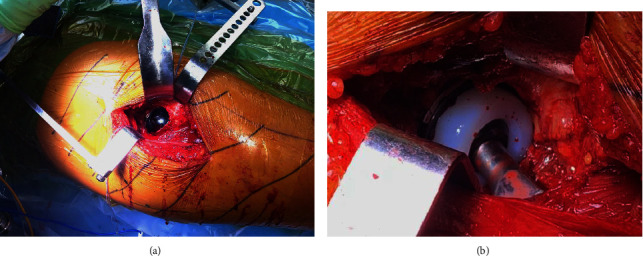
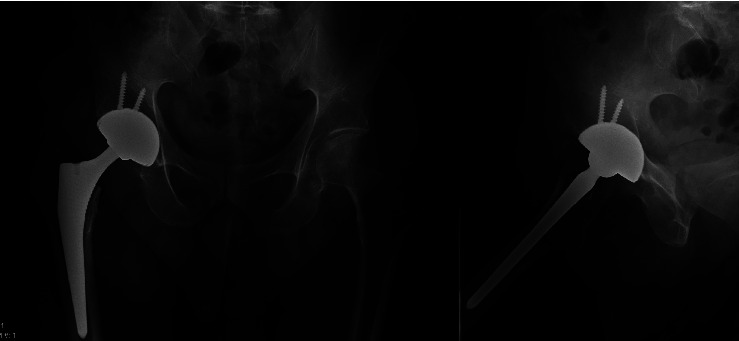
Dual-mobility (DM) implants for total hip arthroplasty (THA) have gained popularity due to their potential to reduce hip instability and dislocation events that may lead to revision surgery. These implants consist of a femoral head articulated within a polyethylene liner, which articulates within an outer acetabular shell, creating a dual-bearing surface. Our study aimed to report our observations on the survivorship of a novel DM implant for primary total hip arthroplasty at two years.
We conducted a retrospective, multicenter study to assess the clinical outcomes of patients undergoing a THA with a novel DM implant (OR3O acetabular system™, Smith & Nephew, Inc., Memphis, TN) from January 2020 to September 2021. Patient demographics, surgical information, and survivorship data were collected from medical records for patients with a minimum of two years of follow-up. Primary outcomes included overall implant survivorship at two years as well as aseptic survivorship, revision rates of the DM acetabular shell, and average time to revision. Patient-reported outcomes were collected in the form of HOOS JR.
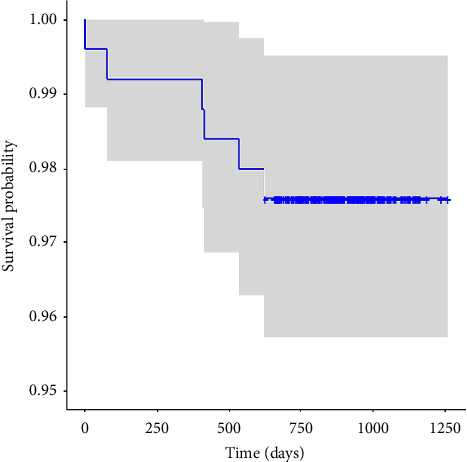
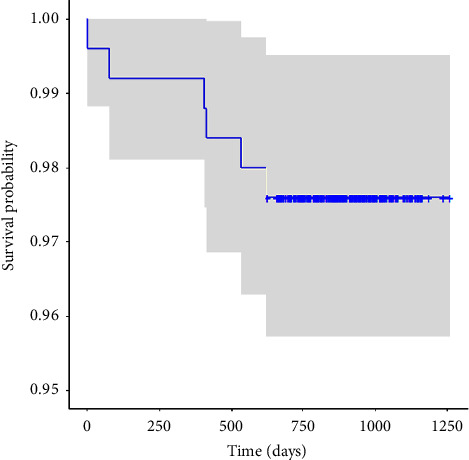
A total of 250 hips in 245 patients had a minimum two-year follow-up. Primary osteoarthritis (80%) was the most common indication for index THA. The average aseptic survivorship of the DM acetabular components at two years for the cohort was 98.4% and survivorship of the acetabular implants overall was 97.6%. There were a total of four (1.6%) aseptic revisions of the DM acetabular component. Reasons for aseptic acetabular revision included one case of instability, one intraprosthetic dislocation, one periprosthetic acetabular fracture, and one malpositioned acetabular cup resulting in impingement. The mean time of follow-up was 893.9 days. Eighty-seven patients had preoperative and two-year HOOS JR available. HOOS JR improved by an average of 38.5 points.
This novel DM acetabular implant demonstrates excellent survivorship at two years follow-up with low rates of instability and intraprosthetic dislocation and no episodes of metal-on-metal corrosion. Use of the DM implant demonstrated clinically relevant improvements in patient-reported outcomes at two years.
用于全髋关节置换术(THA)的双动(DM)植入物因其在降低可能导致翻修手术的髋关节不稳定和脱位事件方面的潜力而受到欢迎。这些植入物由一个在聚乙烯衬垫内活动的股骨头组成,该衬垫在一个外侧髋臼壳内活动,形成一个双承重表面。我们的研究旨在报告我们对一种用于初次全髋关节置换术的新型DM植入物在两年时的生存率的观察结果。
我们进行了一项回顾性多中心研究,以评估2020年1月至2021年9月期间接受使用新型DM植入物(OR3O髋臼系统™,史赛克公司,田纳西州孟菲斯)的THA手术的患者的临床结果。从至少有两年随访的患者的病历中收集患者人口统计学、手术信息和生存数据。主要结果包括两年时的总体植入物生存率以及无菌生存率、DM髋臼壳的翻修率和平均翻修时间。以HOOS JR的形式收集患者报告的结果。
245例患者的250个髋关节至少有两年的随访。原发性骨关节炎(80%)是初次THA最常见的适应症。该队列中DM髋臼组件在两年时的平均无菌生存率为98.4%,髋臼植入物的总体生存率为97.6%。DM髋臼组件共有4例(1.6%)无菌翻修。无菌髋臼翻修的原因包括1例不稳定、1例假体内部脱位(译者注:此处原文intraprosthetic dislocation翻译可能不太准确,结合语境推测可能是这个意思)、1例假体周围髋臼骨折和1例髋臼杯位置不当导致撞击。平均随访时间为893.9天。87例患者有术前和两年时的HOOS JR数据。HOOS JR平均提高了38.5分。
这种新型DM髋臼植入物在两年随访时显示出优异的生存率,不稳定和假体内部脱位发生率低,且没有金属对金属腐蚀的情况。使用DM植入物在两年时患者报告的结果方面显示出与临床相关的改善。