Department of Medicine, Division of Cardiology, Department of Microbiology, Immunology and Molecular Genetics, and Department of Human Genetics, University of California, Los Angeles (Y.-C.W., C.P., Z.Z., A.J.L.).
Cardiometabolic Medicine, School of Medical Sciences, Faculty of Medicine and Health, The University of Sydney, New South Wales, Australia (Y.C.K., J.F.O.).
Circ Res. 2024 Feb 16;134(4):371-389. doi: 10.1161/CIRCRESAHA.123.322381. Epub 2024 Jan 24.
Heart failure with preserved ejection fraction (HFpEF) is a common but poorly understood form of heart failure, characterized by impaired diastolic function. It is highly heterogeneous with multiple comorbidities, including obesity and diabetes, making human studies difficult.
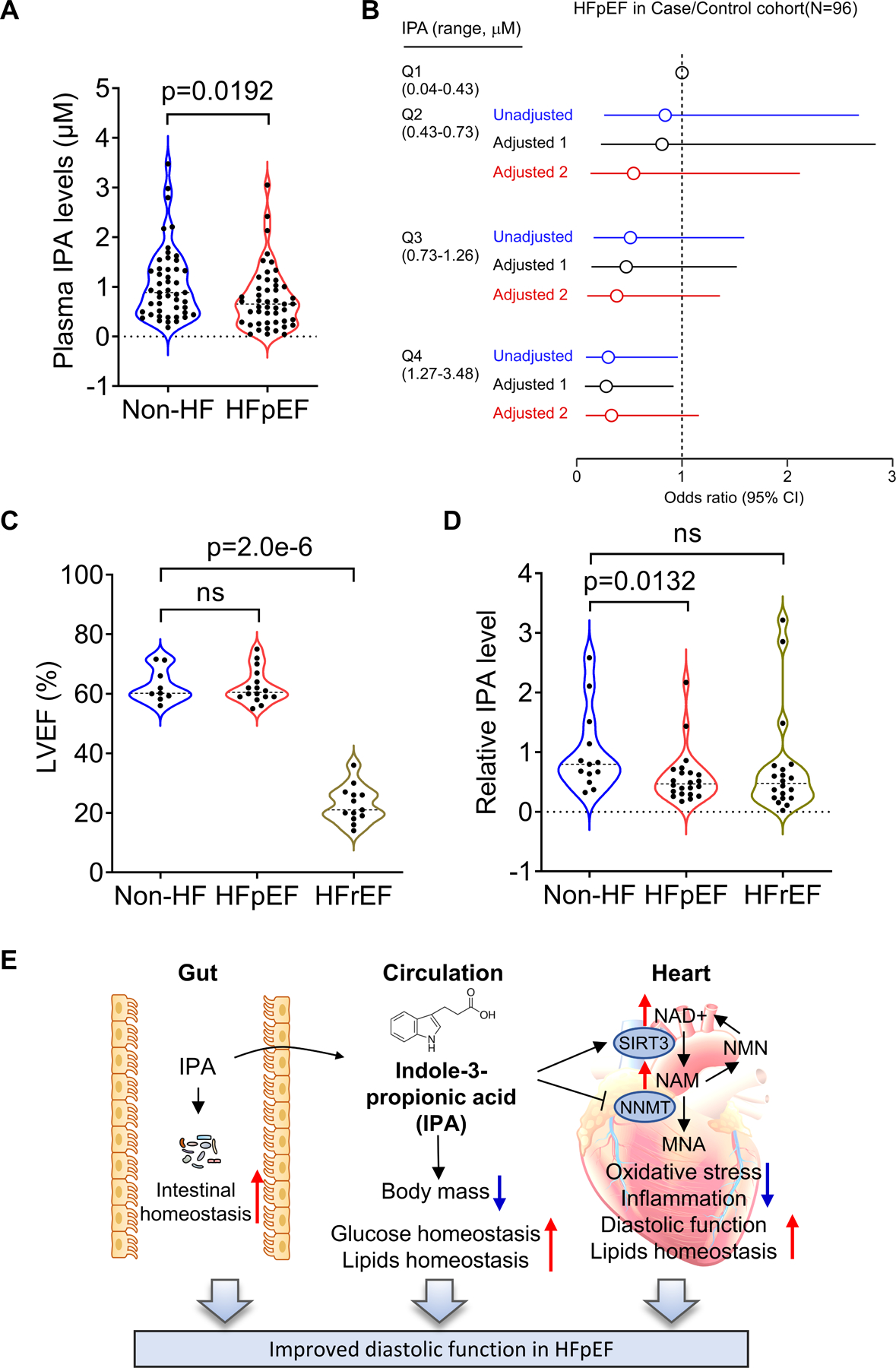
Metabolomic analyses in a mouse model of HFpEF showed that levels of indole-3-propionic acid (IPA), a metabolite produced by gut bacteria from tryptophan, were reduced in the plasma and heart tissue of HFpEF mice as compared with controls. We then examined the role of IPA in mouse models of HFpEF as well as 2 human HFpEF cohorts.
The protective role and therapeutic effects of IPA were confirmed in mouse models of HFpEF using IPA dietary supplementation. IPA attenuated diastolic dysfunction, metabolic remodeling, oxidative stress, inflammation, gut microbiota dysbiosis, and intestinal epithelial barrier damage. In the heart, IPA suppressed the expression of NNMT (nicotinamide N-methyl transferase), restored nicotinamide, NAD/NADH, and SIRT3 (sirtuin 3) levels. IPA mediates the protective effects on diastolic dysfunction, at least in part, by promoting the expression of SIRT3. SIRT3 regulation was mediated by IPA binding to the aryl hydrocarbon receptor, as knockdown diminished the effects of IPA on diastolic dysfunction in vivo. The role of the nicotinamide adenine dinucleotide circuit in HFpEF was further confirmed by nicotinamide supplementation, knockdown, and overexpression in vivo. IPA levels were significantly reduced in patients with HFpEF in 2 independent human cohorts, consistent with a protective function in humans, as well as mice.
Our findings reveal that IPA protects against diastolic dysfunction in HFpEF by enhancing the nicotinamide adenine dinucleotide salvage pathway, suggesting the possibility of therapeutic management by either altering the gut microbiome composition or supplementing the diet with IPA.
射血分数保留型心力衰竭(HFpEF)是一种常见但尚未被充分认识的心力衰竭形式,其特征为舒张功能障碍。HFpEF 高度异质性,合并多种合并症,包括肥胖症和糖尿病,这使得人类研究变得困难。
HFpEF 小鼠模型中的代谢组学分析表明,色氨酸产生的肠道细菌代谢产物吲哚-3-丙酸(IPA)的水平在 HFpEF 小鼠的血浆和心脏组织中较对照组降低。随后,我们在 HFpEF 小鼠模型以及 2 个人类 HFpEF 队列中研究了 IPA 的作用。
使用 IPA 饮食补充,在 HFpEF 小鼠模型中证实了 IPA 的保护作用和治疗效果。IPA 减轻了舒张功能障碍、代谢重塑、氧化应激、炎症、肠道微生物失调和肠上皮屏障损伤。在心脏中,IPA 抑制 NNMT(烟酰胺 N-甲基转移酶)的表达,恢复烟酰胺、NAD/NADH 和 SIRT3(沉默调节蛋白 3)的水平。IPA 通过促进 SIRT3 的表达介导对舒张功能障碍的保护作用,至少部分如此。IPA 调节 SIRT3 的作用是通过与芳香烃受体结合介导的,因为 SIRT3 敲低减弱了 IPA 对体内舒张功能障碍的作用。通过体内补充烟酰胺、 SIRT3 敲低和 SIRT3 过表达进一步证实了烟酰胺腺嘌呤二核苷酸循环在 HFpEF 中的作用。在 2 个独立的人类队列中,HFpEF 患者的 IPA 水平显著降低,这与 IPA 在人类和小鼠中的保护作用一致。
我们的发现表明,IPA 通过增强烟酰胺腺嘌呤二核苷酸补救途径来防止 HFpEF 中的舒张功能障碍,这提示通过改变肠道微生物组组成或用 IPA 饮食补充来进行治疗管理的可能性。