Yoshizaki Tomokazu, Kondo Satoru, Dochi Hirotomo, Kobayashi Eiji, Mizokami Harue, Komura Shigetaka, Endo Kazuhira
Division of Otolaryngology-Head and Neck Surgery, Graduate School of Medical Science, Kanazawa University, 13-1 Takaramachi, Kanazawa 920-8641, Japan.
Microorganisms. 2023 Dec 20;12(1):14. doi: 10.3390/microorganisms12010014.
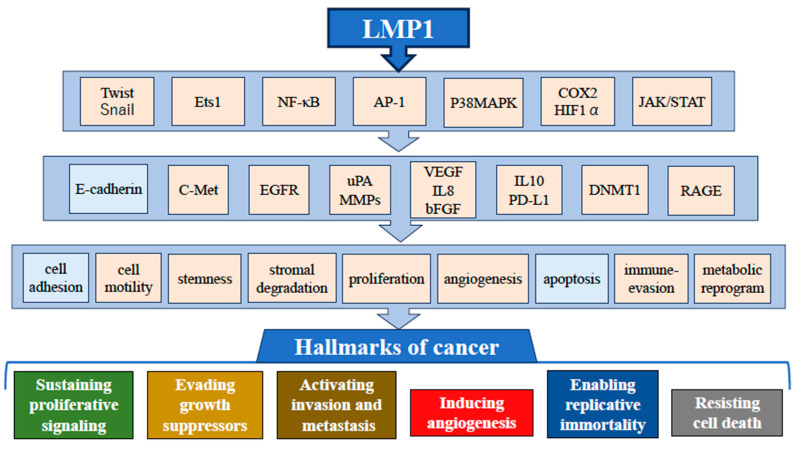
Reports about the oncogenic mechanisms underlying nasopharyngeal carcinoma (NPC) have been accumulating since the discovery of Epstein-Barr virus (EBV) in NPC cells. EBV is the primary causative agent of NPC. EBV-host and tumor-immune system interactions underlie the unique representative pathology of NPC, which is an undifferentiated cancer cell with extensive lymphocyte infiltration. Recent advances in the understanding of immune evasion and checkpoints have changed the treatment of NPC in clinical settings. The main EBV genes involved in NPC are LMP1, which is the primary EBV oncogene, and BZLF1, which induces the lytic phase of EBV. These two multifunctional genes affect host cell behavior, including the tumor-immune microenvironment and EBV behavior. Latent infections, elevated concentrations of the anti-EBV antibody and plasma EBV DNA have been used as biomarkers of EBV-associated NPC. The massive infiltration of lymphocytes in the stroma suggests the immunogenic characteristics of NPC as a virus-infected tumor and, at the same time, also indicates the presence of a sophisticated immunosuppressive system within NPC tumors. In fact, immune checkpoint inhibitors have shown promise in improving the prognosis of NPC patients with recurrent and metastatic disease. However, patients with advanced NPC still require invasive treatments. Therefore, there is a pressing need to develop an effective screening system for early-stage detection of NPC in patients. Various modalities, such as nasopharyngeal cytology, cell-free DNA methylation, and deep learning-assisted nasopharyngeal endoscopy for screening and diagnosis, have been introduced. Each modality has its advantages and disadvantages. A reciprocal combination of these modalities will improve screening and early diagnosis of NPC.
自鼻咽癌(NPC)细胞中发现爱泼斯坦-巴尔病毒(EBV)以来,关于NPC致癌机制的报道不断积累。EBV是NPC的主要致病因子。EBV与宿主以及肿瘤-免疫系统的相互作用是NPC独特典型病理的基础,NPC是一种具有广泛淋巴细胞浸润的未分化癌细胞。对免疫逃逸和检查点认识的最新进展改变了NPC的临床治疗方式。参与NPC的主要EBV基因是LMP1(主要的EBV癌基因)和BZLF1(诱导EBV裂解期)。这两个多功能基因影响宿主细胞行为,包括肿瘤免疫微环境和EBV行为。潜伏感染、抗EBV抗体浓度升高和血浆EBV DNA已被用作EBV相关NPC的生物标志物。基质中淋巴细胞的大量浸润表明NPC作为病毒感染肿瘤具有免疫原性特征,同时也表明NPC肿瘤内存在复杂的免疫抑制系统。事实上,免疫检查点抑制剂已显示出改善复发和转移性疾病NPC患者预后的前景。然而,晚期NPC患者仍需要侵入性治疗。因此,迫切需要开发一种有效的筛查系统,用于早期检测NPC患者。已经引入了各种筛查和诊断方式,如鼻咽细胞学检查、游离DNA甲基化以及深度学习辅助鼻咽内镜检查。每种方式都有其优缺点。这些方式的相互结合将改善NPC的筛查和早期诊断。