
肝脏组织的宏基因组学研究在蝙蝠中鉴定出至少两个类全病毒属的病毒。
Metagenomic of Liver Tissue Identified at Least Two Genera of Totivirus-like Viruses in Bats.
作者信息
Couto Roseane da Silva, Ramos Endrya do Socorro Foro, Abreu Wandercleyson Uchôa, Rodrigues Luis Reginaldo Ribeiro, Marinho Luis Fernando, Morais Vanessa Dos Santos, Villanova Fabiola, Pandey Ramendra Pati, Deng Xutao, Delwart Eric, Costa Antonio Charlys da, Leal Elcio
机构信息
Laboratório de Diversidade Viral, Instituto de Ciências Biológicas, Universidade Federal do Pará, Belem 66075-000, PA, Brazil.
Programa de Pos-Graduação REDE Bionorte, Polo Pará, Universidade Federal do Oeste do Pará, Santarém 68040-255, PA, Brazil.
出版信息
Microorganisms. 2024 Jan 19;12(1):206. doi: 10.3390/microorganisms12010206.
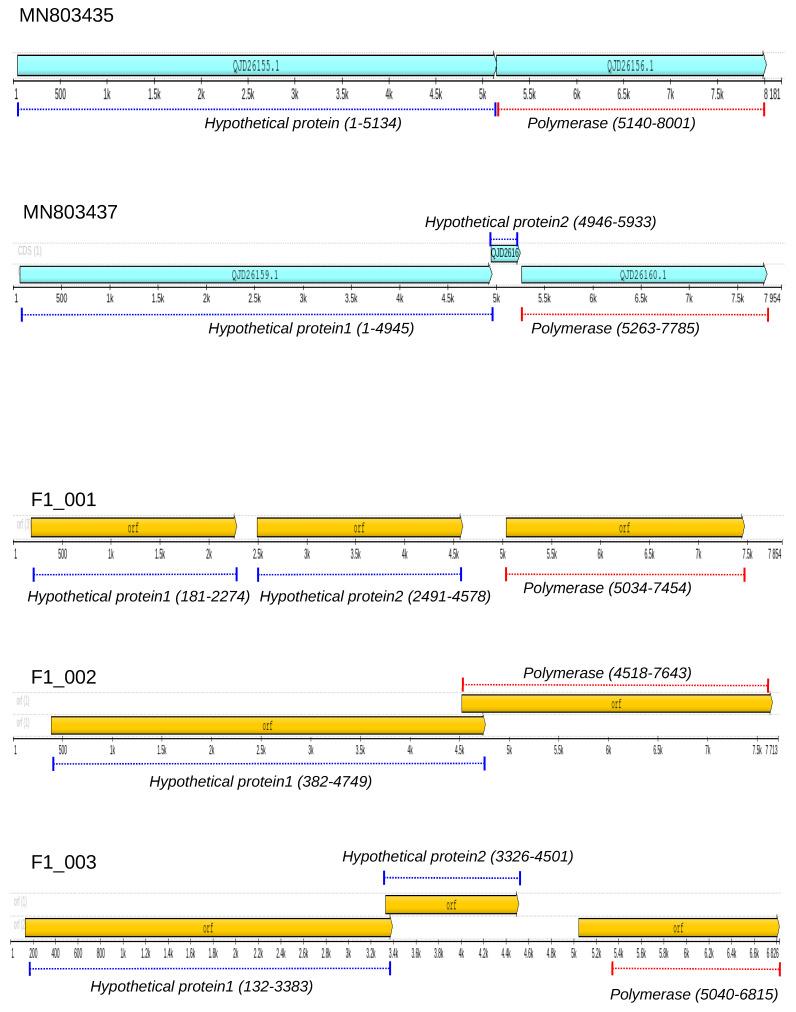
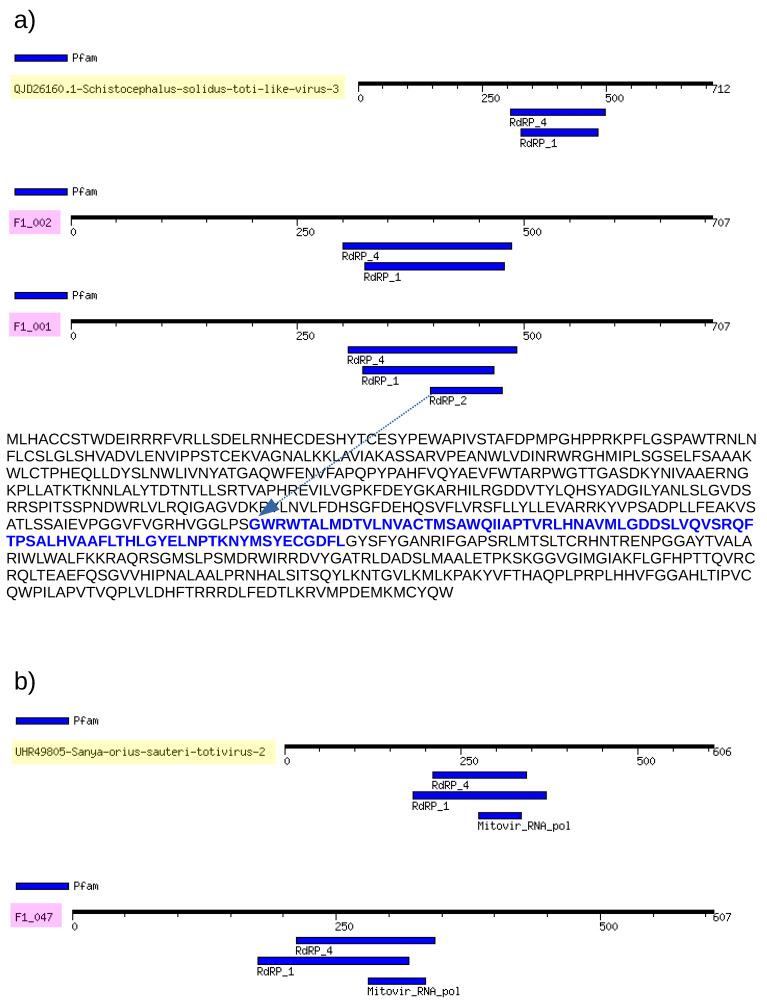
The family of viruses has a unique genome consisting of double-stranded RNA with two open reading frames that encode the capsid protein (Cap) and the RNA-dependent RNA polymerase (RdRpol). Most virions in this family are isometric in shape, approximately 40 nm in diameter, and lack an envelope. There are five genera within this family, including , , , , and . While and primarily infect fungi, , , and infect diverse hosts, including protists, insects, and vertebrates. Recently, new totivirus-like species have been discovered in fish and plant hosts, and through metagenomic analysis, a novel totivirus-like virus (named Tianjin totivirus) has been isolated from bat guano. Interestingly, Tianjin totivirus causes cytopathic effects in insect cells but cannot grow in mammalian cells, suggesting that it infects insects consumed by insectivorous bats. In this study, we used next-generation sequencing and identified totivirus-like viruses in liver tissue from bats in the Amazon region of Brazil. Comparative phylogenetic analysis based on the RNA-dependent RNA polymerase region revealed that the viruses identified in Molossus bats belong to two distinct phylogenetic clades, possibly comprising different genera within the family. Notably, the mean similarity between the Tianjin totivirus and the totiviruses identified in Molossus bats is less than 18%. These findings suggest that the diversity of totiviruses in bats is more extensive than previously recognized and highlight the potential for bats to serve as reservoirs for novel toti-like viruses.
该病毒家族具有独特的基因组,由双链RNA组成,带有两个开放阅读框,分别编码衣壳蛋白(Cap)和RNA依赖性RNA聚合酶(RdRpol)。该家族中的大多数病毒粒子呈等轴状,直径约40纳米,且无包膜。该家族中有五个属,包括、、、、和。虽然和主要感染真菌,但、、和感染多种宿主,包括原生生物、昆虫和脊椎动物。最近,在鱼类和植物宿主中发现了新的类番茄病毒物种,并且通过宏基因组分析,从蝙蝠粪便中分离出一种新型类番茄病毒(命名为天津番茄病毒)。有趣的是,天津番茄病毒在昆虫细胞中会引起细胞病变效应,但不能在哺乳动物细胞中生长,这表明它感染食虫蝙蝠所捕食的昆虫。在本研究中,我们使用下一代测序技术,在巴西亚马逊地区的蝙蝠肝脏组织中鉴定出类番茄病毒。基于RNA依赖性RNA聚合酶区域的比较系统发育分析表明,在犬吻蝠中鉴定出的病毒属于两个不同的系统发育分支,可能包含番茄病毒科内的不同属。值得注意的是,天津番茄病毒与在犬吻蝠中鉴定出的番茄病毒之间的平均相似度小于18%。这些发现表明,蝙蝠中番茄病毒的多样性比以前认识到的更为广泛,并突出了蝙蝠作为新型类番茄病毒宿主的潜力。


 Zotero 插件