
靶向免疫疗法:利用免疫系统对抗多发性骨髓瘤。
Targeted immunotherapy: harnessing the immune system to battle multiple myeloma.
作者信息
Xu Limei, Wen Caining, Xia Jiang, Zhang Hao, Liang Yujie, Xu Xiao
机构信息
Department of Hematology, Affiliated Hospital of Jining Medical University, Jining Medical University, Jining, 272029, Shandong, China.
Affiliated Hospital of Jining Medical University, Jining Medical University, Jining, 272029, Shandong, China.
出版信息
Cell Death Discov. 2024 Jan 27;10(1):55. doi: 10.1038/s41420-024-01818-6.
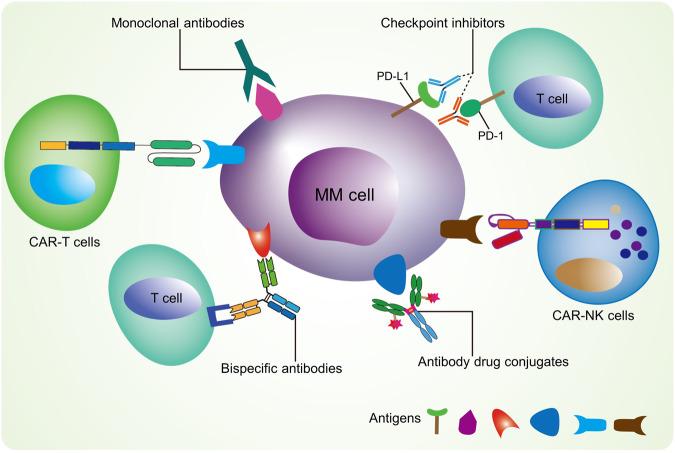
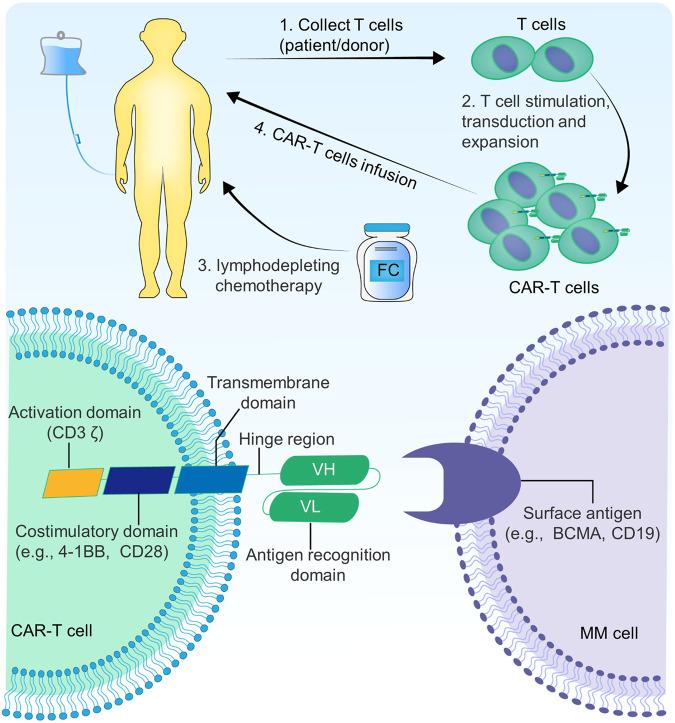
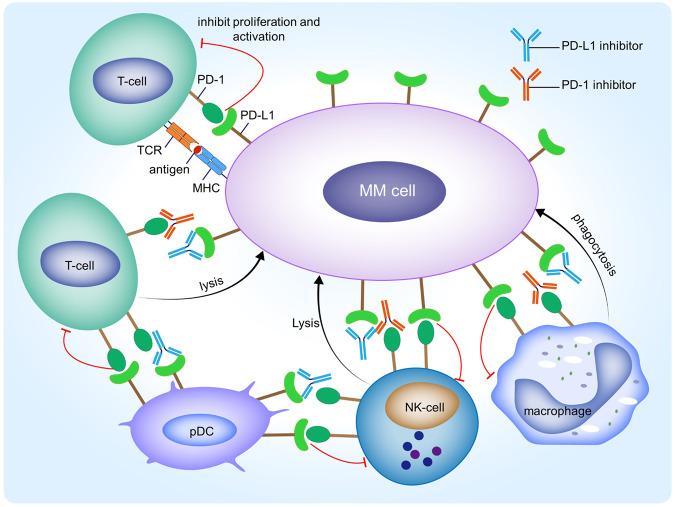
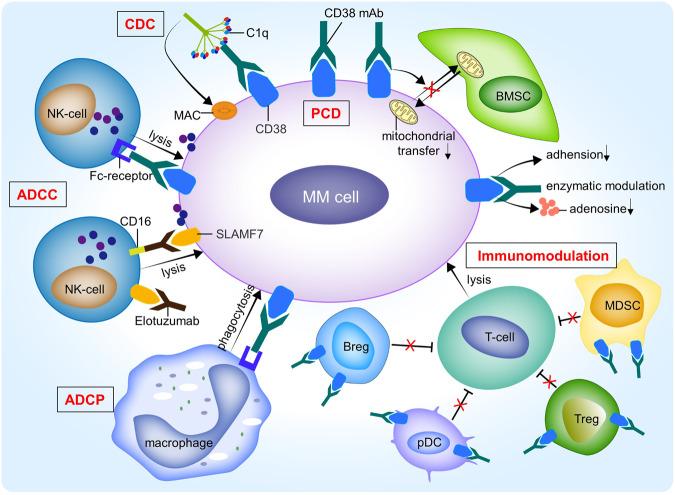
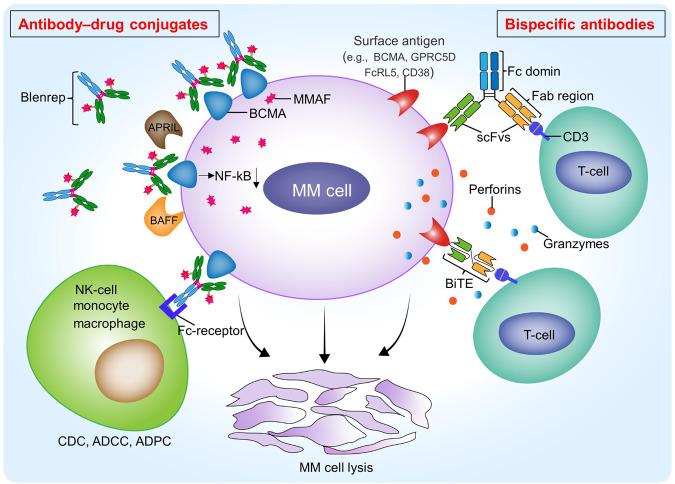
Multiple myeloma (MM) remains an incurable hematological malignancy disease characterized by the progressive dysfunction of the patient's immune system. In this context, immunotherapy for MM has emerged as a prominent area of research in recent years. Various targeted immunotherapy strategies, such as monoclonal antibodies, antibody-drug conjugates, bispecific antibodies, chimeric antigen receptor T cells/natural killer (NK) cells, and checkpoint inhibitors have been developed for MM. This review aims to discuss promising experimental and clinical evidence as well as the mechanisms of action underlying these immunotherapies. Specifically, we will explore the design of exosome-based bispecific monoclonal antibodies that offer cell-free immunotherapy options. The treatment landscape for myeloma continues to evolve with the development of numerous emerging immunotherapies. Given their significant advantages in modulating the MM immune environment through immune-targeted therapy, these approaches provide novel perspectives in selecting cutting-edge treatments for MM.
多发性骨髓瘤(MM)仍然是一种无法治愈的血液系统恶性疾病,其特征是患者免疫系统进行性功能障碍。在此背景下,近年来MM的免疫疗法已成为一个突出的研究领域。已经为MM开发了各种靶向免疫疗法策略,如单克隆抗体、抗体药物偶联物、双特异性抗体、嵌合抗原受体T细胞/自然杀伤(NK)细胞和检查点抑制剂。本综述旨在讨论这些免疫疗法的有前景的实验和临床证据以及其作用机制。具体而言,我们将探讨基于外泌体的双特异性单克隆抗体的设计,其提供了无细胞免疫疗法选择。随着众多新兴免疫疗法的发展,骨髓瘤的治疗格局不断演变。鉴于它们在通过免疫靶向疗法调节MM免疫环境方面的显著优势,这些方法为选择MM的前沿治疗提供了新的视角。

 Zotero 插件