Clinical Research Center, Affiliated Hospital of Guangdong Medical University, Zhanjiang 524001, China.
Department of Cardiovascular, the Affiliated Hospital of Guangdong Medical University, Zhanjiang 524001, China.
Acta Biochim Biophys Sin (Shanghai). 2024 Feb 25;56(2):184-198. doi: 10.3724/abbs.2023264.
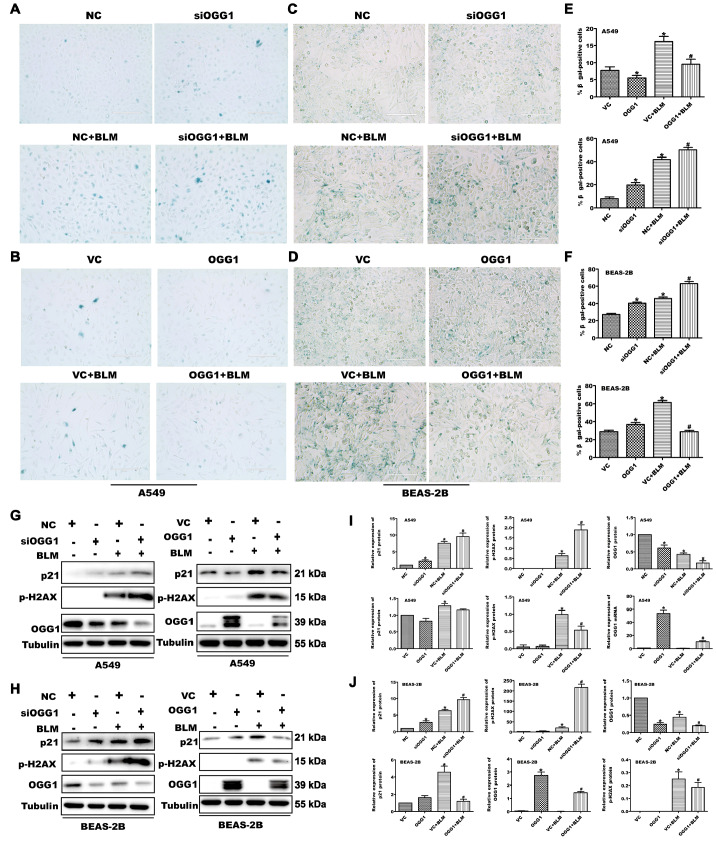
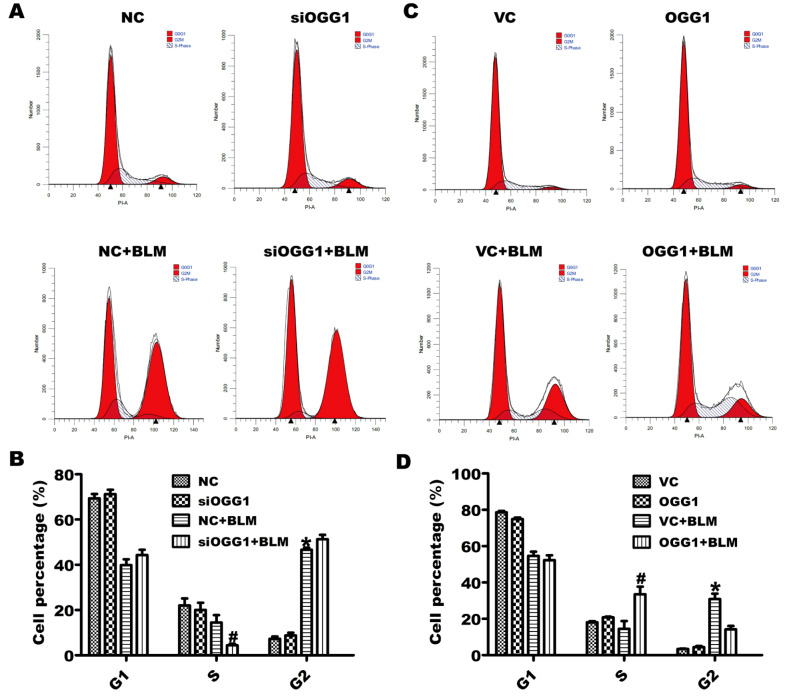
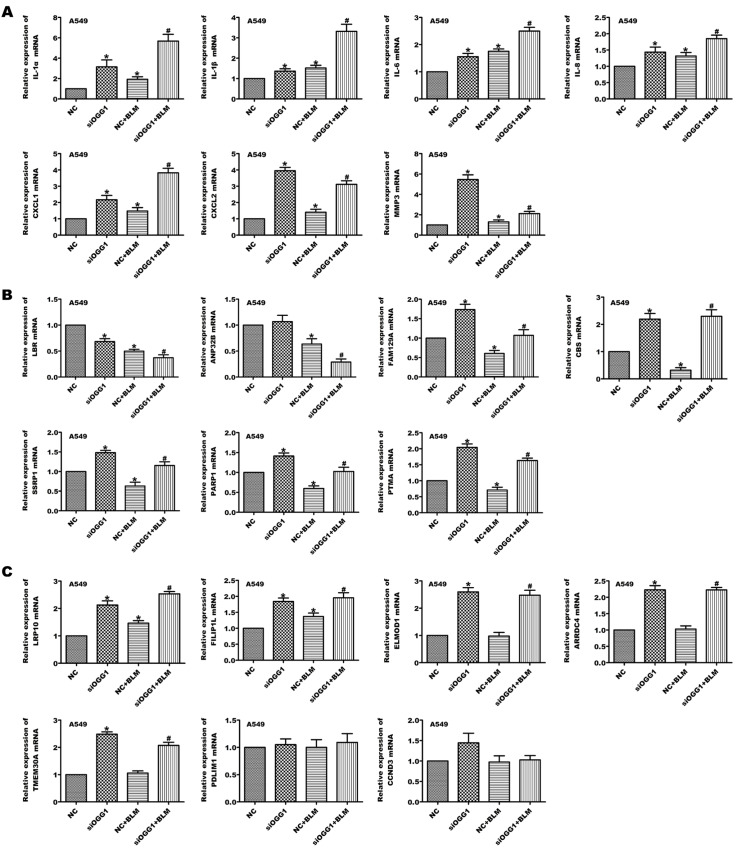
Cellular senescence is an important factor leading to pulmonary fibrosis. Deficiency of 8-oxoguanine DNA glycosylase (OGG1) in mice leads to alleviation of bleomycin (BLM)-induced mouse pulmonary fibrosis, and inhibition of the OGG1 enzyme reduces the epithelial mesenchymal transition (EMT) in lung cells. In the present study, we find decreased expression of OGG1 in aged mice and BLM-induced cell senescence. In addition, a decrease in OGG1 expression results in cell senescence, such as increases in the percentage of SA-β-gal-positive cells, and in the p21 and p-H2AX protein levels in response to BLM in lung cells. Furthermore, OGG1 promotes cell transformation in A549 cells in the presence of BLM. We also find that OGG1 siRNA impedes cell cycle progression and inhibits the levels of telomerase reverse transcriptase (TERT) and LaminB1 in BLM-treated lung cells. The increase in OGG1 expression results in the opposite phenomenon. The mRNA levels of senescence-associated secretory phenotype (SASP) components, including IL-1α, IL-1β, IL-6, IL-8, CXCL1/CXCL2, and MMP-3, in the absence of OGG1 are obviously increased in A549 cells treated with BLM. Interestingly, we demonstrate that OGG1 binds to p53 to inhibit the activation of p53 and that silencing of reverses the inhibition of OGG1 on senescence in lung cells. Additionally, the augmented cell senescence is shown in OGG1-deficient mice. Overall, we provide direct evidence and that OGG1 plays an important role in protecting tissue cells against aging associated with the p53 pathway.
细胞衰老(Cellular senescence)是导致肺纤维化(pulmonary fibrosis)的一个重要因素。在小鼠中,8-氧鸟嘌呤 DNA 糖苷酶(8-oxoguanine DNA glycosylase,OGG1)的缺乏可减轻博莱霉素(bleomycin,BLM)诱导的小鼠肺纤维化(mouse pulmonary fibrosis),并抑制 OGG1 酶可减少肺细胞中的上皮间质转化(epithelial mesenchymal transition,EMT)。在本研究中,我们发现衰老(aged)小鼠和 BLM 诱导的细胞衰老(cell senescence)中 OGG1 的表达降低。此外,OGG1 表达的减少会导致细胞衰老,例如 BLM 处理后的肺细胞中 SA-β-半乳糖苷酶(SA-β-gal)阳性细胞(percentage of SA-β-gal-positive cells)的百分比增加,以及 p21 和 p-H2AX 蛋白水平的增加。此外,在 BLM 存在的情况下,OGG1 可促进 A549 细胞的转化(cell transformation)。我们还发现,OGG1 siRNA 可阻碍 BLM 处理的肺细胞中的细胞周期进程(cell cycle progression),并抑制端粒酶逆转录酶(telomerase reverse transcriptase,TERT)和核纤层蛋白 B1(lamin B1)的水平。OGG1 表达增加则会产生相反的现象。在 BLM 处理的 A549 细胞中,缺乏 OGG1 时,衰老相关分泌表型(senescence-associated secretory phenotype,SASP)成分的 mRNA 水平,包括白细胞介素 1α(IL-1α)、白细胞介素 1β(IL-1β)、白细胞介素 6(IL-6)、白细胞介素 8(IL-8)、CXC 趋化因子配体 1/2(CXCL1/CXCL2)和基质金属蛋白酶 3(MMP-3),明显增加。有趣的是,我们证明 OGG1 与 p53 结合以抑制 p53 的激活,并且沉默可逆转 OGG1 对肺细胞衰老的抑制作用。此外,在 OGG1 缺陷小鼠中,细胞衰老(cell senescence)增加。总的来说,我们提供了直接证据表明,OGG1 通过与 p53 通路(p53 pathway)相互作用,在保护组织细胞抵抗与衰老相关的损伤方面发挥着重要作用。