Han Di, Xu Yong, Peng Wen-Pan, Feng Fanchao, Wang Zhichao, Gu Cheng, Zhou Xianmei
Department of Respiratory Medicine, Affiliated Hospital of Nanjing University of Chinese Medicine, Nanjing, Jiangsu, China (mainland).
Department of Respiratory Medicine, Jiangsu Province Hospital of Chinese Medicine, Nanjing, Jiangsu, China (mainland).
Med Sci Monit. 2021 Mar 12;27:e928547. doi: 10.12659/MSM.928547.
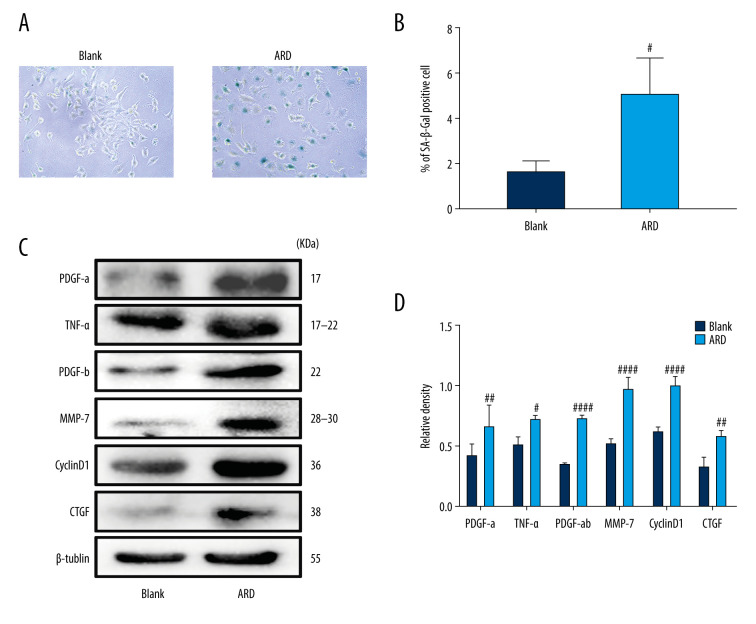
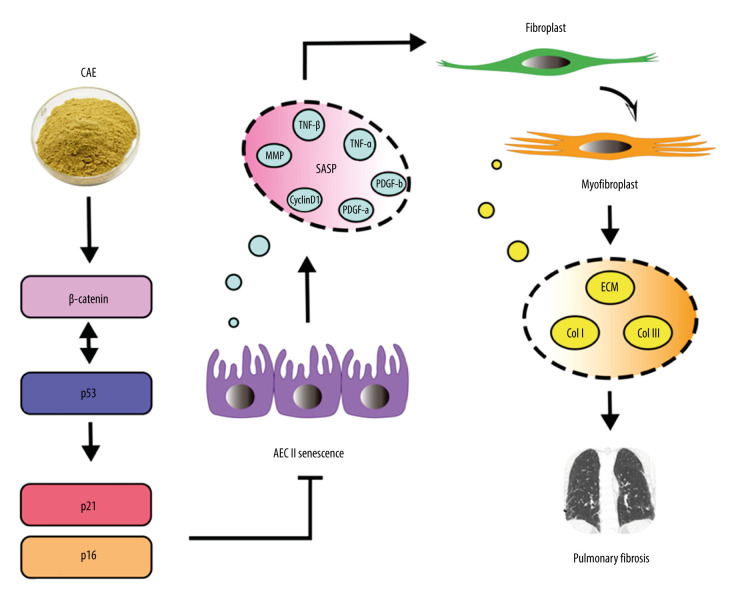
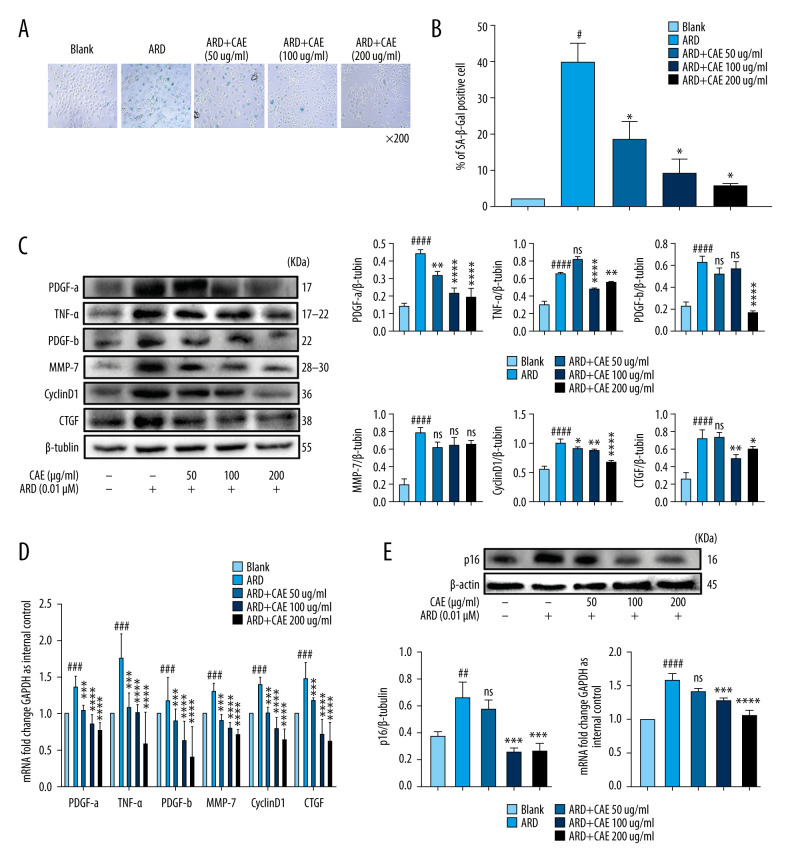
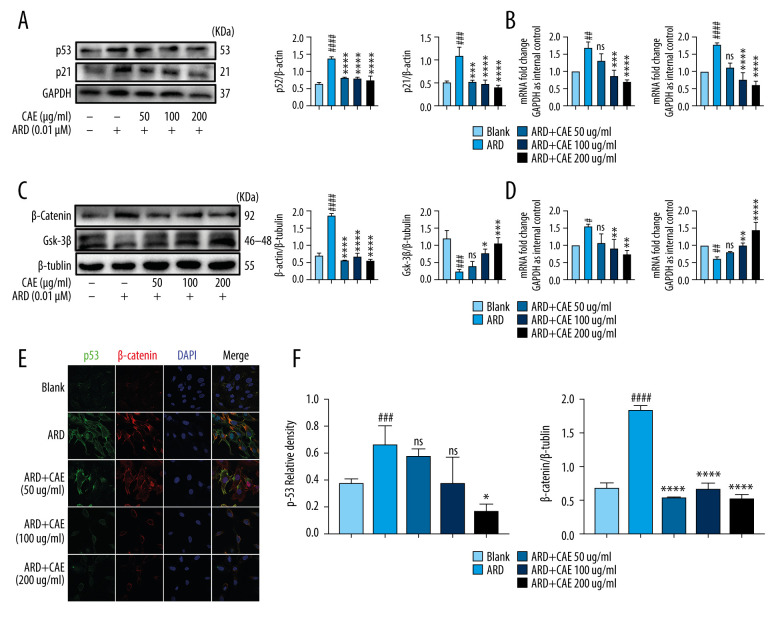
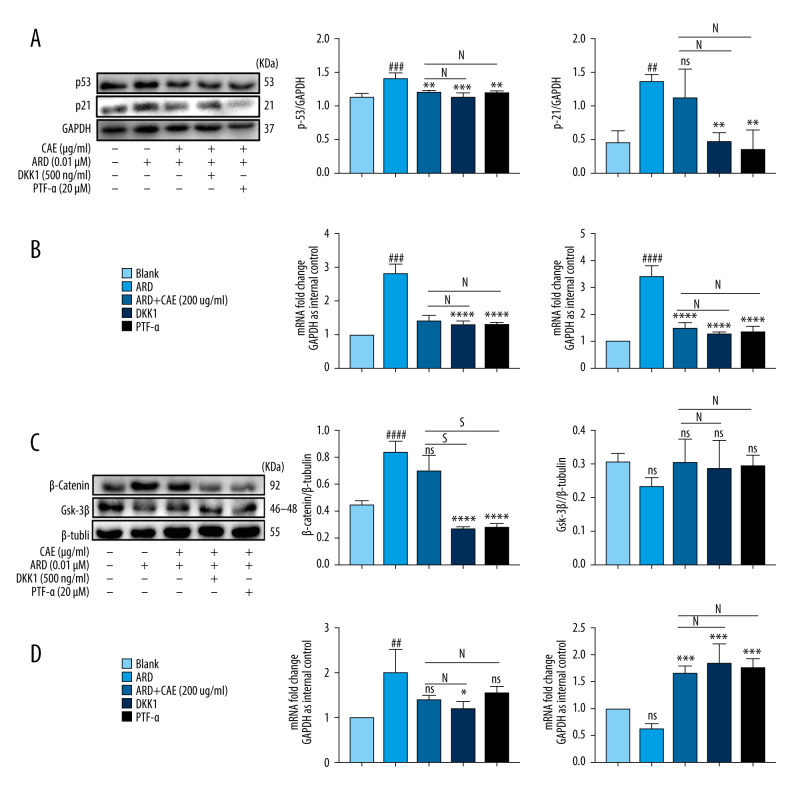
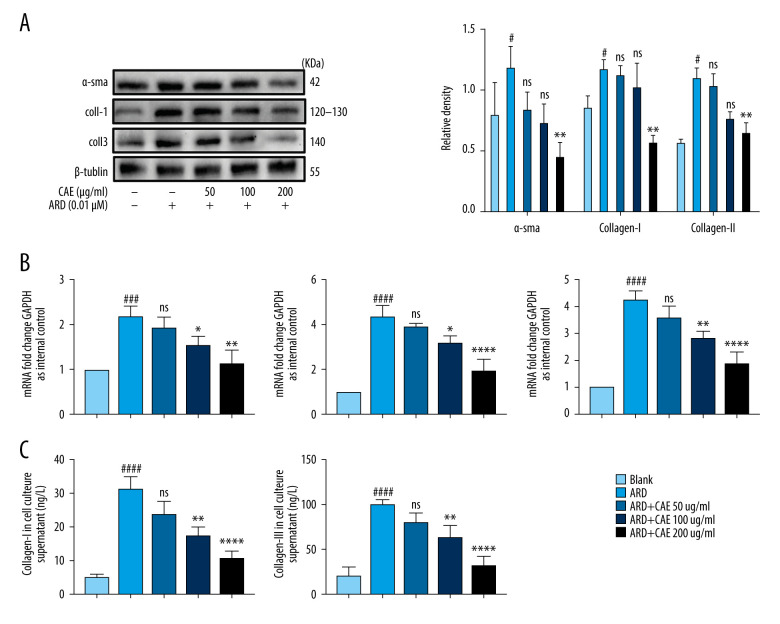
BACKGROUND Idiopathic pulmonary fibrosis (IPF) is a disease related to aging, which has become increasingly prevalent as the population has aged. However, there remains no effective treatment for the disease. Alveolar epithelial type II cell (AEC II) senescence plays an important role in the occurrence and development of IPF. Therefore, enhancing our understanding of aging AEC IIs might facilitate the development of a new therapeutic strategy for the prevention and treatment of IPF. The aim of this study was to investigate the effect of citrus alkaline extracts (CAE) on senescence in A549 cells and elucidate the mechanism by which CAE function. MATERIAL AND METHODS Adriamycin RD (ARD) induces the senescence of A549 cells. Relevant indicators were identified following administration of 3 concentrations of CAE (50 μg/mL, 100 μg/mL, and 200 μg/mL) to A549 cells. RESULTS CAE inhibited senescence in ARD-induced A549 cells. It inhibited p16, p21, p53, and a senescence-associated secretory phenotype, and reduced expression of the senescence-related positive cells of ß-galactosidase. Further study revealed that activation of the ß-catenin signaling pathway is closely associated with p53. CAE inhibited senescence in A549 cells via the ß-catenin/p53 pathway. Further, inhibition of b-catenin was associated with reduced expression levels of p53 and p21, and the anti-aging effects of CAE were enhanced. When expression of p53 was inhibited, expression levels of ß-catenin also tended to decrease. CONCLUSIONS In summary, our study showed that CAE can inhibit aging in A549 cells to alleviate pulmonary fibrosis, and thus limit the secretion of the extracellular matrix and collagen in lung fibroblasts.
背景 特发性肺纤维化(IPF)是一种与衰老相关的疾病,随着人口老龄化,其发病率日益增加。然而,该疾病仍无有效治疗方法。肺泡Ⅱ型上皮细胞(AEC II)衰老在IPF的发生和发展中起重要作用。因此,加深对衰老AEC II的了解可能有助于开发预防和治疗IPF的新治疗策略。本研究旨在探讨柑橘碱性提取物(CAE)对A549细胞衰老的影响,并阐明CAE发挥作用的机制。
材料与方法 阿霉素RD(ARD)诱导A549细胞衰老。对A549细胞给予3种浓度的CAE(50μg/mL、100μg/mL和200μg/mL)后,鉴定相关指标。
结果 CAE抑制ARD诱导的A549细胞衰老。它抑制p16、p21、p53和衰老相关分泌表型,并降低衰老相关阳性细胞β-半乳糖苷酶的表达。进一步研究表明,β-连环蛋白信号通路的激活与p53密切相关。CAE通过β-连环蛋白/p53途径抑制A549细胞衰老。此外,β-连环蛋白的抑制与p53和p21表达水平降低相关,且CAE的抗衰老作用增强。当p53表达受到抑制时,β-连环蛋白的表达水平也趋于下降。
结论 总之,我们的研究表明,CAE可以抑制A549细胞衰老以减轻肺纤维化,从而限制肺成纤维细胞中细胞外基质和胶原蛋白的分泌。