Qureshi Muhammad Hassan
Medicine, Combined Military Hospital, Lahore, PAK.
Health, Medicine, and Social Care, Anglia Ruskin University, Cambridge, GBR.
Cureus. 2023 Dec 27;15(12):e51169. doi: 10.7759/cureus.51169. eCollection 2023 Dec.
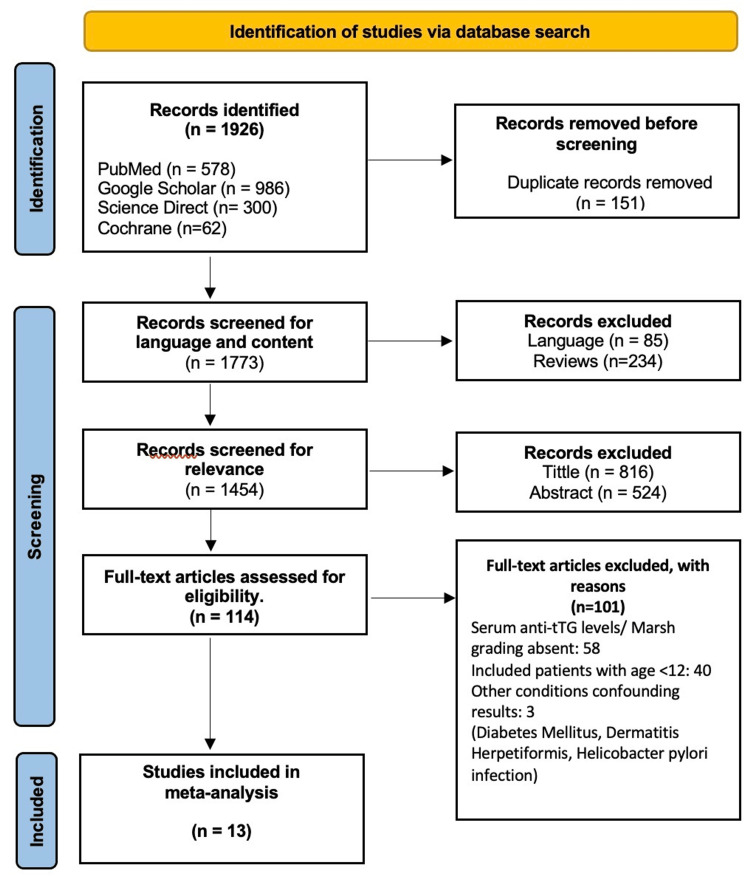
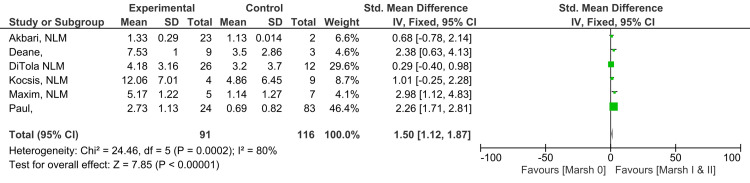
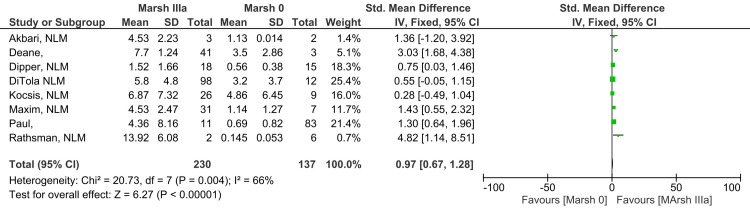
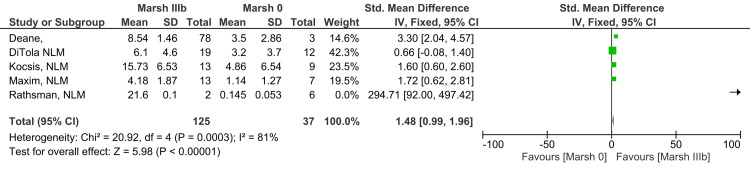
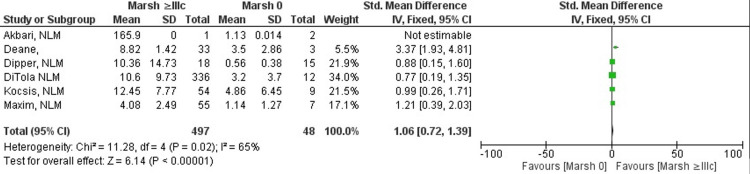
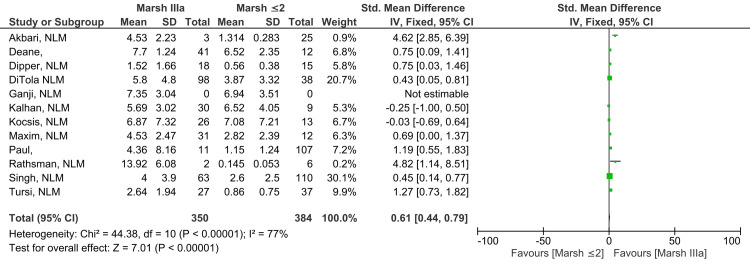
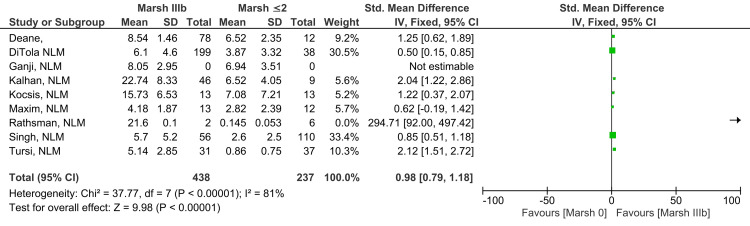
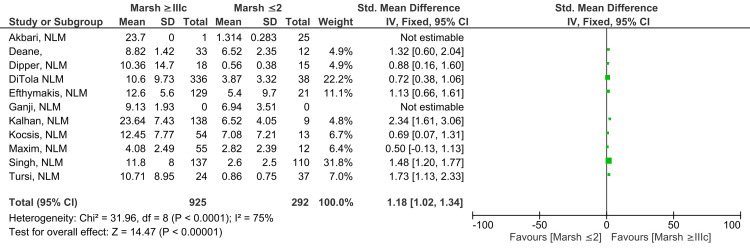
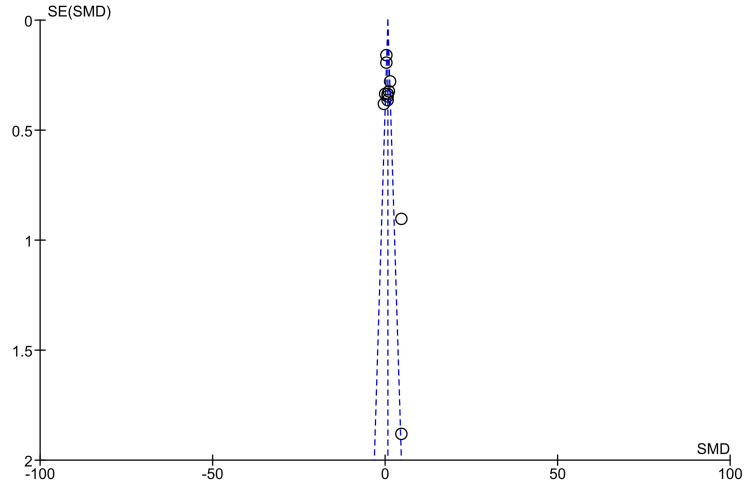
Celiac disease is an autoimmune disorder characterized by a broad spectrum of histological damage to the intestinal mucosa. Comprehension and understanding of the association between anti-tissue transglutaminase (anti-tTG) antibody levels and the histological severity of celiac disease are not well established, prompting the need for meta-analysis. This study aims to offer insights into the diagnostic abilities of anti-tTG antibody levels in determining the histological severity of celiac disease by providing quantitative evidence based on a diverse range of studies. An extensive search was conducted across four electronic research databases to identify primary research articles reporting serum anti-tTG antibody levels in correlation with different Marsh grades, signifying the histological severity of celiac disease. The software tool RevMan 5.4 (the Cochrane Collaboration, London, UK) was used to compile standardized mean differences (SMD) alongside their respective confidence intervals. A total of 13 studies were included in the meta-analysis, with a patient pool of 2505 patients. Marsh grade I and II were found to have higher anti-tTG antibody levels compared to those with grade 0 (SMD 1.50; 95% CI: 1.12, 1.87; p-value <0.00001). Antibody levels were higher in Marsh grade IIIa when compared to both grade 0 (SMD 0.97; 95% CI: 0.67, 1.28; p-value <0.00001) and grade (SMD 0.61; 95% CI: 0.44, 0.79; p-value <0.00001). Patients with Marsh IIIb also reported greater anti-tTG levels compared to grade 0 (SMD 1.48; 95% CI: 0.99, 1.96; p-value <0.00001) and grade (SMD 0.98; 95% CI: 0.79, 1.18; p-value <0.00001). Likewise, Marsh grade ≥IIIc reported high levels of anti-tTG antibodies in comparison with grade 0 (SMD 1.06; 95% CI: 0.72, 1.39; p-value <0.00001) and grade (SMD 1.18; 95% CI: 1.02, 1.34; p-value <0.00001). Our meta-analysis revealed a consistent, robust correlation between anti-tTG antibody levels and the histological severity of celiac disease, with a clear trend of increasing antibody levels corresponding to the severity of mucosal damage. Large-scale primary research initiatives are needed to reach definitive conclusions.
乳糜泻是一种自身免疫性疾病,其特征是肠道黏膜存在广泛的组织学损伤。目前对于抗组织转谷氨酰胺酶(anti-tTG)抗体水平与乳糜泻组织学严重程度之间关联的理解和认识尚不充分,因此需要进行荟萃分析。本研究旨在通过基于一系列不同研究提供定量证据,深入了解anti-tTG抗体水平在确定乳糜泻组织学严重程度方面的诊断能力。我们在四个电子研究数据库中进行了广泛检索,以识别报告血清anti-tTG抗体水平与不同马什分级(Marsh grades)相关的原始研究文章,马什分级代表乳糜泻的组织学严重程度。使用软件工具RevMan 5.4(英国伦敦考科蓝协作网)来汇总标准化均数差(SMD)及其各自的置信区间。共有13项研究纳入了荟萃分析,患者总数为2505例。结果发现,与0级相比,马什I级和II级的anti-tTG抗体水平更高(标准化均数差为1.50;95%置信区间:1.12, 1.87;p值<0.00001)。与0级(标准化均数差为0.97;95%置信区间:0.67, 1.28;p值<0.00001)和[此处原文似乎有误,推测可能是与I级比较](标准化均数差为0.61;95%置信区间:0.44, 0.79;p值<0.00001)相比,马什IIIa级的抗体水平更高。与0级(标准化均数差为1.48;95%置信区间:0.99, 1.96;p值<0.00001)和[此处原文似乎有误,推测可能是与I级比较](标准化均数差为0.98;95%置信区间:0.79, 1.18;p值<0.00001)相比,马什IIIb级患者的anti-tTG水平也更高。同样,与0级(标准化均数差为1.06;95%置信区间:0.72, 1.39;p值<0.00001)和[此处原文似乎有误,推测可能是与I级比较](标准化均数差为1.18;95%置信区间:1.02, 1.34;p值<0.00001)相比,马什≥IIIc级报告的anti-tTG抗体水平较高。我们的荟萃分析揭示了anti-tTG抗体水平与乳糜泻组织学严重程度之间存在一致、显著的相关性,抗体水平随着黏膜损伤严重程度增加呈现明显的上升趋势。需要开展大规模的原始研究以得出明确结论。