James J. Peters Veterans Affairs Medical Center, New York, NY, USA.
The Center for Psychedelic Psychotherapy and Trauma Research, Icahn School of Medicine at Mount Sinai, New York, NY, USA.
Curr Neuropharmacol. 2024;22(4):636-735. doi: 10.2174/1570159X22666231027111147.
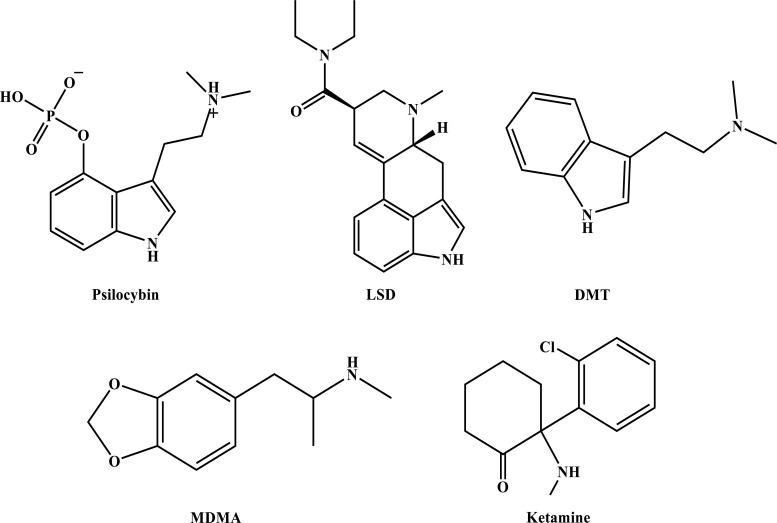
Post-traumatic stress disorder (PTSD) is a mental health condition that can occur following exposure to a traumatic experience. An estimated 12 million U.S. adults are presently affected by this disorder. Current treatments include psychological therapies (e.g., exposure-based interventions) and pharmacological treatments (e.g., selective serotonin reuptake inhibitors (SSRIs)). However, a significant proportion of patients receiving standard-of-care therapies for PTSD remain symptomatic, and new approaches for this and other trauma-related mental health conditions are greatly needed. Psychedelic compounds that alter cognition, perception, and mood are currently being examined for their efficacy in treating PTSD despite their current status as Drug Enforcement Administration (DEA)- scheduled substances. Initial clinical trials have demonstrated the potential value of psychedelicassisted therapy to treat PTSD and other psychiatric disorders. In this comprehensive review, we summarize the state of the science of PTSD clinical care, including current treatments and their shortcomings. We review clinical studies of psychedelic interventions to treat PTSD, trauma-related disorders, and common comorbidities. The classic psychedelics psilocybin, lysergic acid diethylamide (LSD), and N,N-dimethyltryptamine (DMT) and DMT-containing ayahuasca, as well as the entactogen 3,4-methylenedioxymethamphetamine (MDMA) and the dissociative anesthetic ketamine, are reviewed. For each drug, we present the history of use, psychological and somatic effects, pharmacology, and safety profile. The rationale and proposed mechanisms for use in treating PTSD and traumarelated disorders are discussed. This review concludes with an in-depth consideration of future directions for the psychiatric applications of psychedelics to maximize therapeutic benefit and minimize risk in individuals and communities impacted by trauma-related conditions.
创伤后应激障碍(PTSD)是一种心理健康状况,可在经历创伤后发生。据估计,目前有 1200 万美国成年人受到这种疾病的影响。目前的治疗方法包括心理疗法(例如,暴露疗法)和药物疗法(例如,选择性 5-羟色胺再摄取抑制剂(SSRIs))。然而,接受 PTSD 标准治疗的患者中仍有相当一部分存在症状,因此迫切需要针对这种疾病和其他与创伤相关的心理健康状况的新方法。尽管迷幻化合物目前被美国缉毒局(DEA)列为管制物质,但由于它们能够改变认知、感知和情绪,目前正在研究它们在治疗 PTSD 方面的疗效。初步临床试验表明,迷幻辅助疗法治疗 PTSD 和其他精神疾病具有潜在价值。在这篇全面的综述中,我们总结了 PTSD 临床护理的科学现状,包括当前的治疗方法及其缺点。我们回顾了迷幻干预治疗 PTSD、与创伤相关的障碍和常见合并症的临床研究。经典迷幻剂如裸盖菇素、麦角酸二乙酰胺(LSD)和 N,N-二甲基色胺(DMT)以及含有 DMT 的死藤水,以及致幻剂 3,4-亚甲二氧基甲基苯丙胺(MDMA)和分离性麻醉剂氯胺酮也进行了综述。对于每种药物,我们介绍了使用历史、心理和躯体效应、药理学和安全性概况。讨论了在治疗 PTSD 和与创伤相关的障碍中使用这些药物的原理和提出的机制。最后,我们深入考虑了迷幻剂在个体和受创伤相关状况影响的社区中的精神应用的未来方向,以最大限度地提高治疗效益并最小化风险。