School of Nursing, Yale University, Orange, Connecticut, USA,
Department of Statistics, University of Connecticut, Storrs, Connecticut, USA.
Dev Neurosci. 2024;46(5):341-352. doi: 10.1159/000536509. Epub 2024 Jan 29.
Preterm infants experience tremendous early life pain/stress during their neonatal intensive care unit (NICU) hospitalization, which impacts their neurodevelopmental outcomes. Mitochondrial function/dysfunction may interface between perinatal stress events and neurodevelopment. Nevertheless, the specific proteins or pathways linking mitochondrial functions to pain-induced neurodevelopmental outcomes in infants remain unidentified. Our study aims to investigate the associations among pain/stress, proteins associated with mitochondrial function/dysfunction, and neurobehavioral responses in preterm infants.
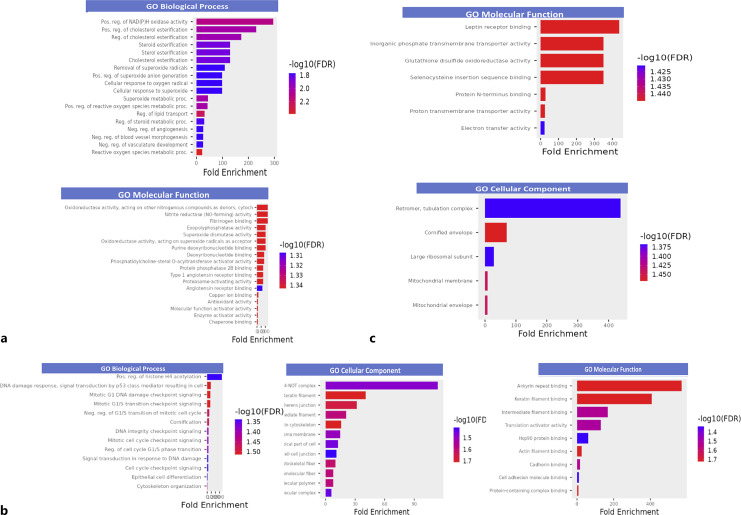
We conducted a prospective cohort study, enrolling 33 preterm infants between September 2017 and July 2022 at two affiliated NICUs located in Hartford and Farmington, CT. NICU Network Neurobehavioral Scale (NNNS) datasets were evaluated to explore potential association with neurobehavioral outcomes. The daily pain/stress experienced by infant's during their NICU stay was documented. At 36-38 weeks post-menstrual age (PMA), neurobehavioral outcomes were evaluated using the NNNS and buccal swabs were collected for further analysis. Mass spectrometry-based proteomics was conducted on epithelial cells obtained from buccal swabs to evaluate protein expression level. Lasso statistical methods were conducted to study the association between protein abundance and infants' NNNS summary scores. Multiple linear regression and Gene Ontology (GO) enrichment analyses were performed to examine how clinical characteristics and neurodevelopmental outcomes may be associated with protein levels and underlying molecular pathways.
During NICU hospitalization, preterm premature rupture of membrane (PPROM) was negatively associated with neurobehavioral outcomes. The protein functions including leptin receptor binding activity, glutathione disulfide oxidoreductase activity and response to oxidative stress, lipid metabolism, and phosphate and proton transmembrane transporter activity were negatively associated with neurobehavioral outcomes; in contrast, cytoskeletal regulation, epithelial barrier, and protection function were found to be associated with the optimal neurodevelopmental outcomes. In addition, mitochondrial function-associated proteins including SPRR2A, PAIP1, S100A3, MT-CO2, PiC, GLRX, PHB2, and BNIPL-2 demonstrated positive association with favorable neurodevelopmental outcomes, while proteins of ABLIM1, UNC45A, keratins, MUC1, and CYB5B showed positive association with adverse neurodevelopmental outcomes.
Mitochondrial function-related proteins were observed to be associated with early life pain/stress and neurodevelopmental outcomes in infants. Large-scale studies with longitudinal datasets are warranted. Buccal proteins could be used to predict potential neurobehavioral outcomes.
早产儿在新生儿重症监护病房(NICU)住院期间经历了巨大的早期生活疼痛/压力,这影响了他们的神经发育结局。线粒体功能障碍/功能障碍可能在围产期应激事件和神经发育之间发挥作用。然而,将线粒体功能与婴儿疼痛引起的神经发育结果联系起来的特定蛋白质或途径仍未确定。我们的研究旨在调查早产儿的疼痛/压力、与线粒体功能障碍相关的蛋白质以及神经行为反应之间的关联。
我们进行了一项前瞻性队列研究,纳入了 2017 年 9 月至 2022 年 7 月在康涅狄格州哈特福德和法明顿的两家附属 NICU 住院的 33 名早产儿。评估了新生儿神经行为评估量表(NNNS)数据集,以探讨与神经行为结果的潜在关联。记录婴儿在 NICU 住院期间每天经历的疼痛/压力。在胎龄 36-38 周(PMA)时,使用 NNNS 评估神经行为结果,并采集颊拭子进行进一步分析。通过基于质谱的蛋白质组学方法对颊拭子中获得的上皮细胞进行检测,以评估蛋白质表达水平。采用套索统计方法研究蛋白质丰度与婴儿 NNNS 综合评分之间的关系。进行多元线性回归和基因本体论(GO)富集分析,以检查临床特征和神经发育结果如何与蛋白质水平和潜在的分子途径相关。
在 NICU 住院期间,早发性胎膜早破(PPROM)与神经行为结果呈负相关。蛋白质功能包括瘦素受体结合活性、谷胱甘肽二硫化物氧化还原酶活性和对氧化应激的反应、脂质代谢以及磷酸盐和质子跨膜转运体活性与神经行为结果呈负相关;相反,细胞骨架调节、上皮屏障和保护功能与最佳神经发育结果相关。此外,与线粒体功能相关的蛋白质,包括 SPRR2A、PAIP1、S100A3、MT-CO2、PiC、GLRX、PHB2 和 BNIPL-2,与良好的神经发育结果呈正相关,而 ABLIM1、UNC45A、角蛋白、MUC1 和 CYB5B 等蛋白质与不良神经发育结果呈正相关。
观察到与婴儿早期生活疼痛/压力和神经发育结果相关的线粒体功能相关蛋白。需要进行具有纵向数据集的大规模研究。颊部蛋白可用于预测潜在的神经行为结果。
