Huang Qi, Chen Haiming, Yin Dandan, Wang Jie, Wang Shaodong, Yang Feng, Li Jiawei, Mu Teng, Li Jilun, Zhao Jia, Yin Rong, Li Wei, Qiu Mantang, Zhang Erbao, Li Xiangnan
Department of Thoracic Surgery, The First Affiliated Hospital of Zhengzhou University, Zhengzhou, 450003, China.
Department of Thoracic Surgery, Peking University People's Hospital, Beijing, 100044, China.
NPJ Precis Oncol. 2024 Jan 30;8(1):24. doi: 10.1038/s41698-024-00509-w.
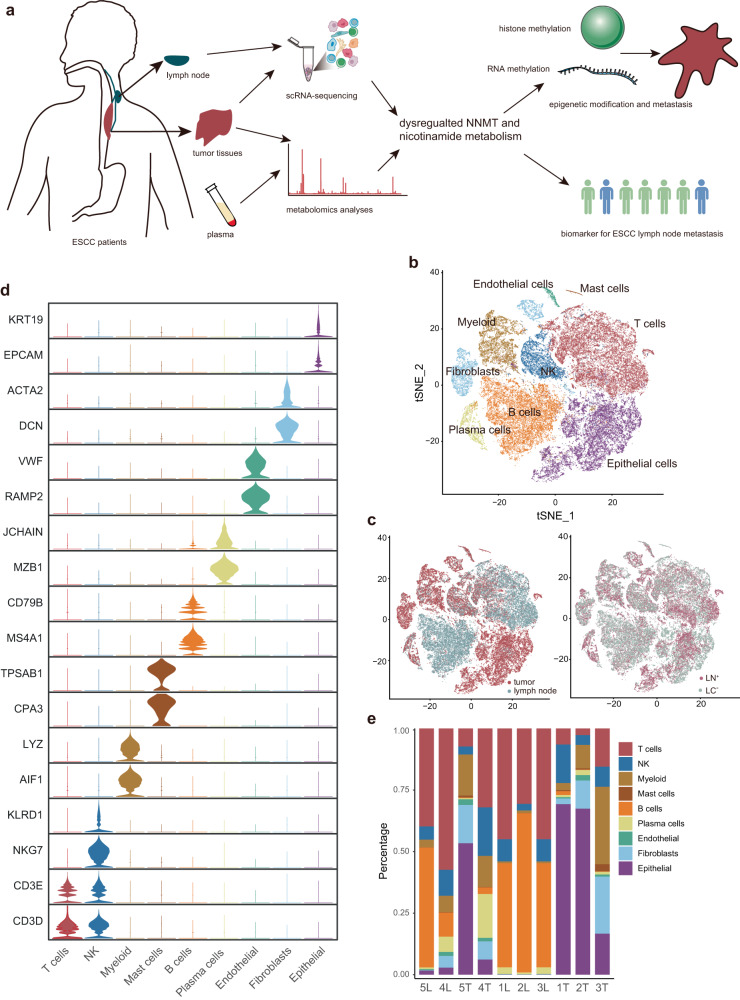
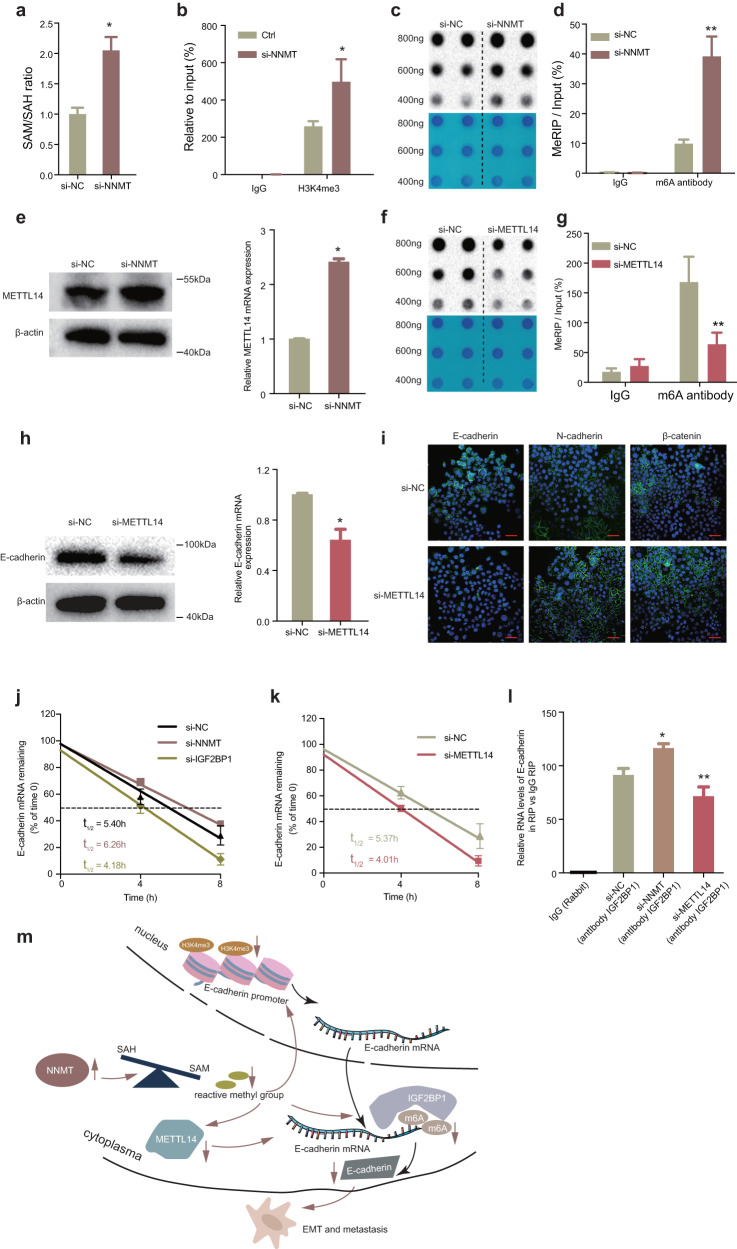
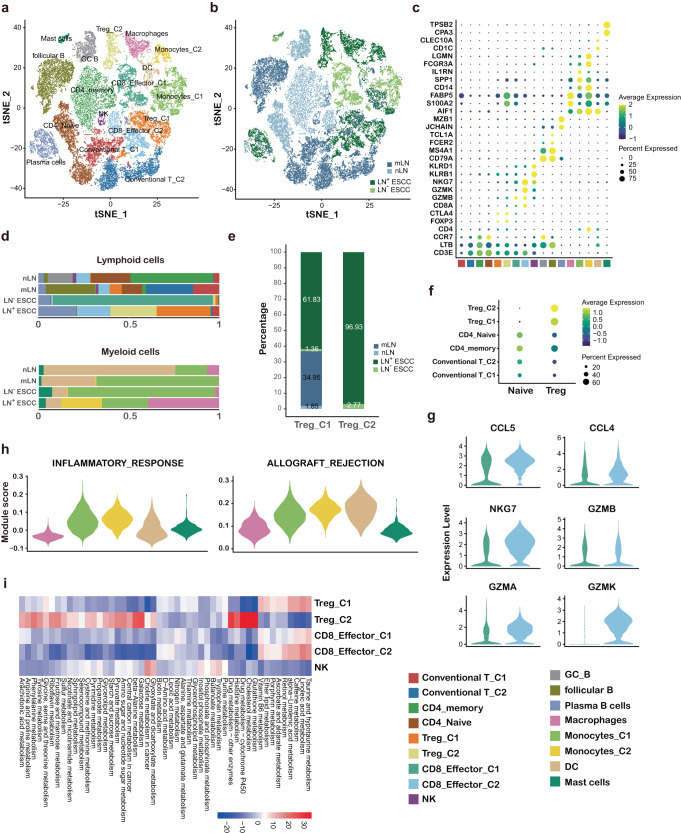
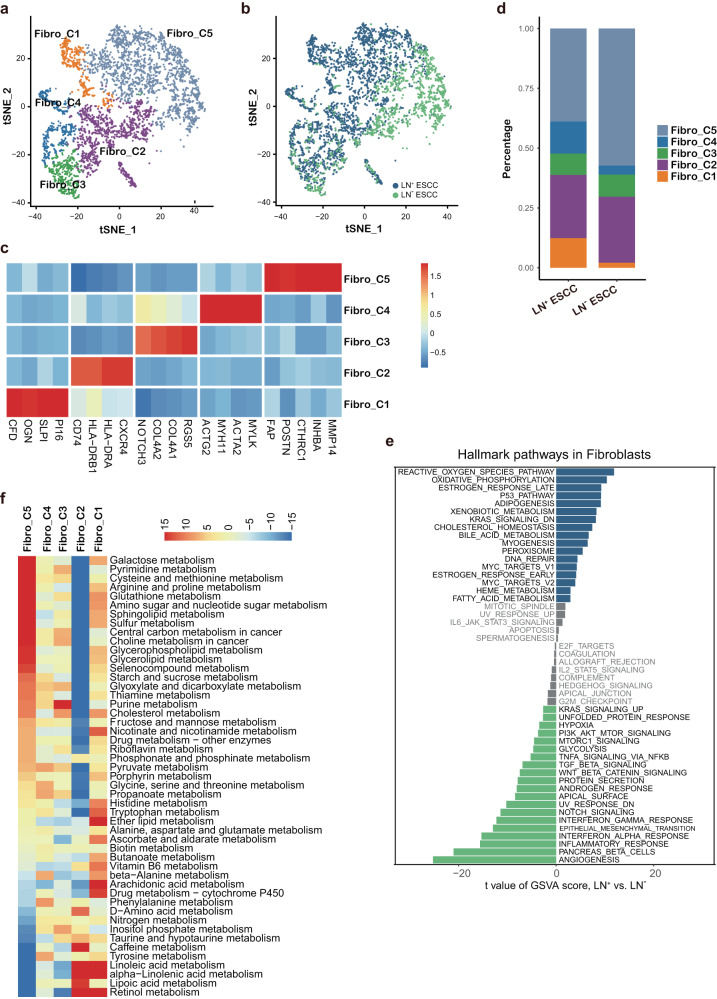
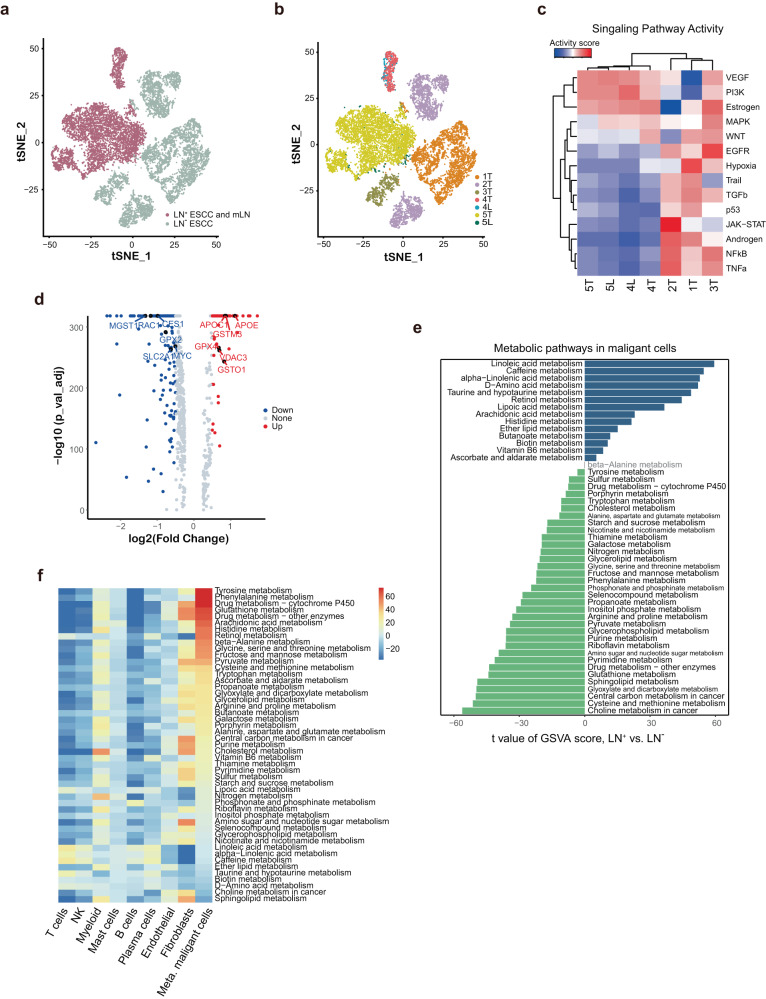
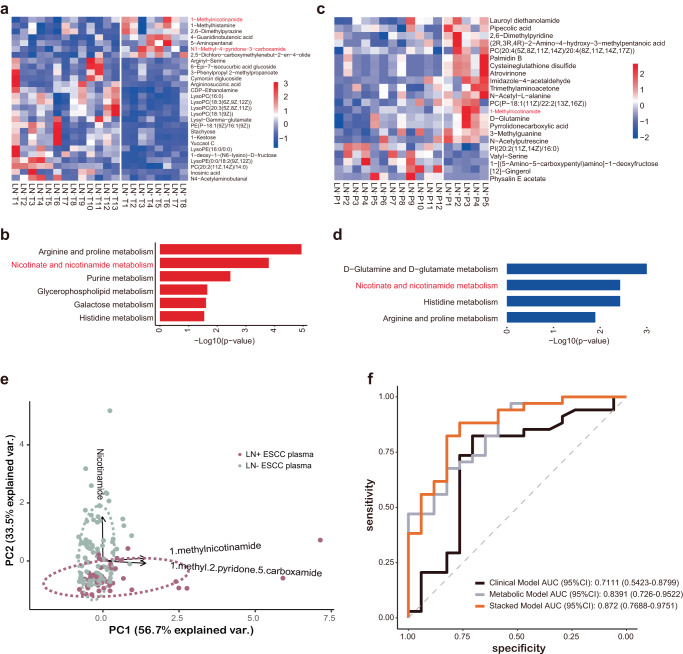
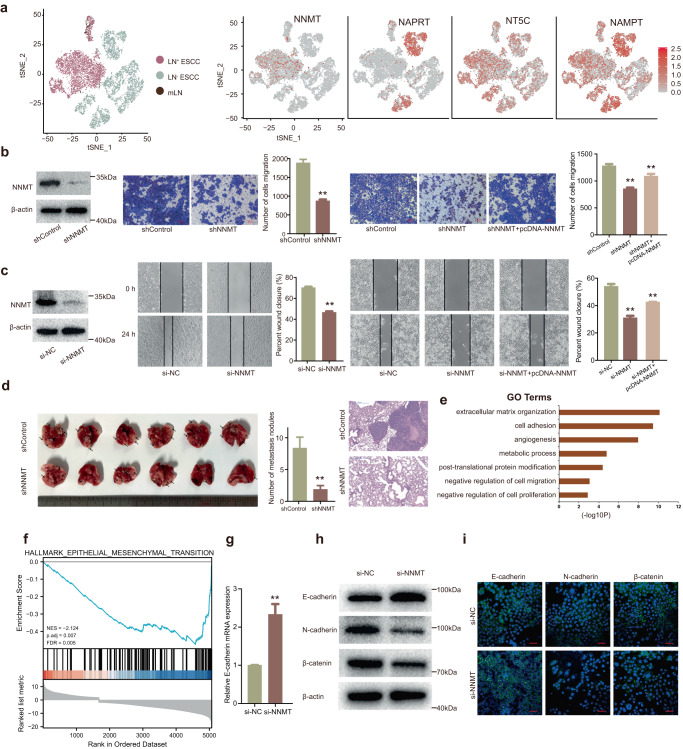
Metabolic reprogramming has been observed in cancer metastasis, whereas metabolic changes required for malignant cells during lymph node metastasis of esophageal squamous cell carcinoma (ESCC) are still poorly understood. Here, we performed single-cell RNA sequencing (scRNA-seq) of paired ESCC tumor tissues and lymph nodes to uncover the reprogramming of tumor microenvironment (TME) and metabolic pathways. By integrating analyses of scRNA-seq data with metabolomics of ESCC tumor tissues and plasma samples, we found nicotinate and nicotinamide metabolism pathway was dysregulated in ESCC patients with lymph node metastasis (LN), exhibiting as significantly increased 1-methylnicotinamide (MNA) in both tumors and plasma. Further data indicated high expression of N-methyltransferase (NNMT), which converts active methyl groups from the universal methyl donor, S-adenosylmethionine (SAM), to stable MNA, contributed to the increased MNA in LN ESCC. NNMT promotes epithelial-mesenchymal transition (EMT) and metastasis of ESCC in vitro and in vivo by inhibiting E-cadherin expression. Mechanically, high NNMT expression consumed too much active methyl group and decreased H3K4me3 modification at E-cadherin promoter and inhibited m6A modification of E-cadherin mRNA, therefore inhibiting E-cadherin expression at both transcriptional and post-transcriptional level. Finally, a detection method of lymph node metastasis was build based on the dysregulated metabolites, which showed good performance among ESCC patients. For lymph node metastasis of ESCC, this work supports NNMT is a master regulator of the cross-talk between cellular metabolism and epigenetic modifications, which may be a therapeutic target.
代谢重编程在癌症转移中已被观察到,然而食管鳞状细胞癌(ESCC)淋巴结转移过程中恶性细胞所需的代谢变化仍知之甚少。在此,我们对配对的ESCC肿瘤组织和淋巴结进行了单细胞RNA测序(scRNA-seq),以揭示肿瘤微环境(TME)和代谢途径的重编程。通过将scRNA-seq数据与ESCC肿瘤组织和血浆样本的代谢组学分析相结合,我们发现烟酸盐和烟酰胺代谢途径在伴有淋巴结转移(LN)的ESCC患者中失调,表现为肿瘤和血浆中的1-甲基烟酰胺(MNA)显著增加。进一步的数据表明,N-甲基转移酶(NNMT)的高表达将通用甲基供体S-腺苷甲硫氨酸(SAM)的活性甲基转化为稳定的MNA,导致LN ESCC中MNA增加。NNMT在体外和体内通过抑制E-钙黏蛋白的表达促进ESCC的上皮-间质转化(EMT)和转移。从机制上讲,高NNMT表达消耗了过多的活性甲基,降低了E-钙黏蛋白启动子处的H3K4me3修饰,并抑制了E-钙黏蛋白mRNA的m6A修饰,从而在转录和转录后水平抑制E-钙黏蛋白的表达。最后,基于失调的代谢物建立了一种淋巴结转移检测方法,该方法在ESCC患者中表现良好。对于ESCC的淋巴结转移,这项工作支持NNMT是细胞代谢和表观遗传修饰之间相互作用的主要调节因子,可能是一个治疗靶点。