Denorme Frederik, Ajanel Abigail, Campbell Robert A
University of Utah Molecular Medicine Program, Salt Lake City, Utah, USA.
Division of Vascular Neurology, Department of Neurology, University of Utah, Salt Lake City, Utah, USA.
Res Pract Thromb Haemost. 2023 Dec 20;8(1):102298. doi: 10.1016/j.rpth.2023.102298. eCollection 2024 Jan.
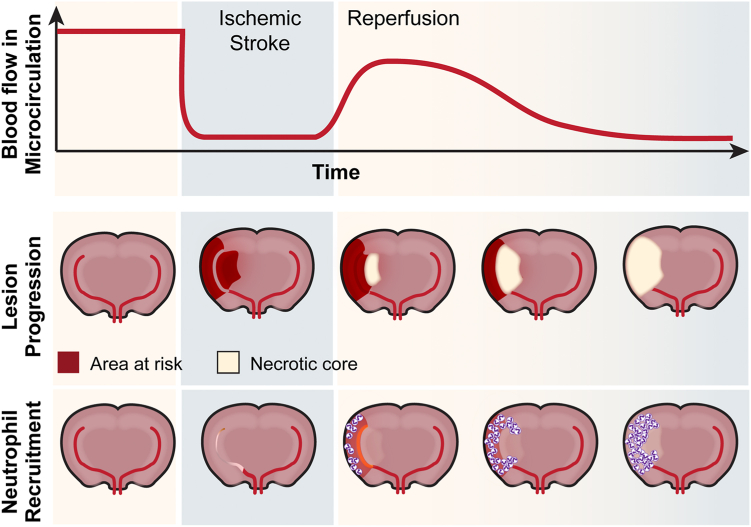
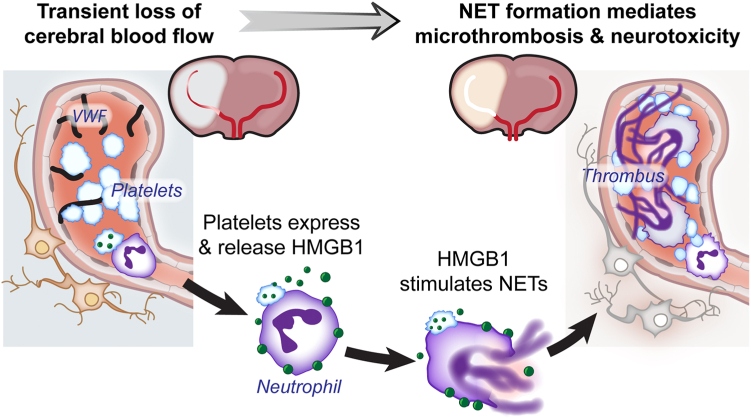
A State of the Art lecture titled "Immunothrombosis in Neurovascular Diseases" was presented at the International Society on Thrombosis and Haemostasis Congress in 2023. Despite significant clinical advancements in stroke therapy, stroke remains a prominent contributor to both mortality and disability worldwide. Brain injury resulting from an ischemic stroke is a dynamic process that unfolds over time. Initially, an infarct core forms due to the abrupt and substantial blockage of blood flow. In the subsequent hours to days, the surrounding tissue undergoes gradual deterioration, primarily driven by sustained hypoperfusion, programmed cell death, and inflammation. While anti-inflammatory strategies have proven highly effective in experimental models of stroke, their successful translation to clinical use has proven challenging. To overcome this translational hurdle, a better understanding of the distinct immune response driving ischemic stroke brain injury is needed. In this review article, we give an overview of current knowledge regarding the immune response in ischemic stroke and the contribution of immunothrombosis to this process. We discuss therapeutic approaches to overcome detrimental immunothrombosis in ischemic stroke and how these can be extrapolated to other neurovascular diseases, such as Alzheimer's disease and multiple sclerosis. Finally, we summarize relevant new data on this topic presented during the 2023 International Society on Thrombosis and Haemostasis Congress.
一场题为“神经血管疾病中的免疫血栓形成”的前沿讲座于2023年在国际血栓与止血学会大会上发表。尽管中风治疗在临床方面取得了重大进展,但中风仍是全球死亡率和残疾率的主要促成因素。缺血性中风导致的脑损伤是一个随时间发展的动态过程。最初,由于血流突然大量受阻,形成梗死核心。在随后的数小时至数天内,周围组织逐渐恶化,主要由持续的灌注不足、程序性细胞死亡和炎症驱动。虽然抗炎策略在中风实验模型中已被证明非常有效,但将其成功转化为临床应用却具有挑战性。为了克服这一转化障碍,需要更好地了解驱动缺血性中风脑损伤的独特免疫反应。在这篇综述文章中,我们概述了关于缺血性中风免疫反应的当前知识以及免疫血栓形成在此过程中的作用。我们讨论了克服缺血性中风中有害免疫血栓形成的治疗方法,以及这些方法如何推广到其他神经血管疾病,如阿尔茨海默病和多发性硬化症。最后,我们总结了在2023年国际血栓与止血学会大会上提出的关于这一主题的相关新数据。