Meneguzzo Paolo, Zuccaretti Daniele, Tenconi Elena, Favaro Angela
Department of Neuroscience, University of Padova, Padova, Italy.
Padova Neuroscience Center, University of Padova, Padova, Italy.
Int J Clin Health Psychol. 2024 Jan-Mar;24(1):100441. doi: 10.1016/j.ijchp.2024.100441. Epub 2024 Jan 18.
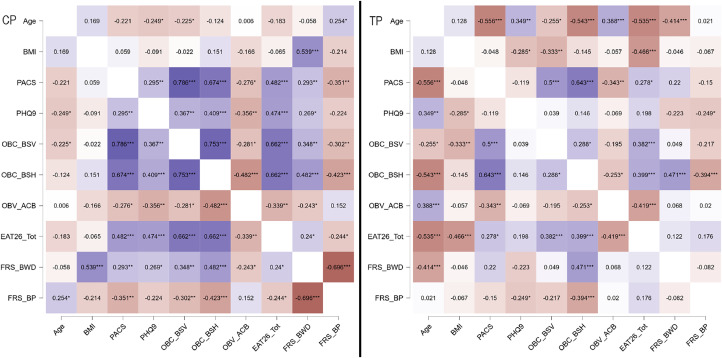
In the context of body image and mental health, transgender individuals face distinctive challenges stemming from the complexities of their gender identity journey, societal expectations, and body norms. However, the existing line of research on this topic remains limited. This study explores the complex relationship in transgender individuals between body objectification, body weight dissatisfaction, and eating concerns. A sample of 154 individuals (77 transgenders paired with 77 cisgenders) was recruited via LGBTQ+ groups' mailing lists. Participants completed various questionnaires assessing body image, eating psychopathology, depression, and body objectification. Propensity score matching was performed with different variables: age, current BMI, years of education, current self-identified gender, and sexual orientation. The results revealed that transgender individuals experienced higher levels of body objectification, body weight dissatisfaction, and eating concerns compared to their cisgender counterparts. Additionally, age emerged as a protective factor, as older transgender individuals demonstrated improved body acceptance and self-esteem. Logistic regression analyzes indicated that bulimic behaviors, depressive symptoms, and appearance control beliefs were specific factors significantly associated with being transgender. Our findings highlight the unique challenges faced by transgender individuals in navigating their gender identity and body image, underscoring the importance of targeted interventions and support systems.
在身体意象与心理健康的背景下,跨性别者面临着因性别认同历程的复杂性、社会期望和身体规范而产生的独特挑战。然而,关于这一主题的现有研究仍然有限。本研究探讨了跨性别者在身体客体化、体重不满和饮食问题之间的复杂关系。通过LGBTQ+群体的邮件列表招募了154名个体样本(77名跨性别者与77名顺性别者配对)。参与者完成了各种评估身体意象、饮食精神病理学、抑郁和身体客体化的问卷。对不同变量进行倾向得分匹配:年龄、当前体重指数、受教育年限、当前自我认定的性别和性取向。结果显示,与顺性别者相比,跨性别者经历了更高水平的身体客体化、体重不满和饮食问题。此外,年龄成为一个保护因素,因为年龄较大的跨性别者表现出更高的身体接受度和自尊。逻辑回归分析表明,暴食行为、抑郁症状和外表控制信念是与跨性别显著相关的特定因素。我们的研究结果突出了跨性别者在应对其性别认同和身体意象方面面临的独特挑战,强调了针对性干预和支持系统的重要性。