Morrison Cassandra, Oliver Michael D, Kamal Farooq, Dadar Mahsa
Department of Psychology, Carleton University, Ontario, Canada, K1S 5B6.
Department of Psychological Science and Neuroscience, Belmont University, Nashville, Tennessee, United States.
medRxiv. 2024 Jan 16:2024.01.15.24301335. doi: 10.1101/2024.01.15.24301335.
Hypertension is a known risk factor for cognitive decline and structural brain changes in aging and dementia. In addition to high blood pressure (BP), individuals may also experience variable BP, meaning that their BP fluctuates between normal and high. It is currently unclear what the effects of variable BP are on cognition and brain structure.
To investigate the influence of BP on cognition and brain structure in older adults.
This longitudinal cohort study included data from the Rush Alzheimer's Disease Center Research Resource Sharing Hub (RUSH) and the Alzheimer's Disease Neuroimaging Initiative (ADNI). Participants from the two studies were included if they had BP measurements and either cognitive scores or MRI scans from at least one visit.
Longitudinal gray matter, white matter, white matter hyperintensity volumes, postmortem neuropathology information, as well as cognitive test scores.
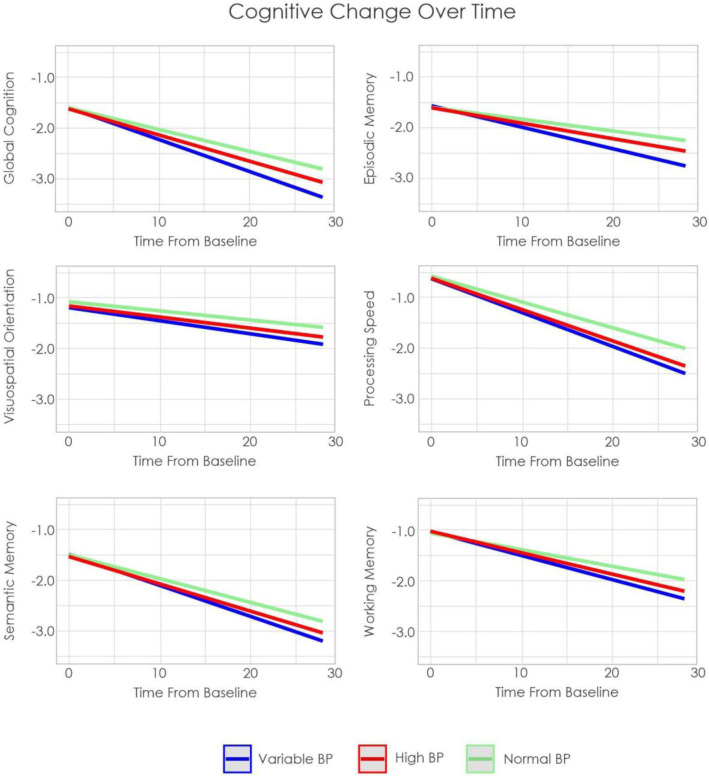
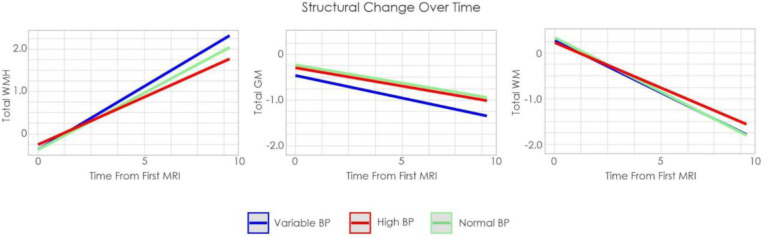
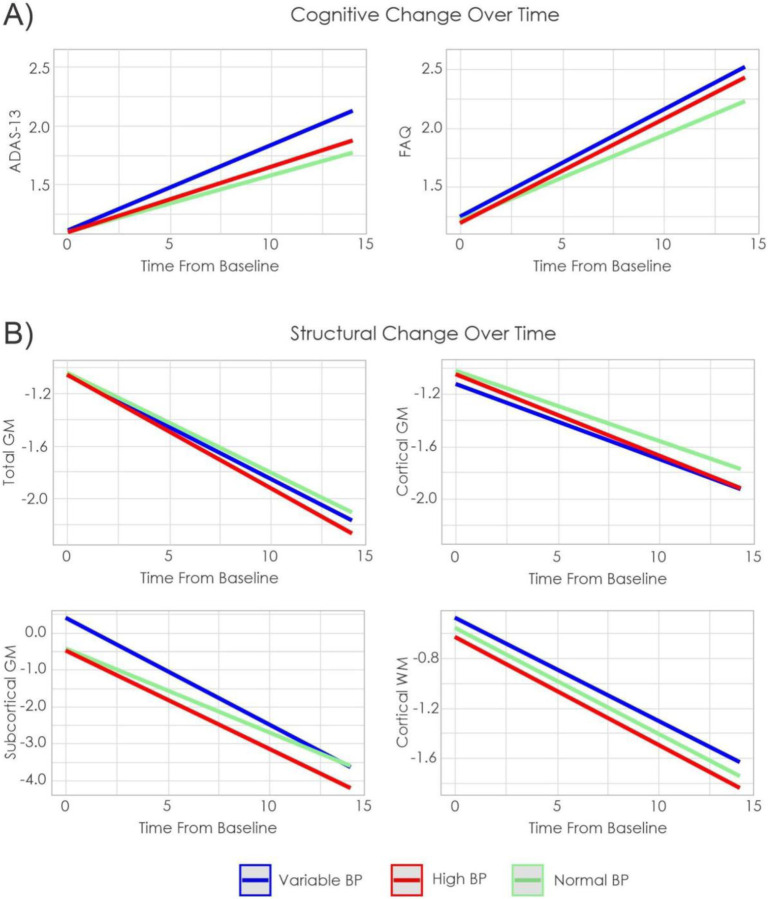
A total of 4606 participants (3429 females, mean age = 76.8) with 32776 follow-ups (mean = 7 years) from RUSH and 2114 participants (1132 females, mean age = 73.3) with 9827 follow-ups (mean = 3 years) from ADNI were included in this study. Participants were divided into one of three groups: 1) normal BP, high BP, or variable BP. Older adults with variable BP exhibited the highest rate of cognitive decline followed by high BP and then normal BP. Increased GM volume loss and WMH burden was also observed in variable BP compared to high and normal BP. With respect to post-mortem neuropathology, both variable and high BP had increased severities compared to normal BP. Importantly, results were consistent across the RUSH and ADNI participants, supporting the generalizability of the findings.
Limited research has examined the long-term impact of variable BP on cognition and brain structure. These findings show the importance that both high and variable BP have on cognitive decline and structural brain changes. Structural damages caused by variable BP may reduce resilience to future dementia-related pathology and increased risk of dementia. Improved treatment and management of variable BP may help reduce cognitive decline in the older adult population.
高血压是衰老和痴呆中认知衰退及脑结构改变的已知风险因素。除了高血压(BP)外,个体还可能经历血压波动,即其血压在正常和高血压之间波动。目前尚不清楚血压波动对认知和脑结构有何影响。
研究血压对老年人认知和脑结构的影响。
设计、设置和参与者:这项纵向队列研究纳入了拉什阿尔茨海默病中心研究资源共享中心(RUSH)和阿尔茨海默病神经影像倡议(ADNI)的数据。如果两项研究的参与者有血压测量值以及至少一次就诊时的认知评分或MRI扫描结果,则将其纳入。
纵向灰质、白质、白质高信号体积、死后神经病理学信息以及认知测试分数。
本研究纳入了来自RUSH的4606名参与者(3429名女性,平均年龄 = 76.8岁),进行了32776次随访(平均 = 7年),以及来自ADNI的2114名参与者(1132名女性,平均年龄 = 73.3岁),进行了9827次随访(平均 = 3年)。参与者被分为三组之一:1)正常血压、高血压或血压波动。血压波动的老年人认知衰退率最高,其次是高血压,然后是正常血压。与高血压和正常血压相比,血压波动者还观察到灰质体积损失增加和白质高信号负担加重。关于死后神经病理学,与正常血压相比,血压波动和高血压的严重程度均增加。重要的是,RUSH和ADNI参与者的结果一致,支持了研究结果的普遍性。
有限的研究探讨了血压波动对认知和脑结构的长期影响。这些发现表明高血压和血压波动对认知衰退和脑结构改变都很重要。血压波动引起的结构损伤可能会降低对未来痴呆相关病理的抵抗力,并增加患痴呆症的风险。改善血压波动的治疗和管理可能有助于减少老年人群的认知衰退。