Holt Leanne M, Gyles Trevonn M, Parise Eric M, Minier-Toribio Angelica, Markovic Tamara, Rivera Matthew, Yeh Szu-Ying, Nestler Eric J
Nash Family Department of Neuroscience and Friedman Brain Institute, Icahn School of Medicine at Mount Sinai, New York, USA.
bioRxiv. 2024 Jan 16:2024.01.15.575728. doi: 10.1101/2024.01.15.575728.
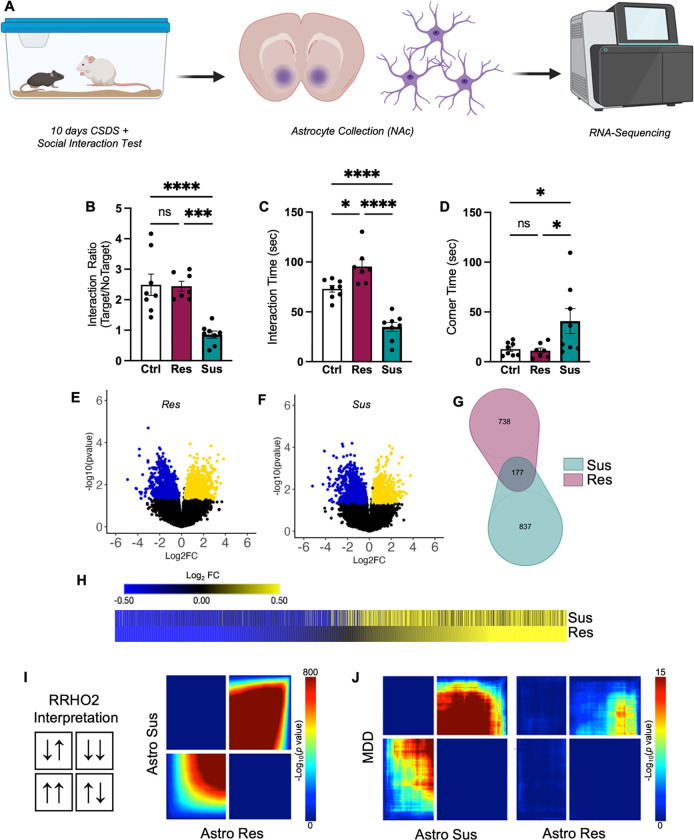
Increasing evidence implicates astrocytes in stress and depression in both rodent models and human Major Depressive Disorder (MDD). Despite this, little is known about the transcriptional responses to stress of astrocytes within the nucleus accumbens (NAc), a key brain reward region, and their influence on behavioral outcomes.
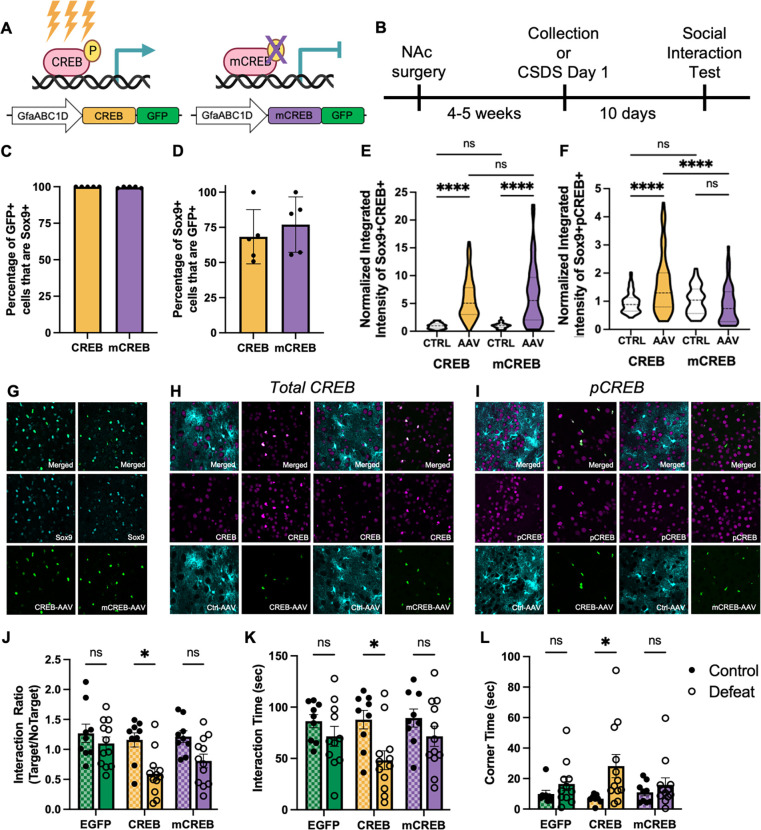
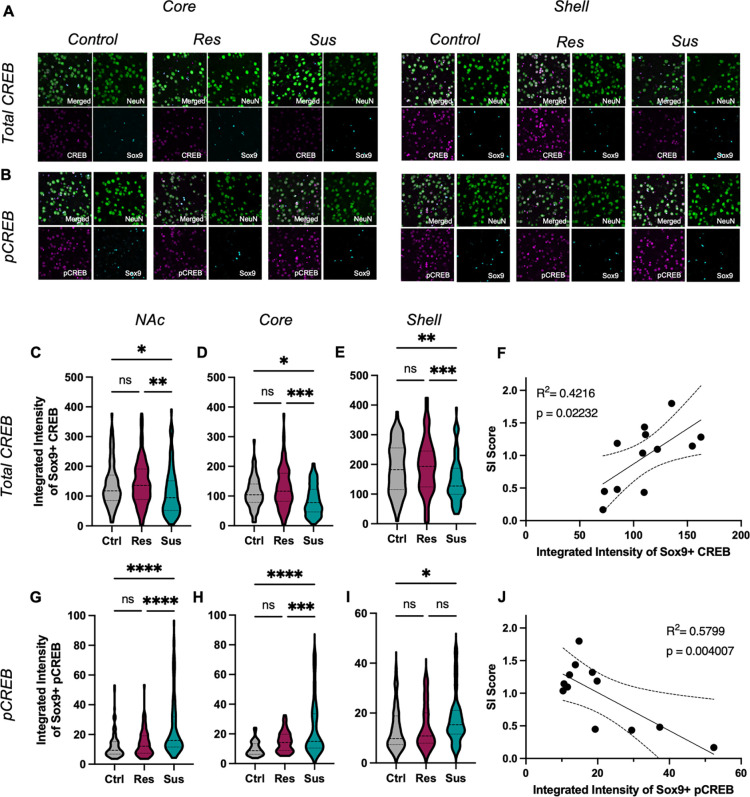
We used whole cell sorting, RNA-sequencing, and bioinformatic analyses to investigate the NAc astrocyte transcriptome in male mice in response to chronic social defeat stress (CSDS). Immunohistochemistry was used to determine stress-induced changes in astrocytic CREB within the NAc. Finally, astrocytic regulation of depression-like behavior was investigated using viral-mediated manipulation of CREB in combination with CSDS.
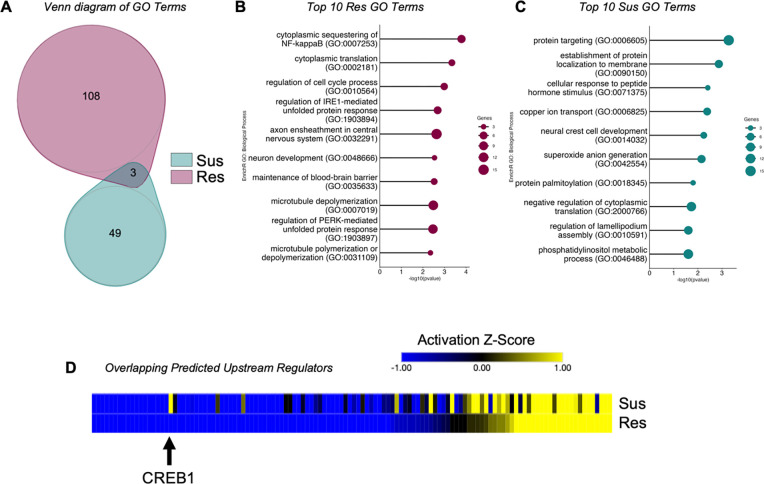
We found a robust transcriptional response in NAc astrocytes to CSDS in stressed mice, with changes seen in both stress-susceptible and stress-resilient animals. Bioinformatic analysis revealed CREB, a transcription factor widely studied in neurons, as one of the top-predicted upstream regulators of the NAc astrocyte transcriptome, with opposite activation states seen in resilient versus susceptible mice. This bioinformatic result was confirmed at the protein level with immunohistochemistry. Viral overexpression of CREB selectively in NAc astrocytes promoted susceptibility to chronic stress.
Together, our data demonstrate that the astrocyte transcriptome responds robustly to CSDS and, for the first time, that transcriptional regulation in astrocytes contributes to depressive-like behaviors. A better understanding of transcriptional regulation in astrocytes may reveal unknown molecular mechanisms underlying neuropsychiatric disorders.
越来越多的证据表明,在啮齿动物模型和人类重度抑郁症(MDD)中,星形胶质细胞与应激和抑郁有关。尽管如此,对于伏隔核(NAc,一个关键的脑奖赏区域)内星形胶质细胞对应激的转录反应及其对行为结果的影响,我们知之甚少。
我们使用全细胞分选、RNA测序和生物信息学分析来研究雄性小鼠伏隔核星形胶质细胞转录组对慢性社会挫败应激(CSDS)的反应。免疫组织化学用于确定应激诱导的伏隔核内星形胶质细胞CREB的变化。最后,结合CSDS,使用病毒介导的CREB操纵来研究星形胶质细胞对抑郁样行为的调节。
我们发现应激小鼠的伏隔核星形胶质细胞对CSDS有强烈的转录反应,在应激易感性和应激恢复性动物中均有变化。生物信息学分析显示,CREB(一种在神经元中广泛研究的转录因子)是伏隔核星形胶质细胞转录组预测的上游调节因子之一,在恢复性小鼠和易感性小鼠中呈现相反的激活状态。这一生物信息学结果在蛋白质水平通过免疫组织化学得到证实。在伏隔核星形胶质细胞中选择性地病毒过表达CREB会增加对慢性应激的易感性。
总之,我们的数据表明星形胶质细胞转录组对CSDS有强烈反应,并且首次表明星形胶质细胞中的转录调节促成了抑郁样行为。更好地理解星形胶质细胞中的转录调节可能揭示神经精神疾病潜在的未知分子机制。