Molecular Cell Biology of Autophagy, The Francis Crick Institute, London NW1 1AT, UK.
Proteomics Science Technology Platform, The Francis Crick Institute, London NW1 1AT, UK.
J Cell Sci. 2024 Feb 15;137(4). doi: 10.1242/jcs.261081. Epub 2024 Feb 22.
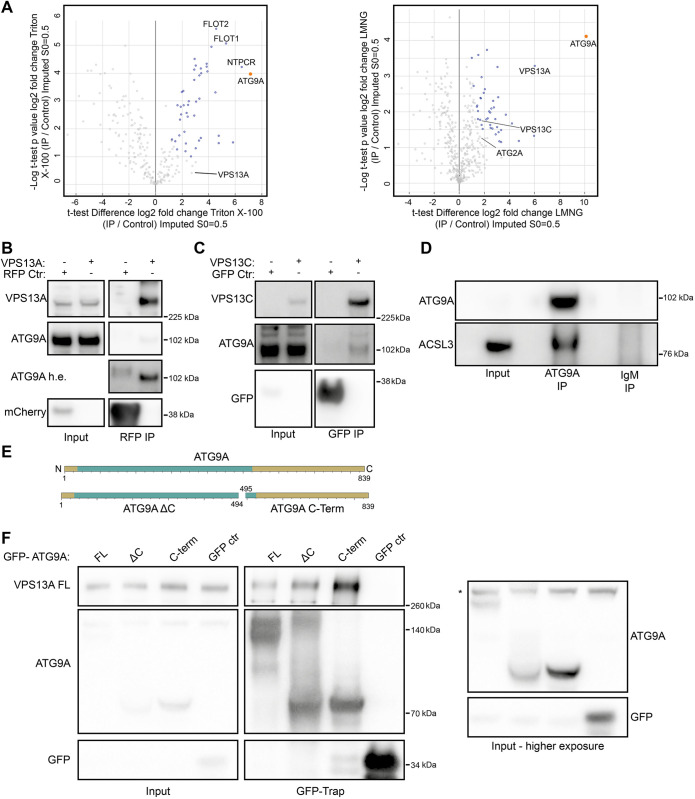
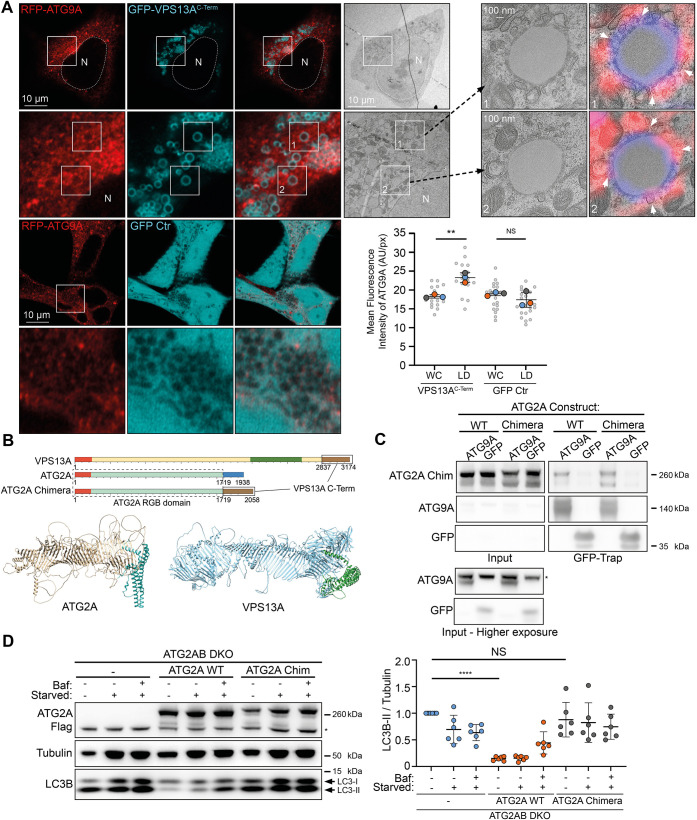
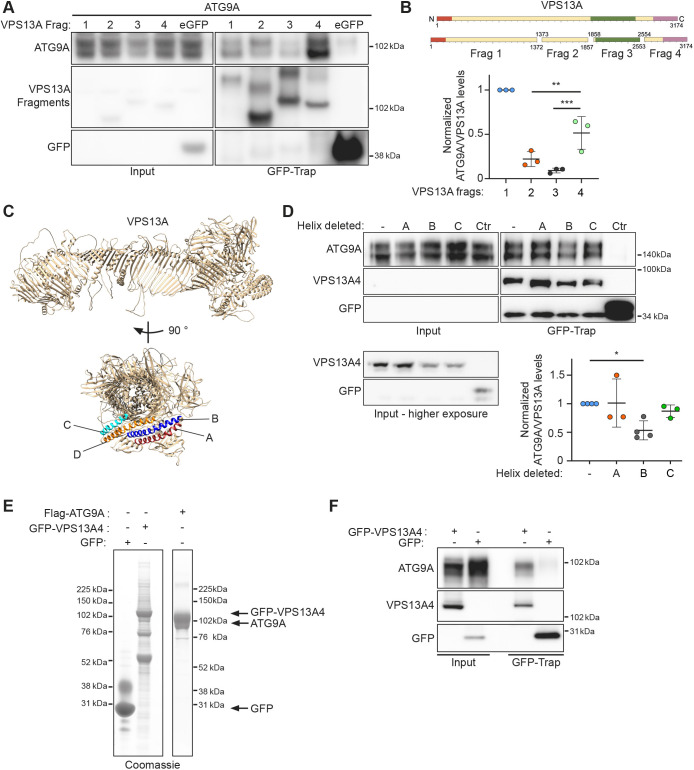
ATG9A, a transmembrane protein of the core autophagy pathway, cycles between the Golgi, endosomes and a vesicular compartment. ATG9A was recently shown to act as a lipid scramblase, and this function is thought to require its interaction with another core autophagy protein, ATG2A, which acts as a lipid transfer protein. Together, ATG9A and ATG2A are proposed to function to expand the growing autophagosome. However, ATG9A is implicated in other pathways including membrane repair and lipid droplet homeostasis. To elucidate other ATG9A interactors within the autophagy pathway, or interactors beyond autophagy, we performed an interactome analysis through mass spectrometry. This analysis revealed a host of proteins involved in lipid synthesis and trafficking, including ACSL3, VPS13A and VPS13C. Furthermore, we show that ATG9A directly interacts with VPS13A and forms a complex that is distinct from the ATG9A-ATG2A complex.
ATG9A 是核心自噬途径的一种跨膜蛋白,在高尔基体、内体和囊泡隔室之间循环。最近有研究表明,ATG9A 作为一种脂质翻转酶发挥作用,而这一功能被认为需要其与另一种核心自噬蛋白 ATG2A 相互作用,ATG2A 作为一种脂质转移蛋白发挥作用。ATG9A 和 ATG2A 一起被认为可以扩展正在生长的自噬体。然而,ATG9A 还涉及其他途径,包括膜修复和脂滴动态平衡。为了阐明自噬途径内的其他 ATG9A 相互作用蛋白,或超越自噬的相互作用蛋白,我们通过质谱进行了相互作用组分析。该分析揭示了许多涉及脂质合成和运输的蛋白质,包括 ACSL3、VPS13A 和 VPS13C。此外,我们还表明 ATG9A 直接与 VPS13A 相互作用,并形成一个不同于 ATG9A-ATG2A 复合物的复合物。