Corcelle-Termeau Elisabeth, Vindeløv Signe Diness, Hämälistö Saara, Mograbi Baharia, Keldsbo Anne, Bräsen Jan Hinrich, Favaro Elena, Adam Dieter, Szyniarowski Piotr, Hofman Paul, Krautwald Stefan, Farkas Thomas, Petersen Nikolaj H T, Rohde Mikkel, Linkermann Andreas, Jäättelä Marja
a Cell Death and Metabolism, Center for Autophagy, Recycling and Disease, Danish Cancer Society Research Center , Copenhagen , Denmark.
b Institute of Research on Cancer and Ageing of Nice (IRCAN), Université de Nice-Sophia Antipolis, Centre Antoine Lacassagne , Nice , France.
Autophagy. 2016 May 3;12(5):833-49. doi: 10.1080/15548627.2016.1159378. Epub 2016 Apr 12.
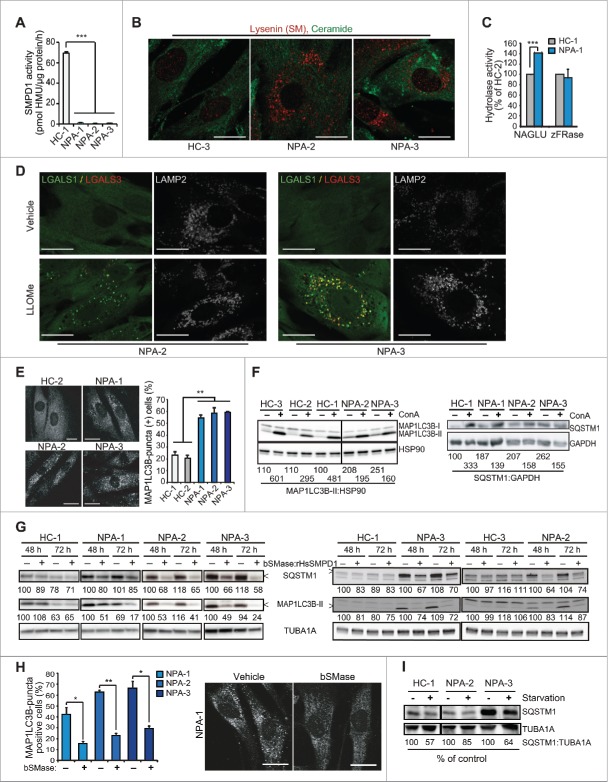
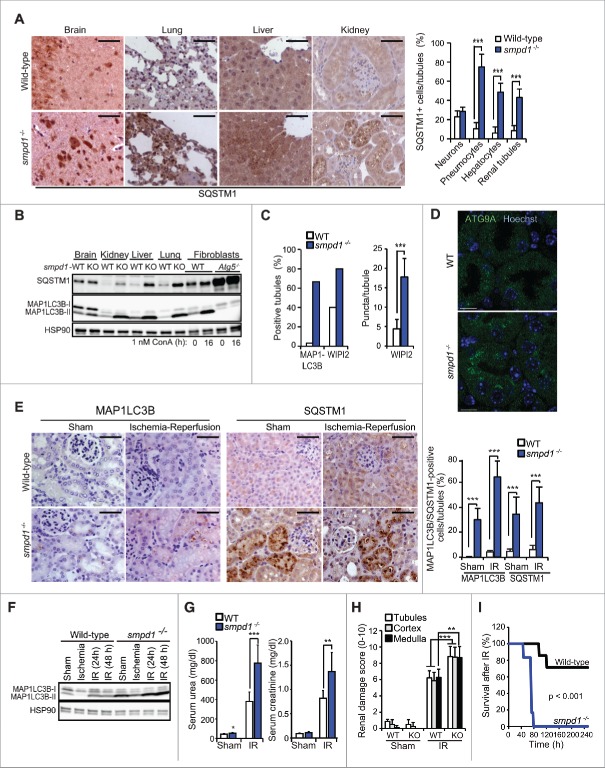
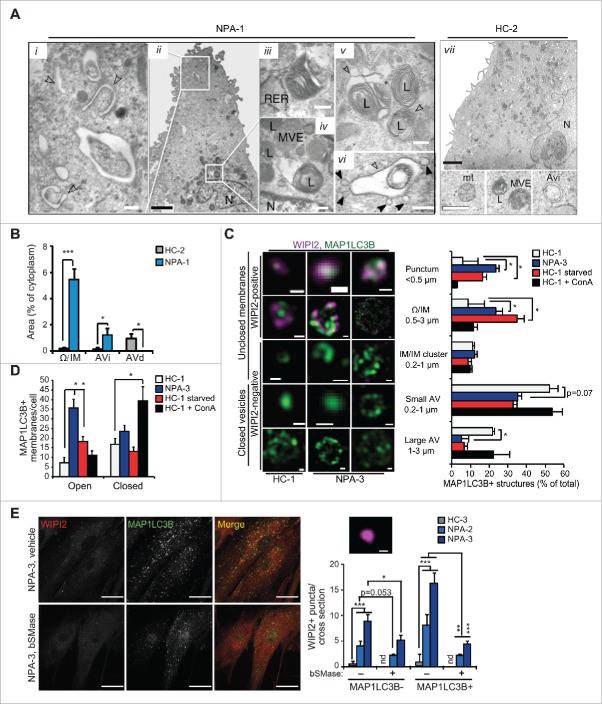
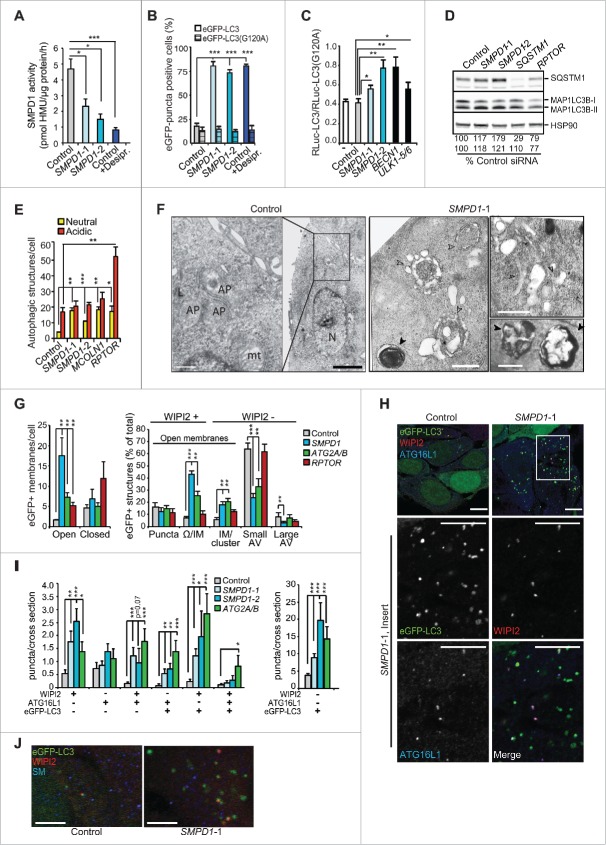
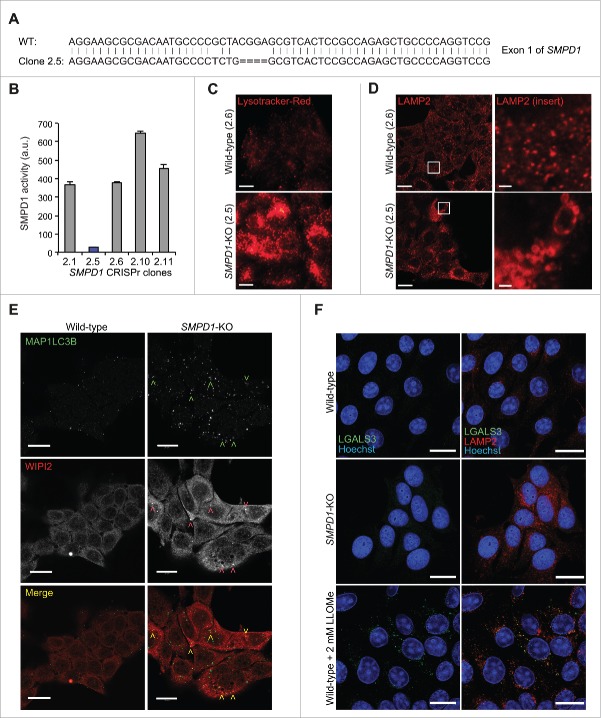
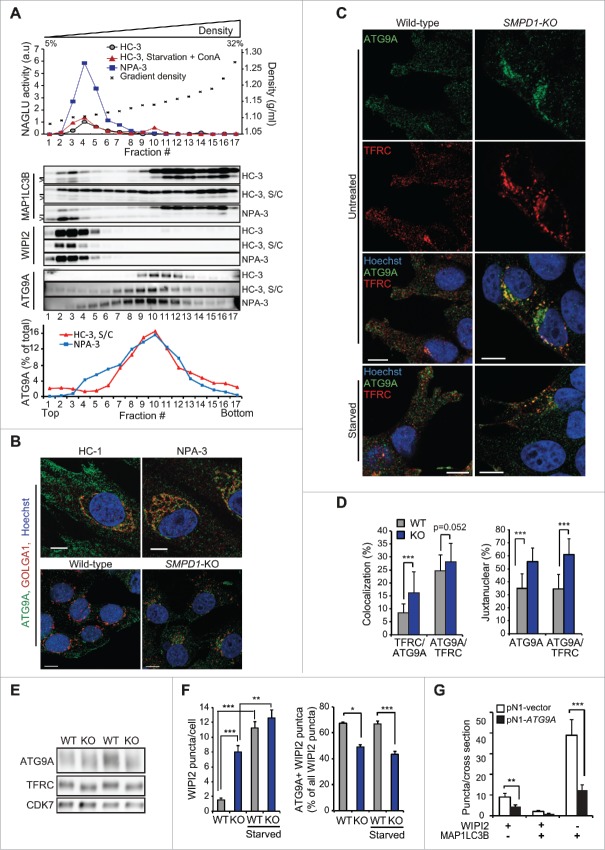
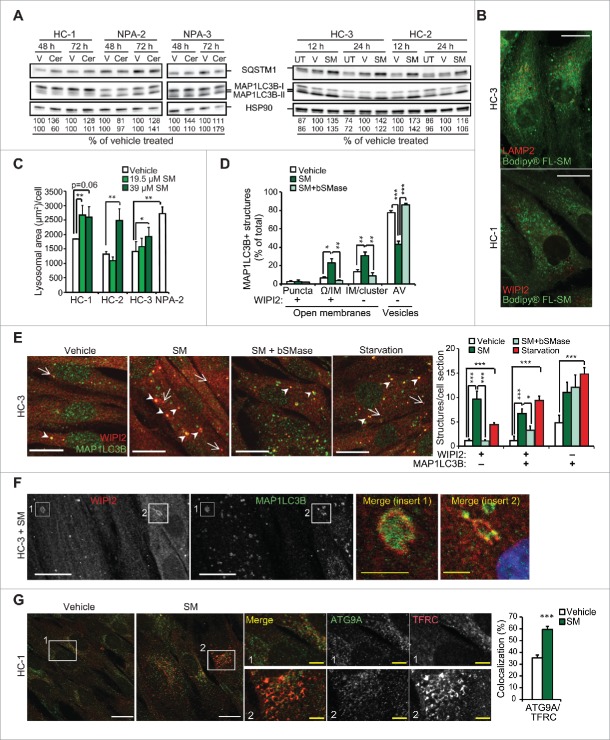
Sphingomyelin is an essential cellular lipid that traffics between plasma membrane and intracellular organelles until directed to lysosomes for SMPD1 (sphingomyelin phosphodiesterase 1)-mediated degradation. Inactivating mutations in the SMPD1 gene result in Niemann-Pick diseases type A and B characterized by sphingomyelin accumulation and severely disturbed tissue homeostasis. Here, we report that sphingomyelin overload disturbs the maturation and closure of autophagic membranes. Niemann-Pick type A patient fibroblasts and SMPD1-depleted cancer cells accumulate elongated and unclosed autophagic membranes as well as abnormally swollen autophagosomes in the absence of normal autophagosomes and autolysosomes. The immature autophagic membranes are rich in WIPI2, ATG16L1 and MAP1LC3B but display reduced association with ATG9A. Contrary to its normal trafficking between plasma membrane, intracellular organelles and autophagic membranes, ATG9A concentrates in transferrin receptor-positive juxtanuclear recycling endosomes in SMPD1-deficient cells. Supporting a causative role for ATG9A mistrafficking in the autophagy defect observed in SMPD1-deficient cells, ectopic ATG9A effectively reverts this phenotype. Exogenous C12-sphingomyelin induces a similar juxtanuclear accumulation of ATG9A and subsequent defect in the maturation of autophagic membranes in healthy cells while the main sphingomyelin metabolite, ceramide, fails to revert the autophagy defective phenotype in SMPD1-deficient cells. Juxtanuclear accumulation of ATG9A and defective autophagy are also evident in tissues of smpd1-deficient mice with a subsequent inability to cope with kidney ischemia-reperfusion stress. These data reveal sphingomyelin as an important regulator of ATG9A trafficking and maturation of early autophagic membranes.
鞘磷脂是一种重要的细胞脂质,在质膜和细胞内细胞器之间运输,直至被导向溶酶体进行由SMPD1(鞘磷脂磷酸二酯酶1)介导的降解。SMPD1基因的失活突变导致A型和B型尼曼-匹克病,其特征是鞘磷脂积累和组织稳态严重紊乱。在此,我们报告鞘磷脂过载会干扰自噬膜的成熟和闭合。A型尼曼-匹克病患者的成纤维细胞和SMPD1缺失的癌细胞在缺乏正常自噬体和自溶酶体的情况下,积累了伸长且未闭合的自噬膜以及异常肿胀的自噬体。未成熟的自噬膜富含WIPI2、ATG16L1和MAP1LC3B,但与ATG9A的结合减少。与它在质膜、细胞内细胞器和自噬膜之间的正常运输相反,ATG9A在SMPD1缺陷细胞中集中在转铁蛋白受体阳性的近核循环内体中。异位表达ATG9A能有效逆转这种表型,支持了ATG9A运输错误在SMPD1缺陷细胞中观察到的自噬缺陷中起因果作用。外源性C12-鞘磷脂在健康细胞中诱导类似的ATG9A近核积累以及随后自噬膜成熟缺陷,而主要的鞘磷脂代谢产物神经酰胺未能逆转SMPD1缺陷细胞中的自噬缺陷表型。在smpd1缺陷小鼠的组织中也明显存在ATG9A的近核积累和自噬缺陷,随后无法应对肾脏缺血-再灌注应激。这些数据揭示鞘磷脂是ATG9A运输和早期自噬膜成熟的重要调节因子。