Division of Neuroimmunology, Department of Neurology and Neurological Sciences, Stanford University, Stanford, CA.
Division of Blood and Marrow Transplantation and Cellular Therapy, Stanford University School of Medicine, Stanford, CA.
Blood Adv. 2024 Mar 26;8(6):1474-1486. doi: 10.1182/bloodadvances.2023011896.
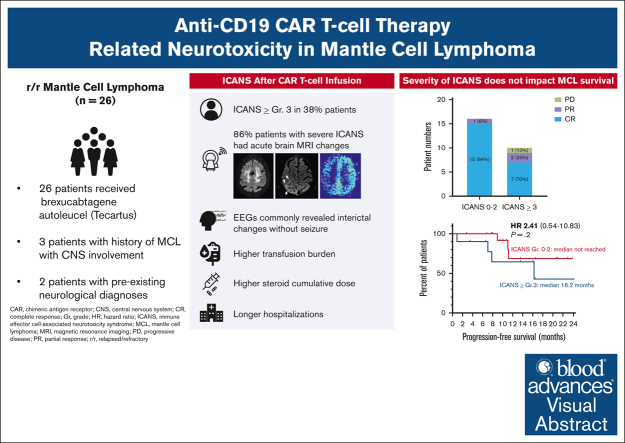
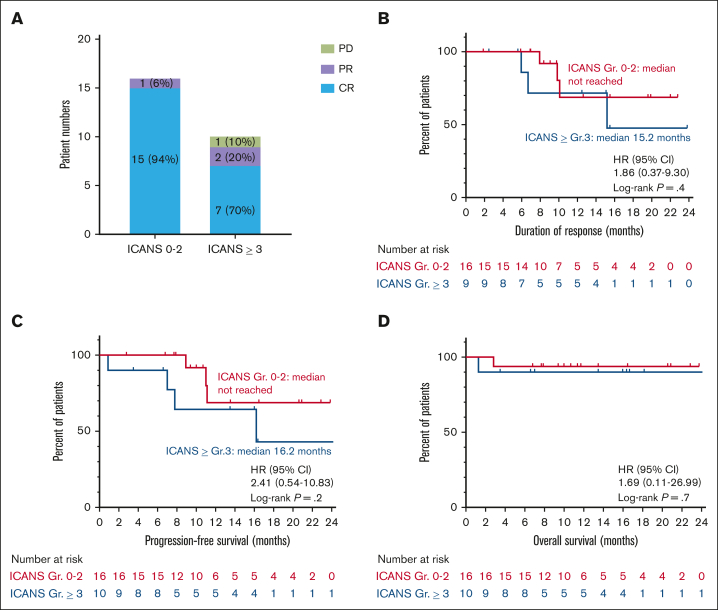
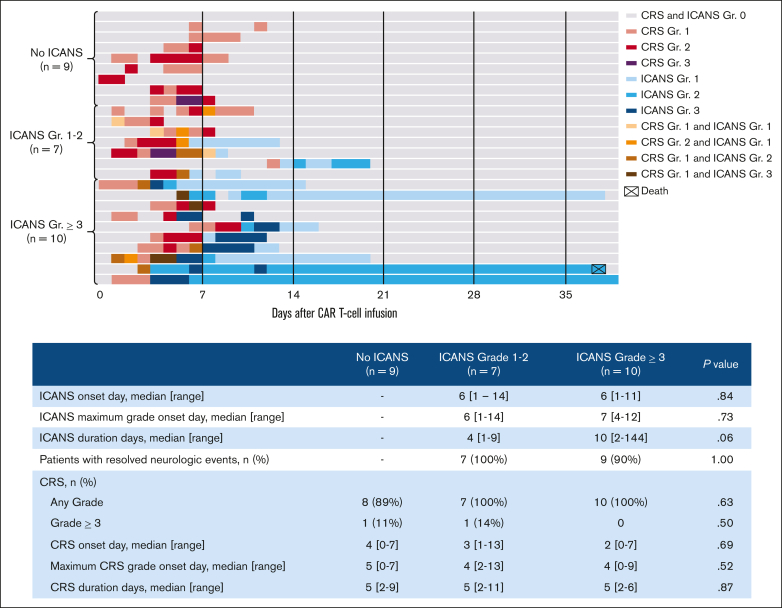
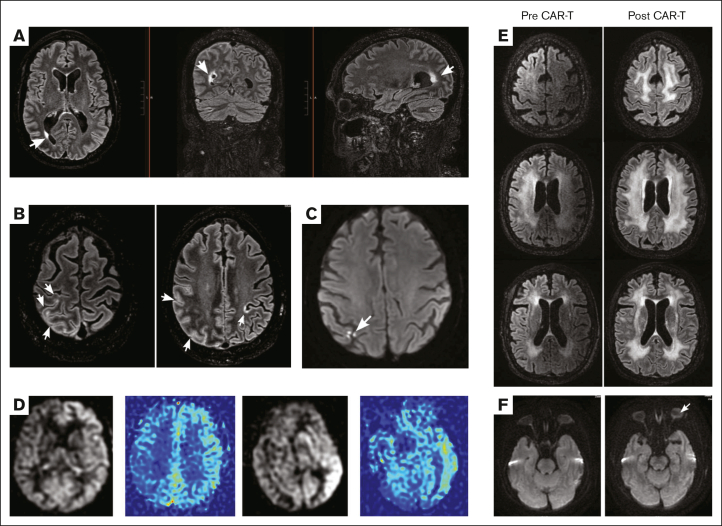
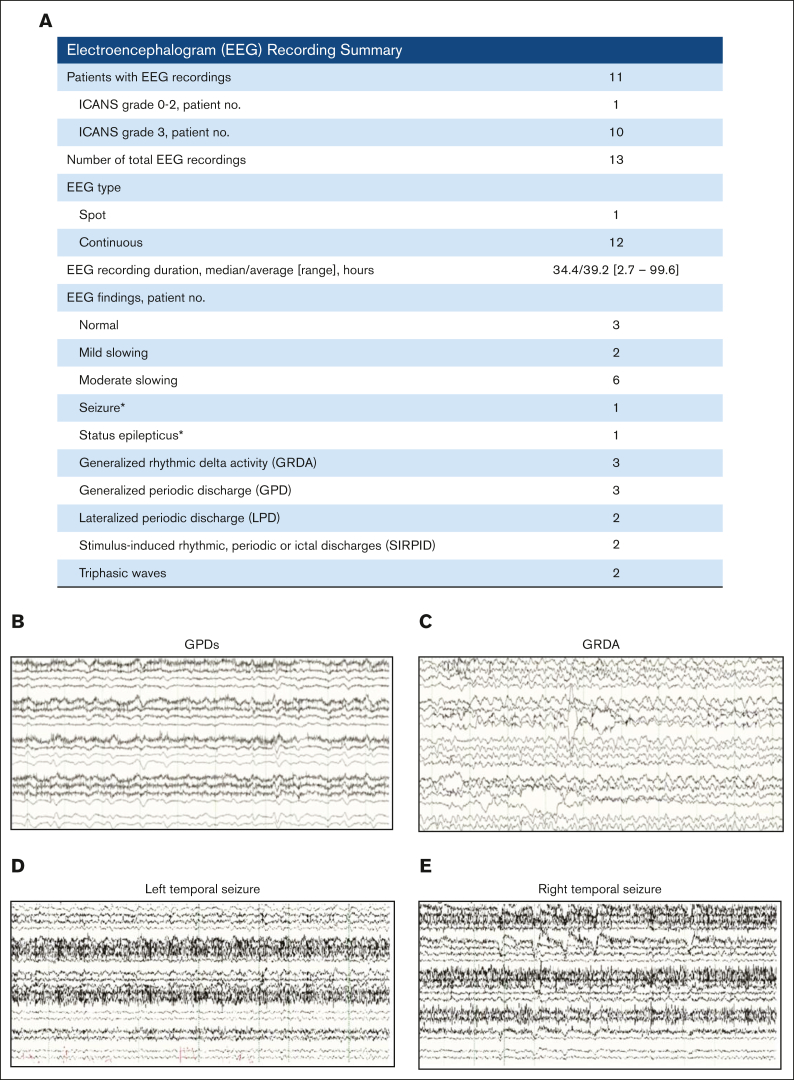
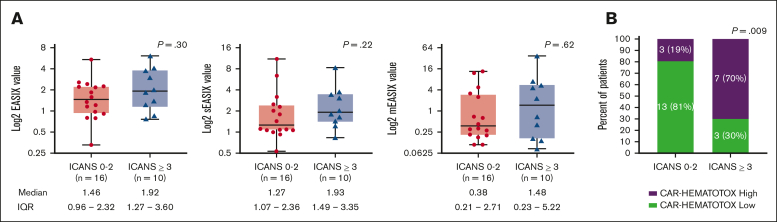
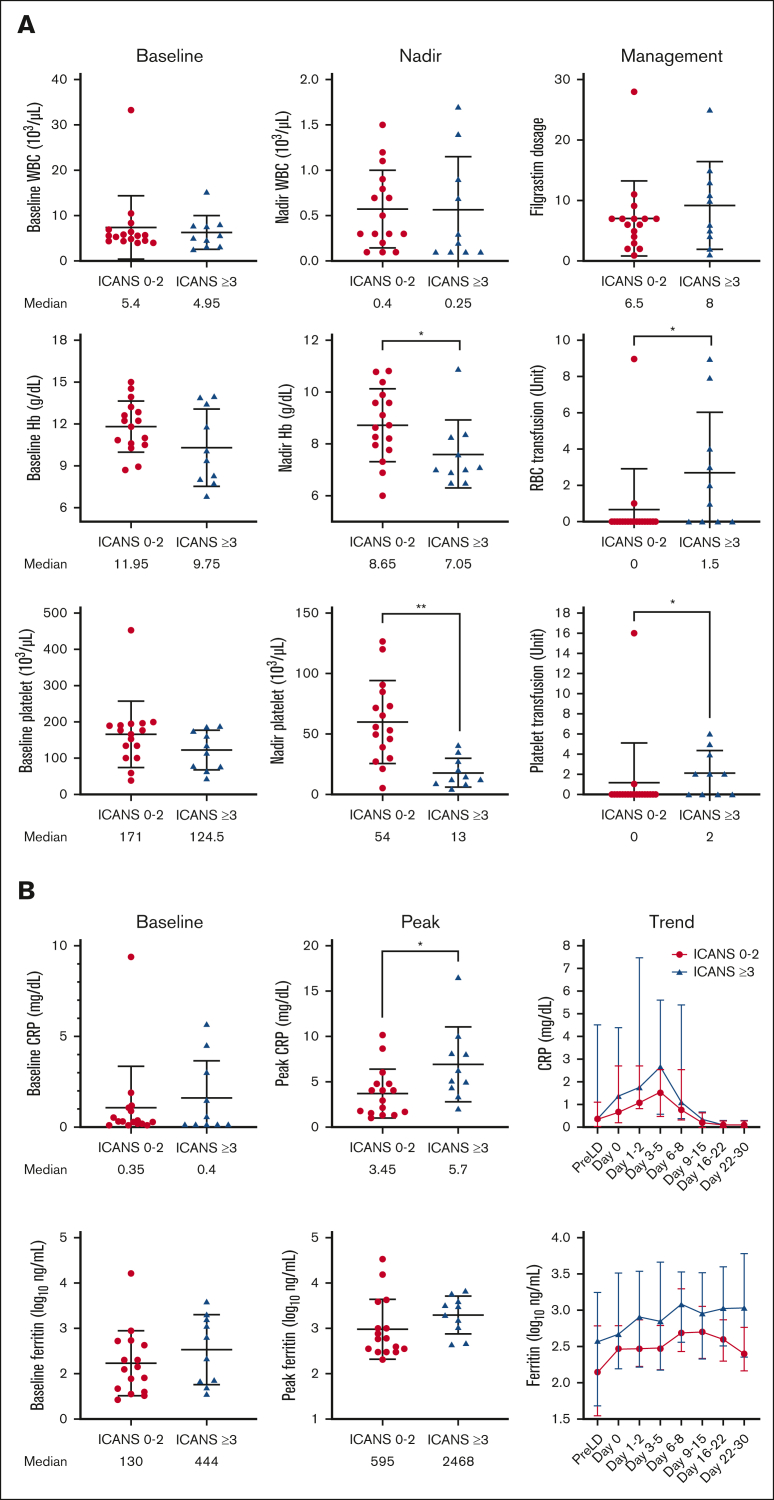
CD19 chimeric antigen receptor (CAR) T-cell therapy has proven highly effective for treating relapsed/refractory mantle cell lymphoma (MCL). However, immune effector cell-associated neurotoxicity syndrome (ICANS) remains a significant concern. This study aimed to evaluate the clinical, radiological, and laboratory correlatives associated with ICANS development after CD19 CAR T-cell therapy in patients with MCL. All patients (N = 26) who received standard-of-care brexucabtagene autoleucel until July 2022 at our institution were evaluated. Laboratory and radiographic correlatives including brain magnetic resonance imaging (MRI) and electroencephalogram (EEG) were evaluated to determine the clinical impact of ICANS. Seventeen (65%) patients experienced ICANS after treatment, with a median onset on day 6. Ten (38%) patients experienced severe (grade ≥3) ICANS. All patients with ICANS had antecedent cytokine release syndrome (CRS), but no correlation was observed between ICANS severity and CRS grade. Overall, 92% of EEGs revealed interictal changes; no patients experienced frank seizures because of ICANS. In total, 86% of patients with severe ICANS with postinfusion brain MRIs demonstrated acute neuroimaging findings not seen on pretreatment MRI. Severe ICANS was also associated with higher rates of cytopenia, coagulopathy, increased cumulative steroid exposure, and prolonged hospitalization. However, severe ICANS did not affect treatment outcomes of patients with MCL. Severe ICANS is frequently associated with a range of postinfusion brain MRI changes and abnormal EEG findings. Longer hospitalization was observed in patients with severe ICANS, especially those with abnormal acute MRI or EEG findings, but there was no discernible impact on overall treatment response and survival.
嵌合抗原受体(CAR)T 细胞疗法已被证明对治疗复发/难治性套细胞淋巴瘤(MCL)非常有效。然而,免疫效应细胞相关神经毒性综合征(ICANS)仍然是一个重大问题。本研究旨在评估 MCL 患者接受 CD19 CAR T 细胞治疗后发生 ICANS 的临床、影像学和实验室相关因素。评估了截至 2022 年 7 月在我院接受标准护理 brexucabtagene autoleucel 治疗的所有患者(N=26)。评估了实验室和影像学相关因素,包括脑磁共振成像(MRI)和脑电图(EEG),以确定 ICANS 的临床影响。治疗后 17 名(65%)患者发生 ICANS,中位发病时间为第 6 天。10 名(38%)患者发生严重(等级≥3)ICANS。所有发生 ICANS 的患者均有细胞因子释放综合征(CRS)的前期表现,但未观察到 ICANS 严重程度与 CRS 等级之间存在相关性。总体而言,92%的 EEG 显示发作间期变化;没有患者因 ICANS 而出现癫痫发作。共有 86%的发生严重 ICANS 并进行了输注后脑部 MRI 的患者表现出治疗前 MRI 未见的急性神经影像学改变。严重的 ICANS 还与更高的血细胞减少症、凝血障碍、累积类固醇暴露增加和住院时间延长相关。然而,严重的 ICANS 并未影响 MCL 患者的治疗结果。严重的 ICANS 常与一系列输注后脑部 MRI 改变和异常 EEG 表现相关。严重的 ICANS 患者住院时间较长,尤其是那些出现异常急性 MRI 或 EEG 表现的患者,但对总体治疗反应和生存没有明显影响。