Ortega-Prieto Paula, Parlati Lucia, Benhamed Fadila, Regnier Marion, Cavalcante Isadora, Montabord Mélanie, Onifarasoaniaina Rachel, Favier Maryline, Pavlovic Natasa, Magusto Julie, Cauzac Michèle, Pagesy Patrick, Gautheron Jérémie, Desdouets Chantal, Guilmeau Sandra, Issad Tarik, Postic Catherine
Université Paris Cité, Institut Cochin, CNRS, INSERM, Paris, France.
Team Genomics and Signaling of Endocrine Tumors, Institut Cochin, CNRS, INSERM, Université Paris Cité, Paris, France.
JHEP Rep. 2023 Aug 12;6(2):100878. doi: 10.1016/j.jhepr.2023.100878. eCollection 2024 Feb.
BACKGROUND & AIMS: -GlcNAcylation is a reversible post-translational modification controlled by the activity of two enzymes, -GlcNAc transferase (OGT) and -GlcNAcase (OGA). In the liver, -GlcNAcylation has emerged as an important regulatory mechanism underlying normal liver physiology and metabolic disease.
To address whether OGT acts as a critical hepatic nutritional node, mice with a constitutive hepatocyte-specific deletion of OGT (OGT) were generated and challenged with different carbohydrate- and lipid-containing diets.
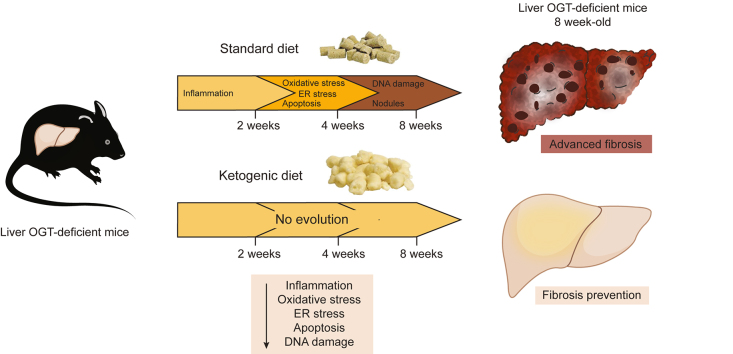
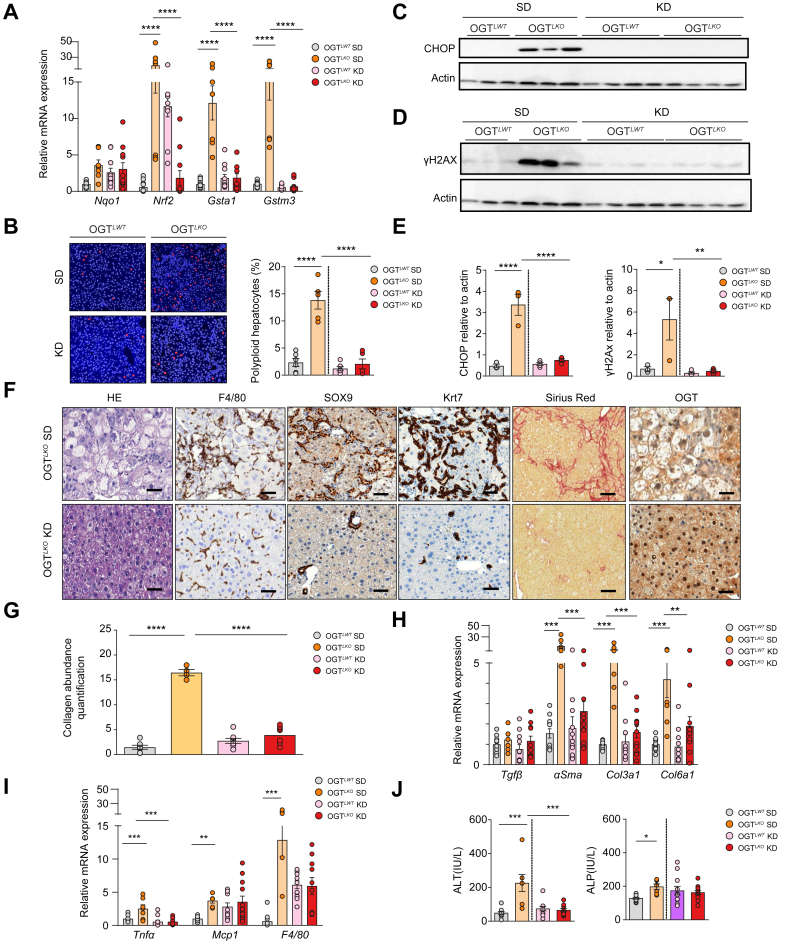
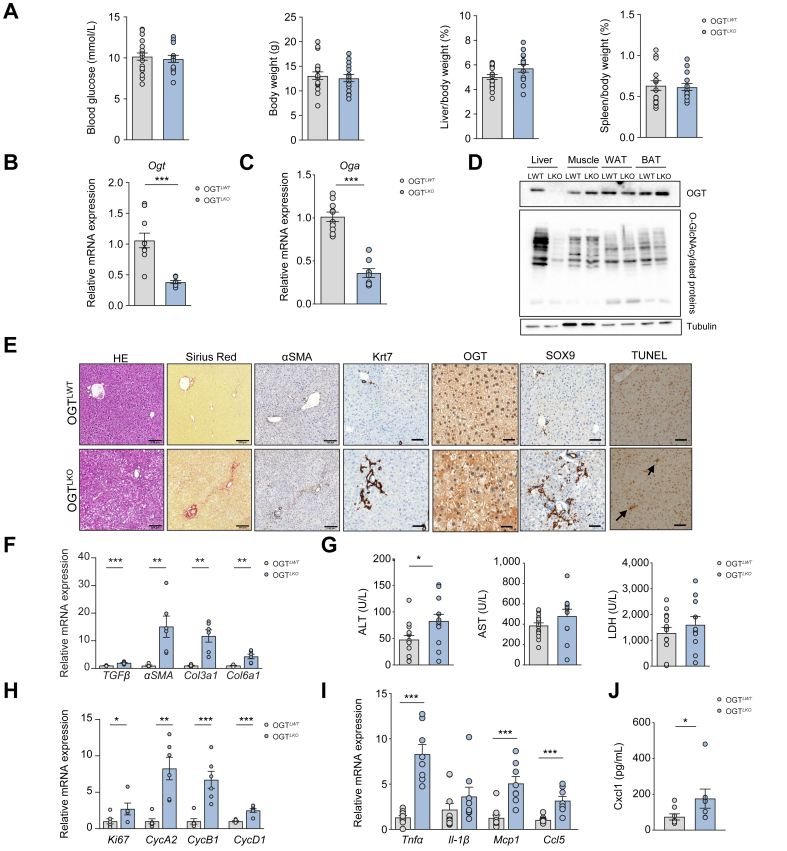
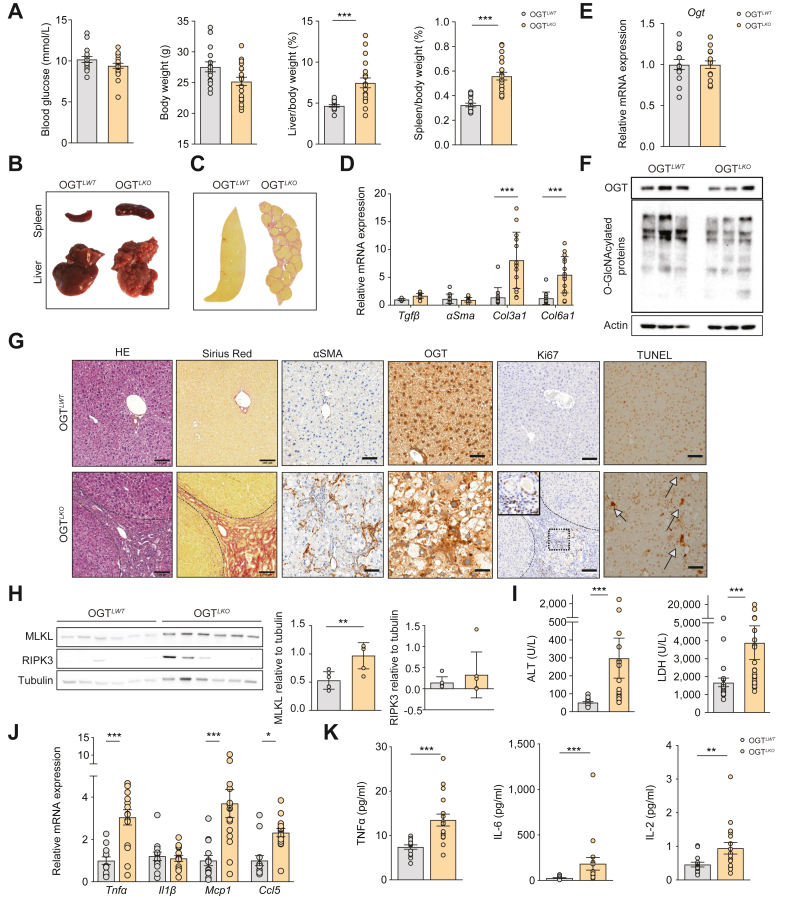
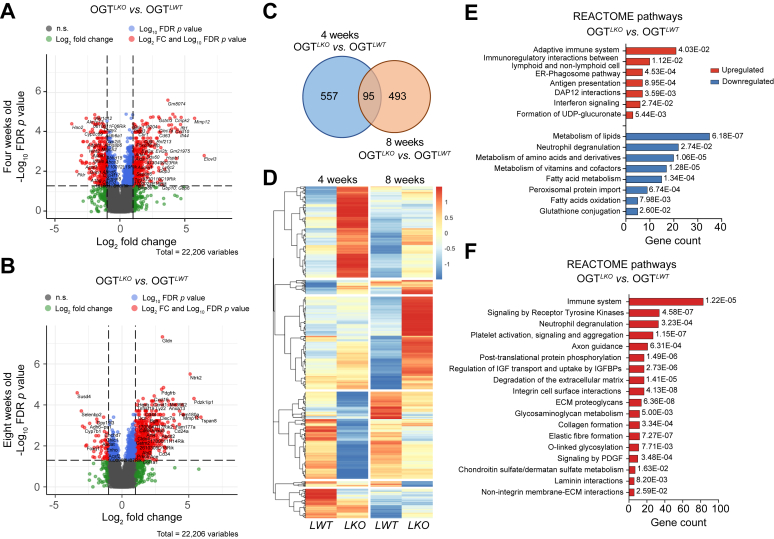
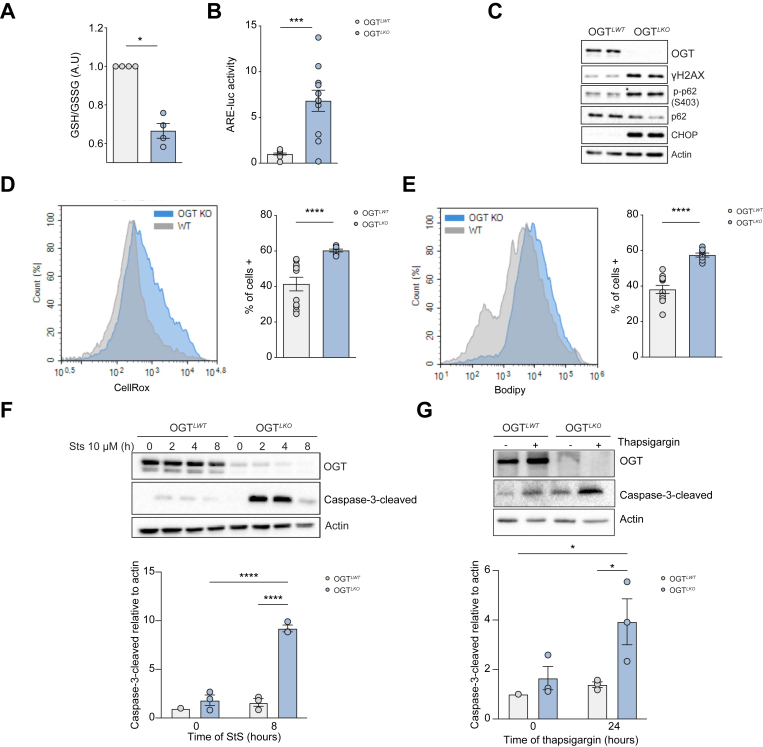
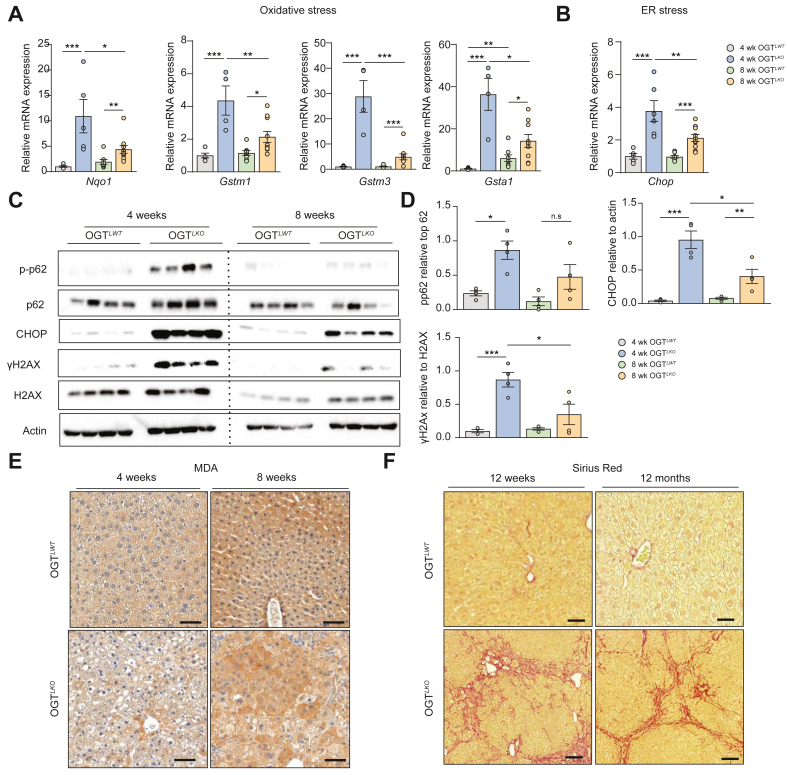
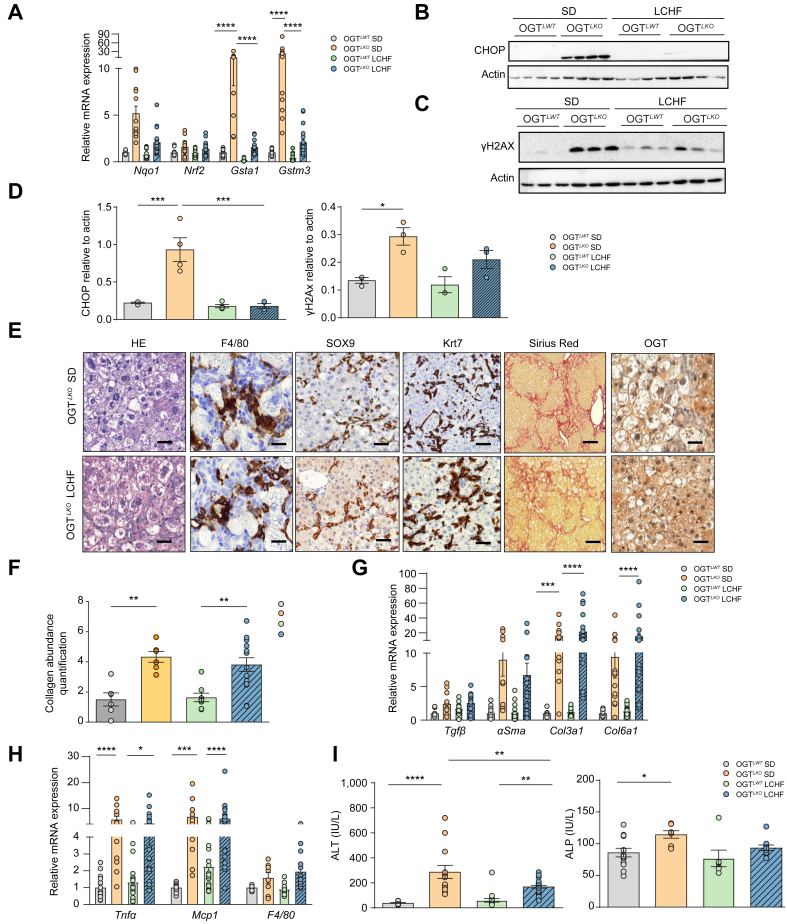
Analyses of 4-week-old OGT mice revealed significant oxidative and endoplasmic reticulum stress, and DNA damage, together with inflammation and fibrosis, in the liver. Susceptibility to oxidative and endoplasmic reticulum stress-induced apoptosis was also elevated in OGT hepatocytes. Although OGT expression was partially recovered in the liver of 8-week-old OGT mice, hepatic injury and fibrosis were not rescued but rather worsened with time. Interestingly, weaning of OGT mice on a ketogenic diet (low carbohydrate, high fat) fully prevented the hepatic alterations induced by OGT deletion, indicating that reduced carbohydrate intake protects an OGT-deficient liver.
These findings pinpoint OGT as a key mediator of hepatocyte homeostasis and survival upon carbohydrate intake and validate OGT mice as a valuable model for assessing therapeutical approaches of advanced liver fibrosis.
Our study shows that hepatocyte-specific deletion of -GlcNAc transferase (OGT) leads to severe liver injury, reinforcing the importance of -GlcNAcylation and OGT for hepatocyte homeostasis and survival. Our study also validates the liver-deficient mouse as a valuable model for the study of advanced liver fibrosis. Importantly, as the severe hepatic fibrosis of liver-deficient mice could be fully prevented upon feeding on a ketogenic diet ( very-low-carbohydrate, high-fat diet) this work underlines the potential interest of nutritional intervention as antifibrogenic strategies.
O-连接的N-乙酰葡糖胺化(O-GlcNAcylation)是一种可逆的翻译后修饰,受两种酶——O-GlcNAc转移酶(OGT)和O-GlcNAcase(OGA)的活性控制。在肝脏中,O-GlcNAcylation已成为正常肝脏生理学和代谢性疾病的重要调节机制。
为了研究OGT是否作为关键的肝脏营养节点,构建了肝细胞特异性组成性缺失OGT(OGTΔhep)的小鼠,并给予不同的含碳水化合物和脂质的饮食进行挑战。
对4周龄的OGTΔhep小鼠的分析显示,其肝脏存在明显的氧化应激和内质网应激、DNA损伤,以及炎症和纤维化。OGTΔhep肝细胞对氧化应激和内质网应激诱导的凋亡的敏感性也有所升高。尽管8周龄的OGTΔhep小鼠肝脏中OGT表达部分恢复,但肝损伤和纤维化并未得到缓解,反而随时间恶化。有趣的是,将OGTΔhep小鼠断奶后给予生酮饮食(低碳水化合物、高脂肪)可完全预防OGT缺失诱导的肝脏改变,表明减少碳水化合物摄入可保护OGT缺陷的肝脏。
这些发现确定OGT是碳水化合物摄入时肝细胞稳态和存活的关键调节因子,并验证了OGTΔhep小鼠是评估晚期肝纤维化治疗方法的有价值模型。
我们的研究表明,肝细胞特异性缺失O-GlcNAc转移酶(OGT)会导致严重的肝损伤,强化了O-GlcNAcylation和OGT对肝细胞稳态和存活的重要性。我们的研究还验证了OGT缺陷小鼠是研究晚期肝纤维化的有价值模型。重要的是,由于OGT缺陷小鼠的严重肝纤维化在给予生酮饮食(极低碳水化合物、高脂肪饮食)后可完全预防,这项工作强调了营养干预作为抗纤维化策略的潜在价值。