Division of Molecular Pathology, Department of Pathology and Laboratory Medicine, Taipei Veterans General Hospital, Taipei 11217, Taiwan.
Metabolomics-Proteomics Research Center, National Yang-Ming University, Taipei 11221, Taiwan.
Int J Mol Sci. 2021 Mar 27;22(7):3463. doi: 10.3390/ijms22073463.
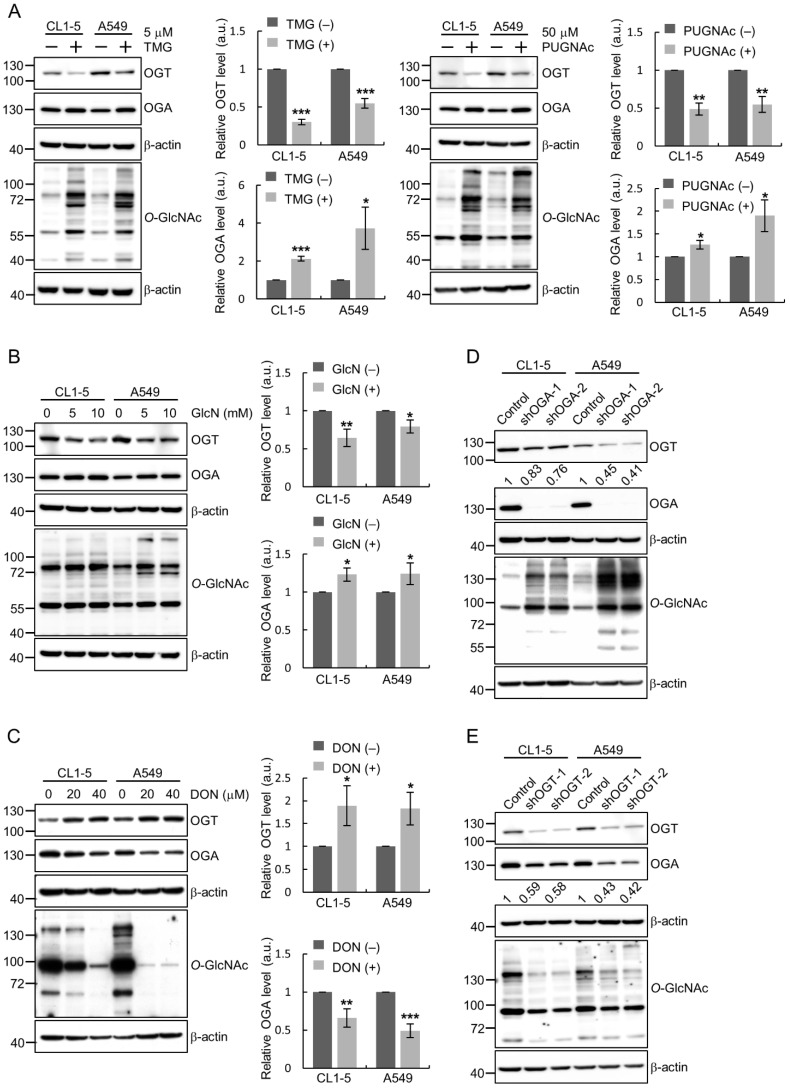
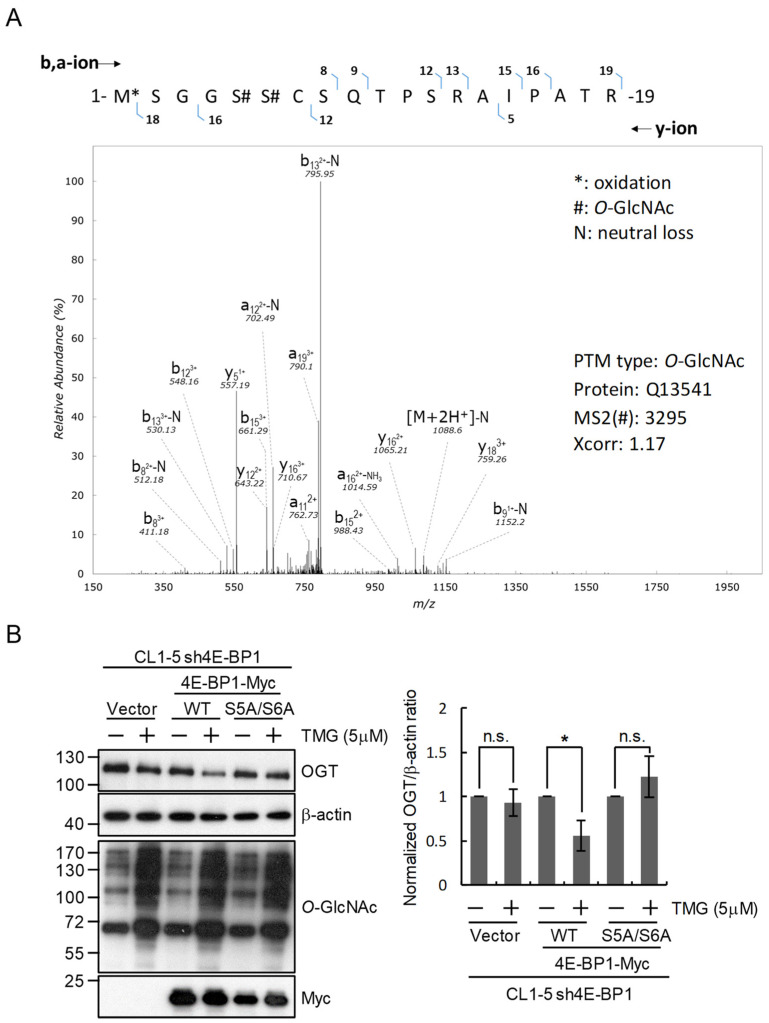
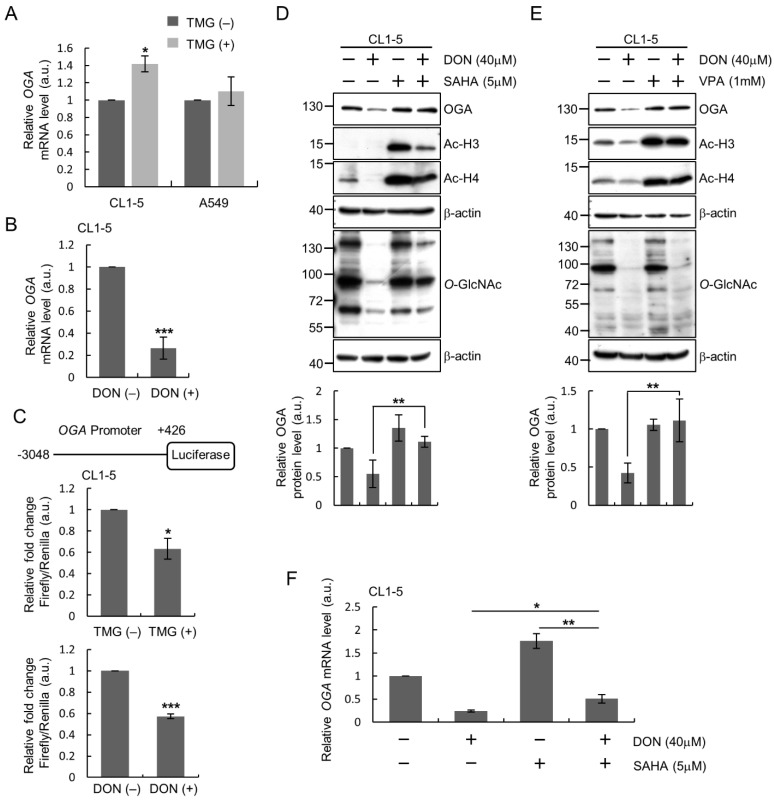
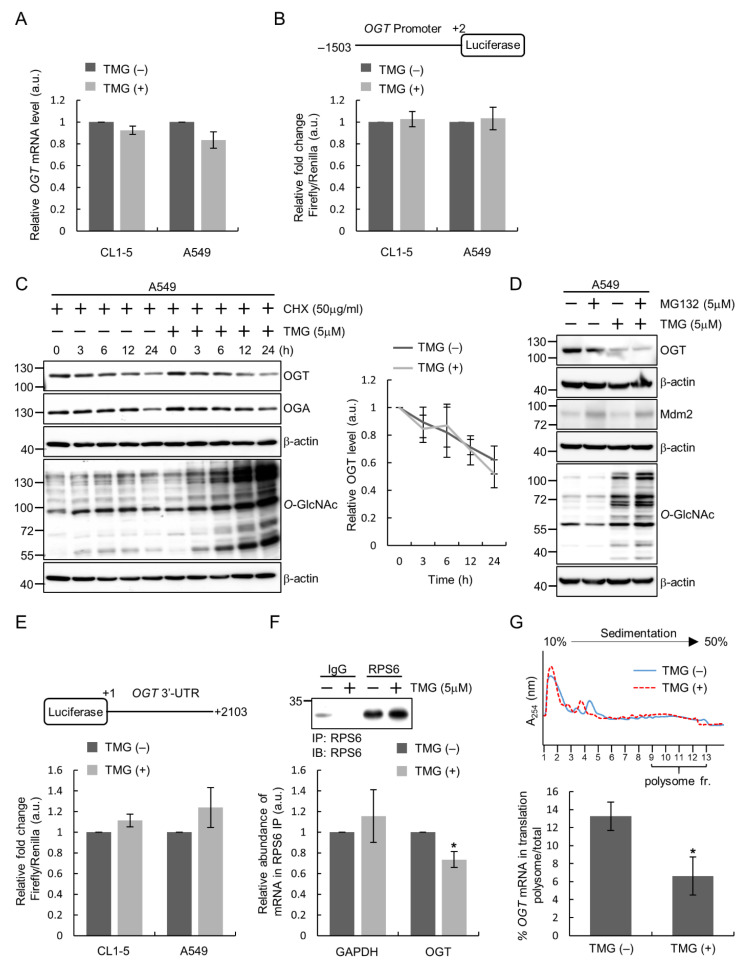
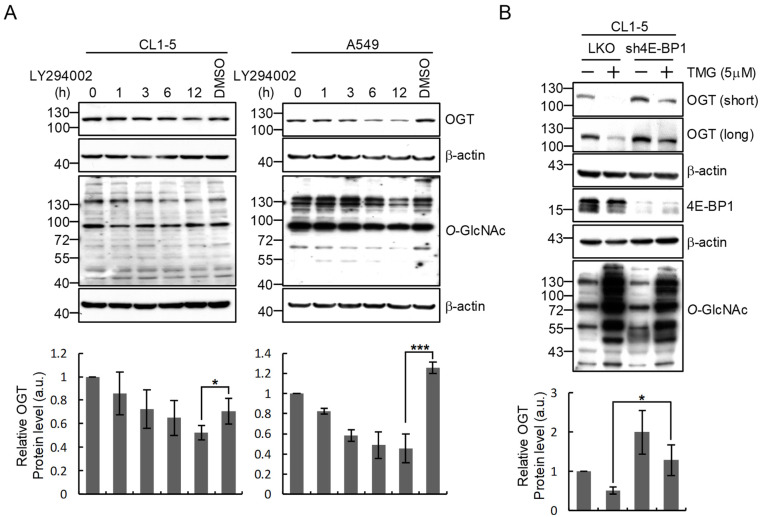
Protein -GlcNAcylation is a dynamic post-translational modification involving the attachment of -acetylglucosamine (GlcNAc) to the hydroxyl groups of Ser/Thr residues on numerous nucleocytoplasmic proteins. Two enzymes are responsible for -GlcNAc cycling on substrate proteins: -GlcNAc transferase (OGT) catalyzes the addition while -GlcNAcase (OGA) helps the removal of GlcNAc. -GlcNAcylation modifies protein functions; therefore, dysregulation of -GlcNAcylation affects cell physiology and contributes to pathogenesis. To maintain homeostasis of cellular -GlcNAcylation, there exists feedback regulation of OGT and OGA expression responding to fluctuations of -GlcNAc levels; yet, little is known about the molecular mechanisms involved. In this study, we investigated the -GlcNAc-feedback regulation of OGT and OGA expression in lung cancer cells. Results suggest that, upon alterations in -GlcNAcylation, the regulation of OGA expression occurs at the mRNA level and likely involves epigenetic mechanisms, while modulation of OGT expression is through translation control. Further analyses revealed that the eukaryotic translation initiation factor 4E-binding protein 1 (4E-BP1) contributes to the downregulation of OGT induced by hyper--GlcNAcylation; the S5A/S6A -GlcNAcylation-site mutant of 4E-BP1 cannot support this regulation, suggesting an important role of -GlcNAcylation. The results provide additional insight into the molecular mechanisms through which cells may fine-tune intracellular -GlcNAc levels to maintain homeostasis.
蛋白质-GlcNAc 酰化是一种动态的翻译后修饰过程,涉及到将 N-乙酰葡萄糖胺(GlcNAc)连接到许多核细胞质蛋白的丝氨酸/苏氨酸残基上的羟基。有两种酶负责底物蛋白上的 -GlcNAc 循环: -GlcNAc 转移酶(OGT)催化添加,而 -GlcNAcase(OGA)有助于 GlcNAc 的去除。-GlcNAc 酰化修饰蛋白质的功能;因此,-GlcNAc 酰化的失调会影响细胞生理学并导致发病机制。为了维持细胞内 -GlcNAc 酰化的平衡,OGT 和 OGA 表达的反馈调节会响应 -GlcNAc 水平的波动;然而,关于涉及的分子机制知之甚少。在这项研究中,我们研究了肺癌细胞中 -GlcNAc 对 OGT 和 OGA 表达的反馈调节。结果表明,在 -GlcNAc 酰化发生变化时,OGA 表达的调节发生在 mRNA 水平上,可能涉及表观遗传机制,而 OGT 表达的调节是通过翻译控制实现的。进一步的分析表明,真核翻译起始因子 4E 结合蛋白 1(4E-BP1)有助于高 GlcNAc 化诱导的 OGT 下调;4E-BP1 的 S5A/S6A -GlcNAc 化位点突变体不能支持这种调节,这表明 -GlcNAc 化的重要作用。这些结果为细胞如何微调细胞内 -GlcNAc 水平以维持平衡提供了更多的分子机制见解。