Department of Periodontology, Division of Oral Rehabilitation, Faculty of Dental Science, Kyushu University, Fukuoka, Japan.
Department of Clinical Chemistry and Laboratory Medicine, Graduate School of Medical Sciences, Kyushu University, Fukuoka, Japan.
Biomed Res Int. 2024 Jan 25;2024:8864513. doi: 10.1155/2024/8864513. eCollection 2024.
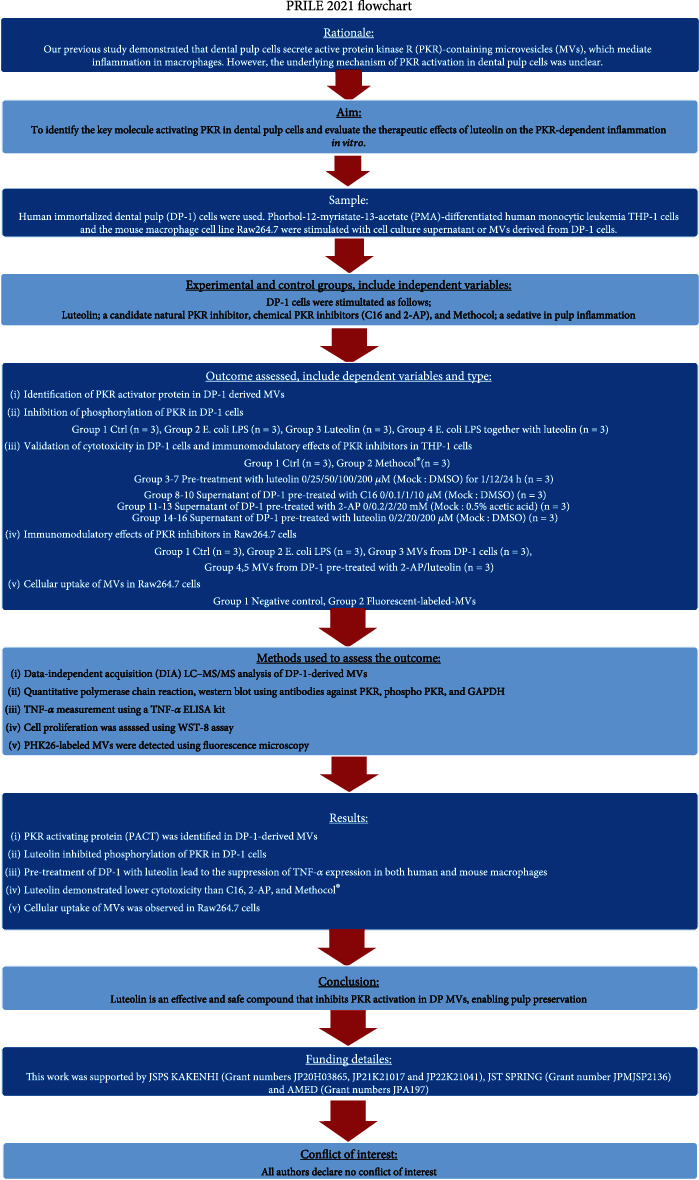
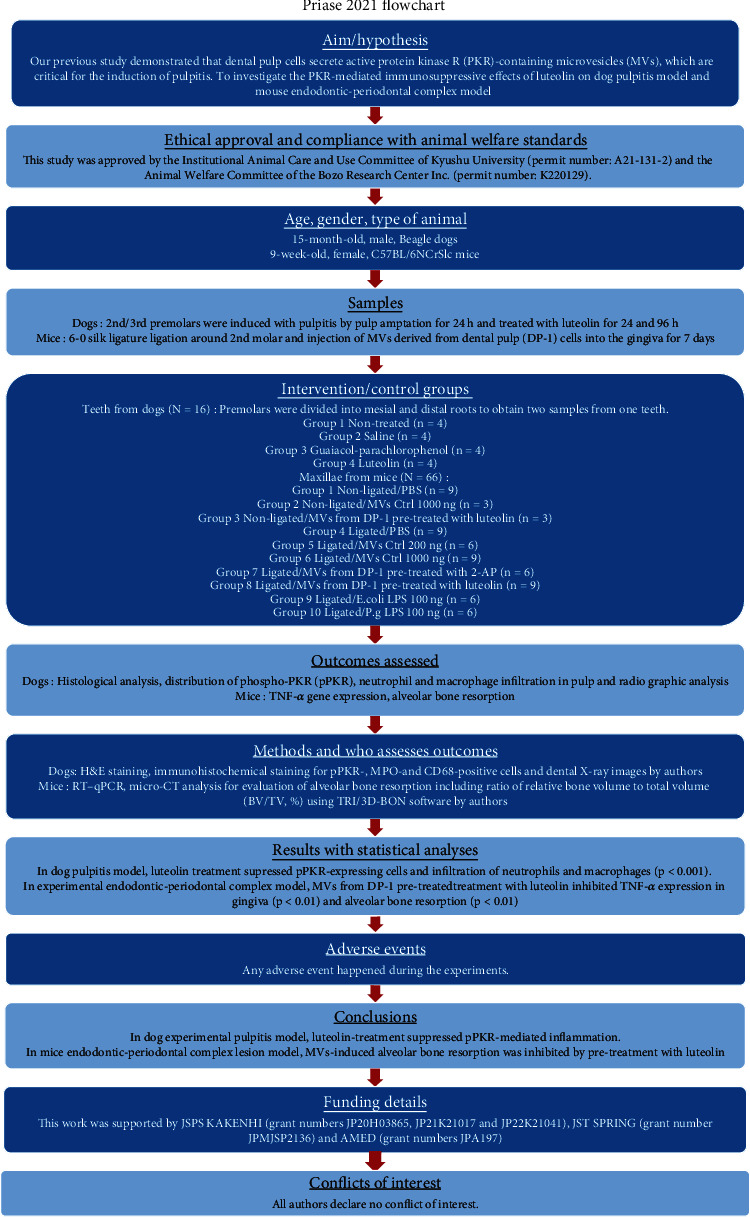
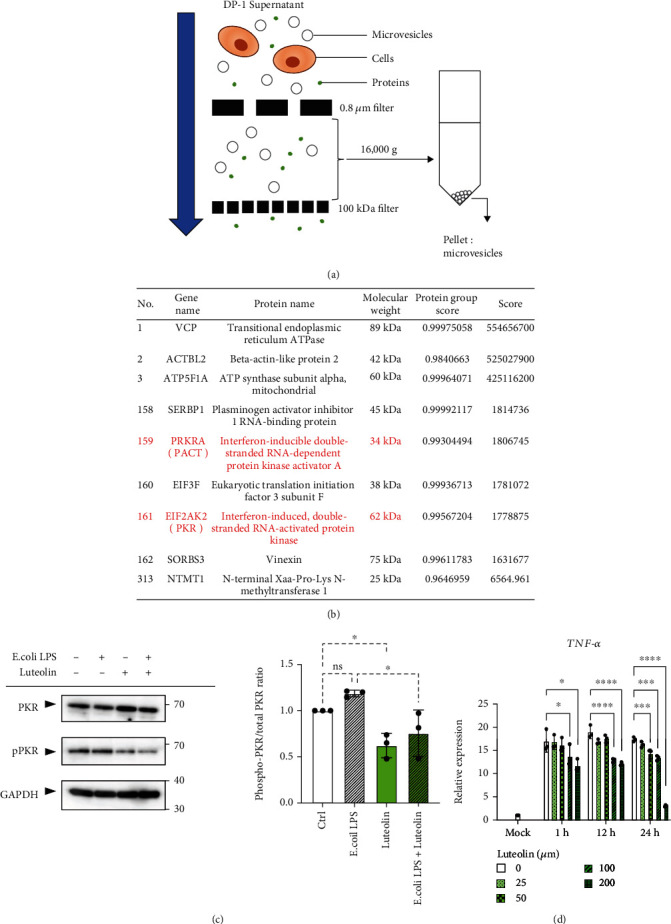
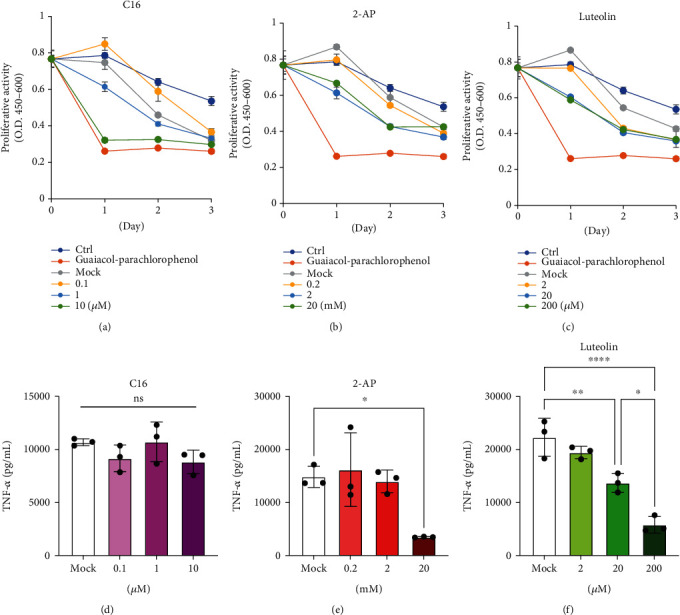
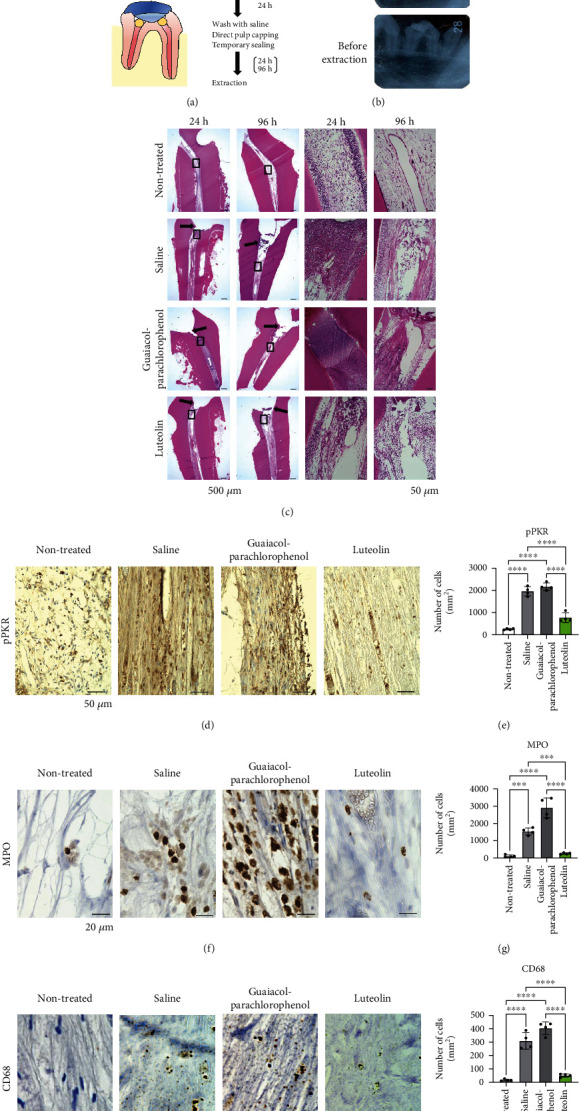
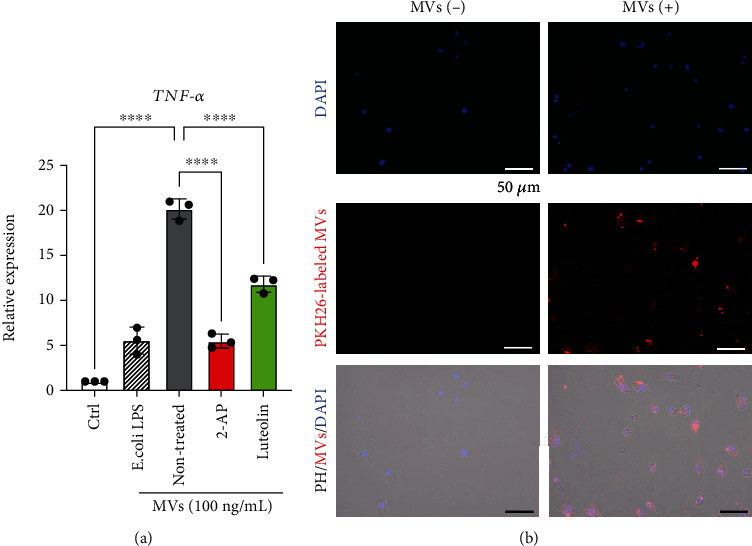
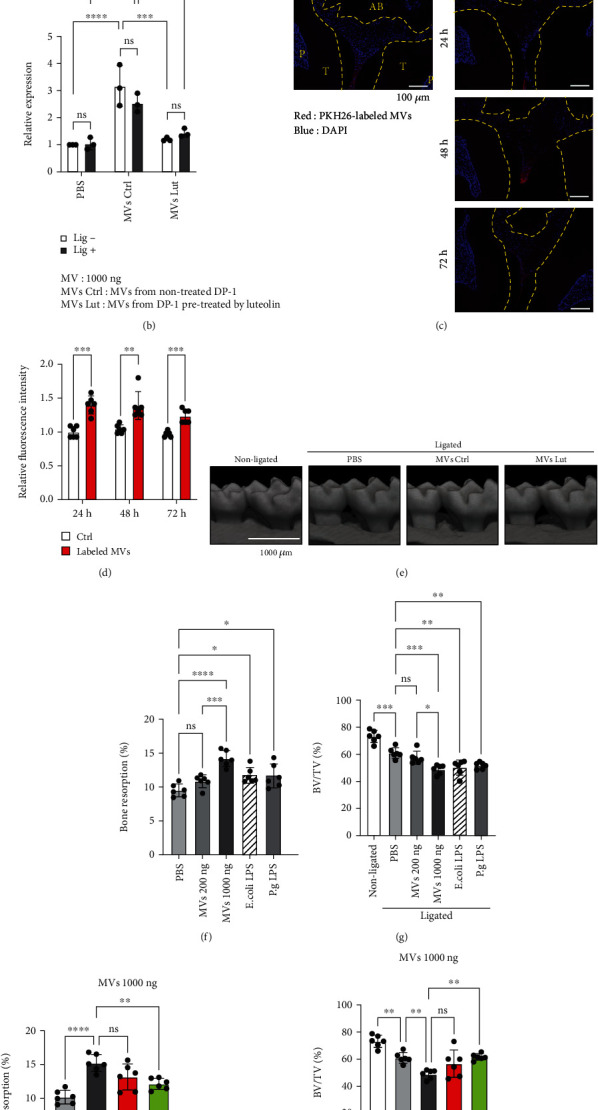
The present study evaluated the therapeutic effects of luteolin in alleviating pulpitis of dental pulp- (DP-) derived microvesicles (MVs) via the inhibition of protein kinase R- (PKR-) mediated inflammation. . Proteomic analysis of immortalized human dental pulp (DP-1) cell-derived MVs was performed to identify PKR-associated molecules. The effect of luteolin on PKR phosphorylation in DP-1 cells and the expression of tumor necrosis factor- (TNF-) in THP-1 macrophage-like cells were validated. The effect of luteolin on cell proliferation was compared with that of chemical PKR inhibitors (C16 and 2-AP) and the unique commercially available sedative guaiacol-parachlorophenol. In the dog experimental pulpitis model, the pulps were treated with (1) saline, (2) guaiacol-parachlorophenol, and (3) luteolin. Sixteen teeth from four dogs were extracted, and the pulp tissues were analyzed using hematoxylin and eosin staining. Immunohistochemical staining was performed to analyze the expression of phosphorylated PKR (pPKR), myeloperoxidase (MPO), and CD68. Experimental endodontic-periodontal complex lesions were established in mouse molar through a silk ligature and simultaneous MV injection. MVs were prepared from DP-1 cells with or without pretreatment with 2-AP or luteolin. A three-dimensional microcomputed tomography analysis was performed on day 7 ( = 6). Periodontal bone resorption volumes were calculated for each group (nonligated-ligated), and the ratio of bone volume to tissue volume was measured.
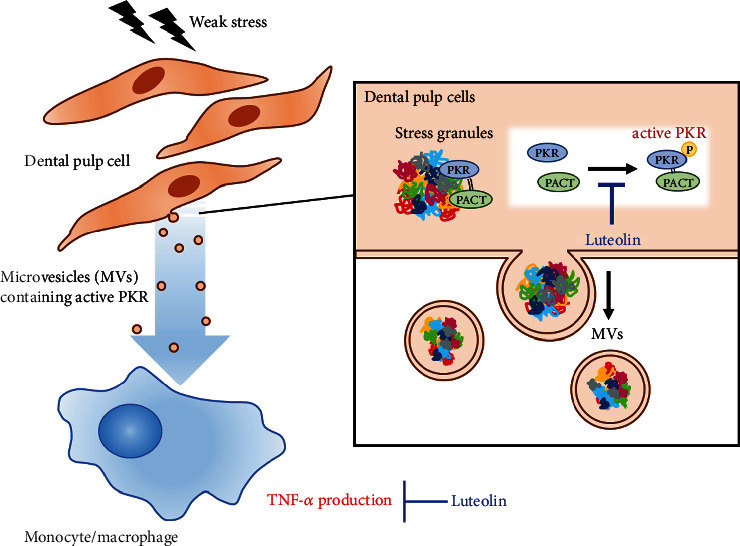
Proteomic analysis identified an endogenous PKR activator, and a protein activator of interferon-induced PKR, also known as PACT, was included in MVs. Luteolin inhibited the expressions of pPKR in DP-1 cells and TNF- in THP-1 cells with the lowest suppression of cell proliferation. In the dog model of experimental pulpitis, luteolin treatment suppressed the expression of pPKR-, MPO-, and CD68-positive cells in pulp tissues, whereas guaiacol-parachlorophenol treatment caused coagulative necrosis and disruption. In a mouse model of endodontic-periodontal complex lesions, luteolin treatment significantly decreased MV-induced alveolar bone resorption.
Luteolin is an effective and safe compound that inhibits PKR activation in DP-derived MVs, enabling pulp preservation.
本研究通过抑制蛋白激酶 R-(PKR-)介导的炎症,评估木樨素缓解牙髓-(DP-)衍生微小囊泡(MVs)牙髓炎的治疗效果。对永生化人牙髓(DP-1)细胞衍生的 MV 进行蛋白质组学分析,以鉴定 PKR 相关分子。验证木樨素对 DP-1 细胞中 PKR 磷酸化和 THP-1 巨噬样细胞中肿瘤坏死因子-(TNF-)的表达的影响。将木樨素对细胞增殖的影响与化学 PKR 抑制剂(C16 和 2-AP)和独特的市售镇静剂愈创木酚-对氯苯酚进行比较。在犬实验性牙髓炎模型中,(1)生理盐水、(2)愈创木酚-对氯苯酚和(3)木樨素处理牙髓。从四只狗中取出 16 颗牙齿,用苏木精和伊红染色分析牙髓组织。进行免疫组织化学染色以分析磷酸化 PKR(pPKR)、髓过氧化物酶(MPO)和 CD68 的表达。通过丝线结扎和同时注射 MV 建立小鼠磨牙实验性牙髓牙周复合体病变。从 DP-1 细胞制备 MV,并用 2-AP 或木樨素预处理或不预处理。对第 7 天(=6)进行三维微计算机断层扫描分析。计算每组(未结扎-结扎)的牙周骨吸收量,并测量骨体积与组织体积的比值。
蛋白质组学分析鉴定出一种内源性 PKR 激活剂,干扰素诱导的 PKR 蛋白激活剂,也称为 PACT,包含在 MV 中。木樨素抑制 DP-1 细胞中 pPKR 和 THP-1 细胞中 TNF-的表达,同时对细胞增殖的抑制作用最小。在犬实验性牙髓炎模型中,木樨素处理抑制了牙髓组织中 pPKR-、MPO-和 CD68-阳性细胞的表达,而愈创木酚-对氯苯酚处理导致凝固性坏死和破坏。在牙髓牙周复合体病变的小鼠模型中,木樨素处理显著减少了 MV 诱导的牙槽骨吸收。
木樨素是一种有效的、安全的化合物,可抑制 DP 衍生的 MV 中 PKR 的激活,从而实现牙髓的保存。