Department of Anesthesiology, Zhongshan Hospital, Fudan University, 180# Feng-Lin Road, Shanghai, 200032, China.
Shanghai Key Laboratory of Perioperative Stress and Protection, Shanghai, China.
Cell Commun Signal. 2024 Feb 2;22(1):97. doi: 10.1186/s12964-023-01440-6.
Sepsis is a severe systemic inflammatory disorder manifested by a dysregulated immune response to infection and multi-organ failure. Numerous studies have shown that elevated ferritin levels exist as an essential feature during sepsis and are able to suggest patients' prognoses. At the same time, the specific mechanism of ferritin-induced inflammatory injury remains unclear.
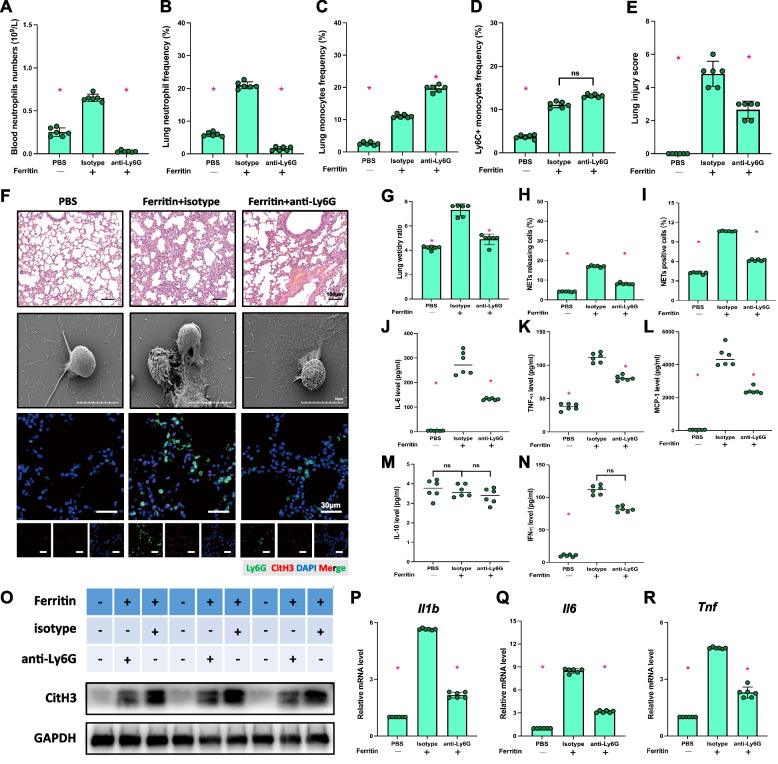
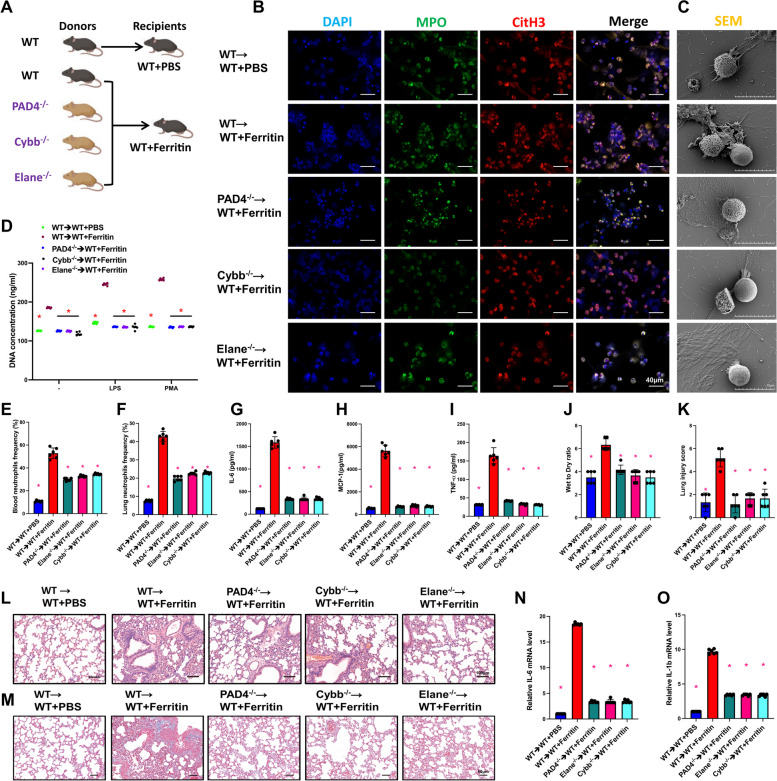
Hyper-ferritin state during inflammation was performed by injecting ferritin into a mouse model and demonstrated that injection of ferritin could induce a systemic inflammatory response and increase neutrophil extracellular trap (NET) formation.Padi4, Elane and Cybb mice were used for the NETs formation experiment. Western blot, immunofluorescence, ELISA, and flow cytometry examined the changes in NETs, inflammation, and related signaling pathways.
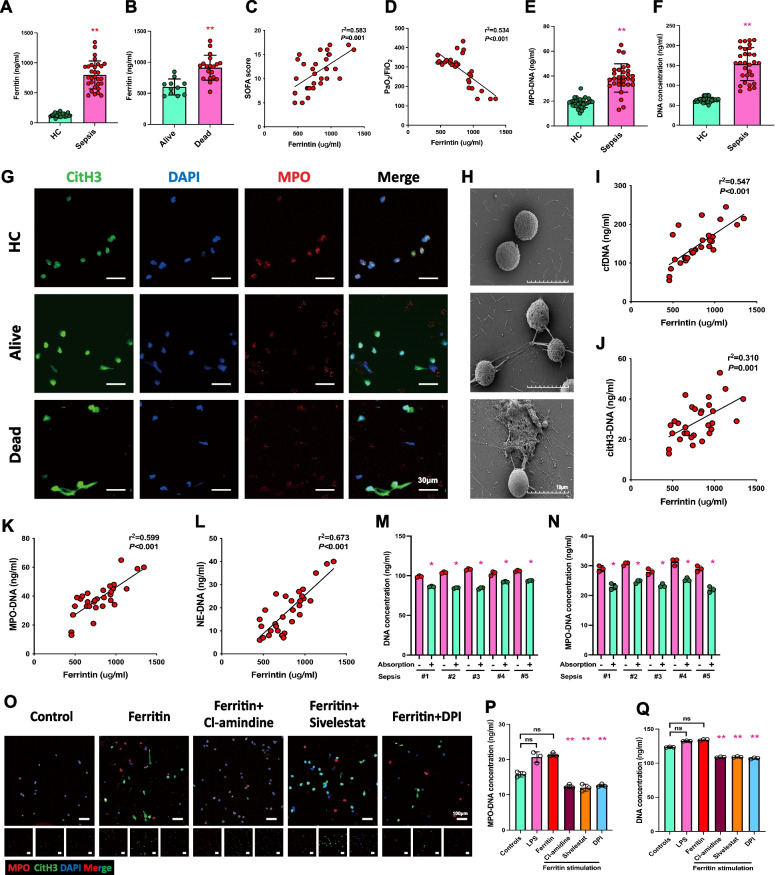
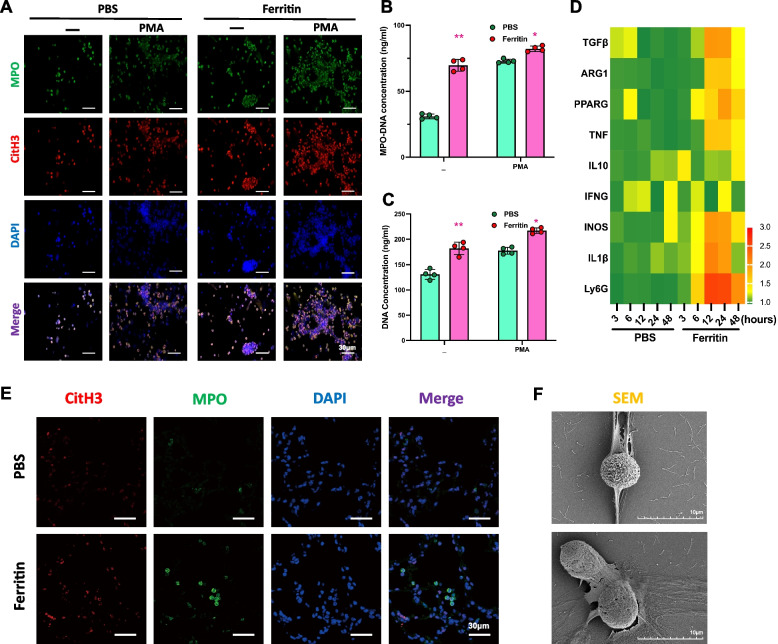
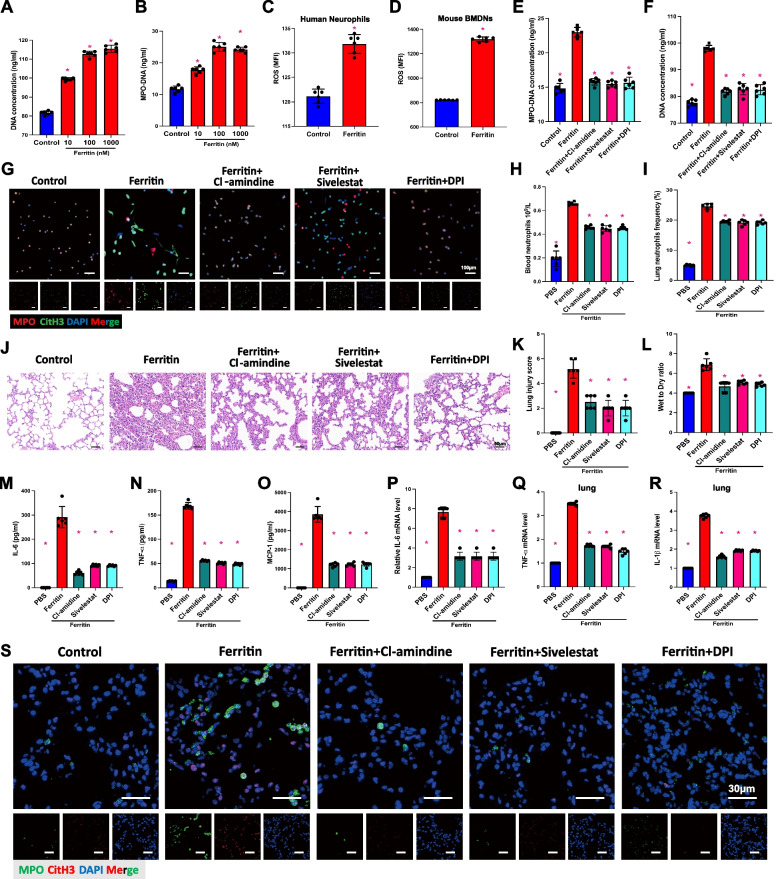
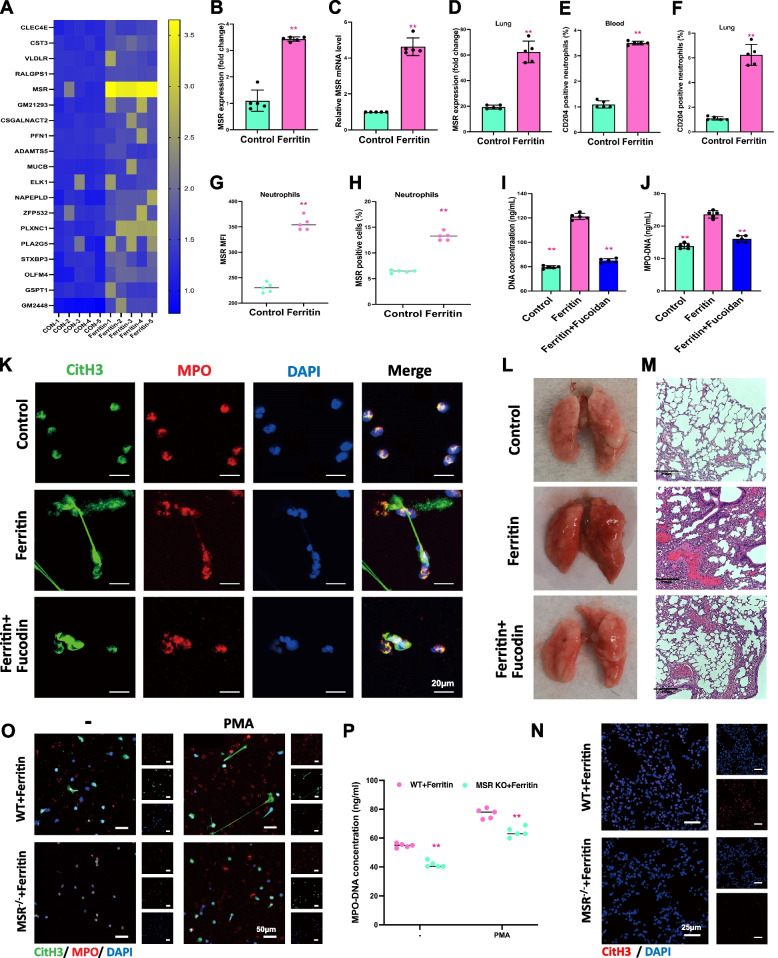
Ferritin induces NET formation in a peptidylarginine deiminase 4 (PAD4), neutrophil elastase (NE), and reactive oxygen species (ROS)-dependent manner, thereby exacerbating the inflammatory response. Mechanistically, ferritin induces the expression of neutrophil macrophage scavenger receptor (MSR), which promotes the formation of NETs. Clinically, high levels of ferritin in patients with severe sepsis correlate with NETs-mediated cytokines storm and are proportional to the severity of sepsis-induced lung injury.
In conclusion, we demonstrated that hyper-ferritin can induce systemic inflammation and increase NET formation in an MSR-dependent manner. This process relies on PAD4, NE, and ROS, further aggravating acute lung injury. In the clinic, high serum ferritin levels are associated with elevated NETs and worse lung injury, which suggests a poor prognosis for patients with sepsis. Our study indicated that targeting NETs or MSR could be a potential treatment to alleviate lung damage and systemic inflammation during sepsis. Video Abstract.
脓毒症是一种严重的全身炎症性疾病,表现为对感染的免疫反应失调和多器官衰竭。许多研究表明,铁蛋白水平升高是脓毒症的一个重要特征,能够提示患者的预后。同时,铁蛋白引起的炎症损伤的具体机制尚不清楚。
通过向小鼠模型中注射铁蛋白来模拟炎症中的高铁蛋白状态,结果表明注射铁蛋白可诱导全身炎症反应并增加中性粒细胞胞外诱捕网(NET)的形成。利用 Padi4、Elane 和 Cybb 基因敲除小鼠进行 NET 形成实验。Western blot、免疫荧光、ELISA 和流式细胞术检测 NETs、炎症和相关信号通路的变化。
铁蛋白以依赖肽基精氨酸脱亚氨酶 4(PAD4)、中性粒细胞弹性蛋白酶(NE)和活性氧(ROS)的方式诱导 NET 的形成,从而加重炎症反应。机制上,铁蛋白诱导中性粒细胞巨噬细胞清道夫受体(MSR)的表达,促进 NET 的形成。临床上,严重脓毒症患者铁蛋白水平升高与 NET 介导的细胞因子风暴相关,并与脓毒症引起的肺损伤严重程度成正比。
总之,我们证明了高铁蛋白可以通过 MSR 依赖性方式诱导全身炎症和增加 NET 的形成。这个过程依赖于 PAD4、NE 和 ROS,进一步加重急性肺损伤。临床上,血清铁蛋白水平升高与 NETs 和更严重的肺损伤相关,提示脓毒症患者预后不良。我们的研究表明,靶向 NETs 或 MSR 可能是一种潜在的治疗方法,可减轻脓毒症期间的肺损伤和全身炎症。