Han Yu-Xin, Mo Yu-Yao, Wu Hui-Xuan, Iqbal Junaid, Cai Jun-Min, Li Long, Bu Yan-Hong, Xiao Fen, Jiang Hong-Li, Wen Ying, Zhou Hou-De
National Clinical Research Centre for Metabolic Diseases, Hunan Provincial Key Laboratory for Metabolic Bone Diseases, Key Laboratory of Diabetes Immunology, Ministry of Education, and Department of Metabolism and Endocrinology, The Second Xiangya Hospital of Central South University, Changsha, Hunan, China.
Department of Blood Transfusion, The Second Xiangya Hospital, Central South University, Changsha, Hunan, China.
EClinicalMedicine. 2024 Jan 23;68:102425. doi: 10.1016/j.eclinm.2024.102425. eCollection 2024 Feb.
The sequential anti-osteoporotic treatment for women with postmenopausal osteoporosis (PMO) is important, but the order in which different types of drugs are used is confusing and controversial. Therefore, we performed a network meta-analysis to compare the efficacy and safety of available sequential treatments to explore the most efficacious strategy for long-term management of osteoporosis.
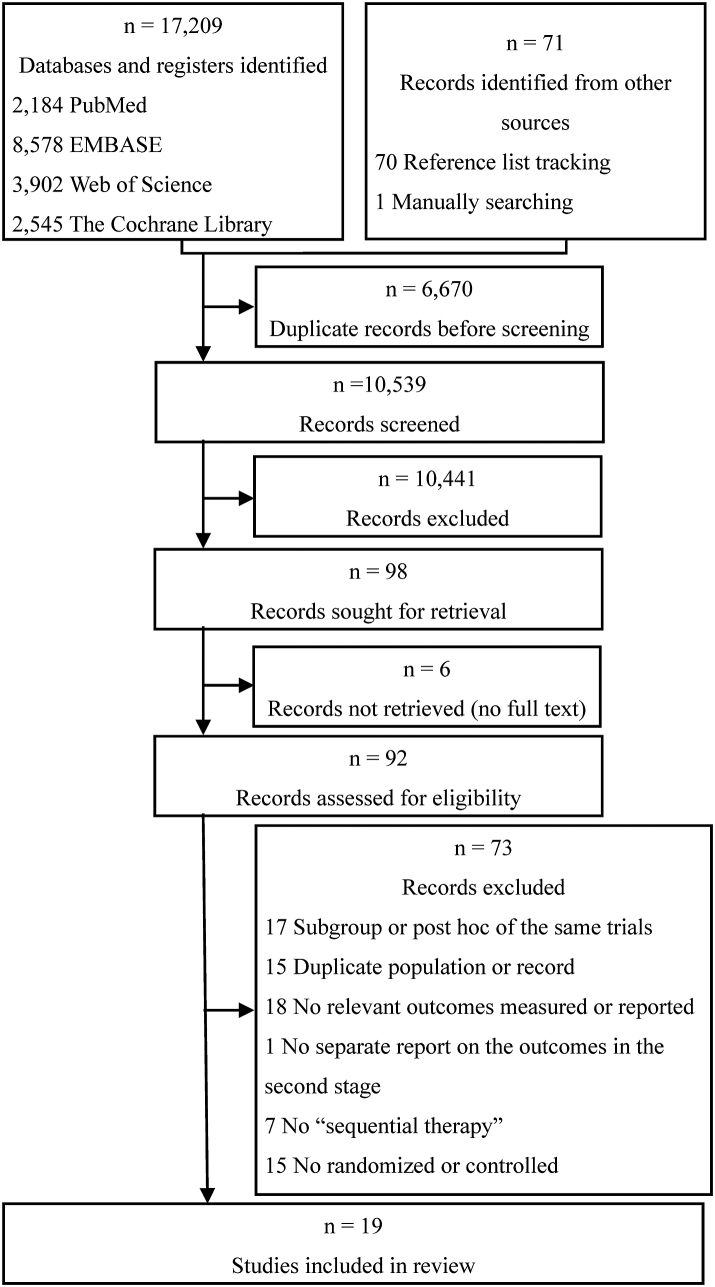
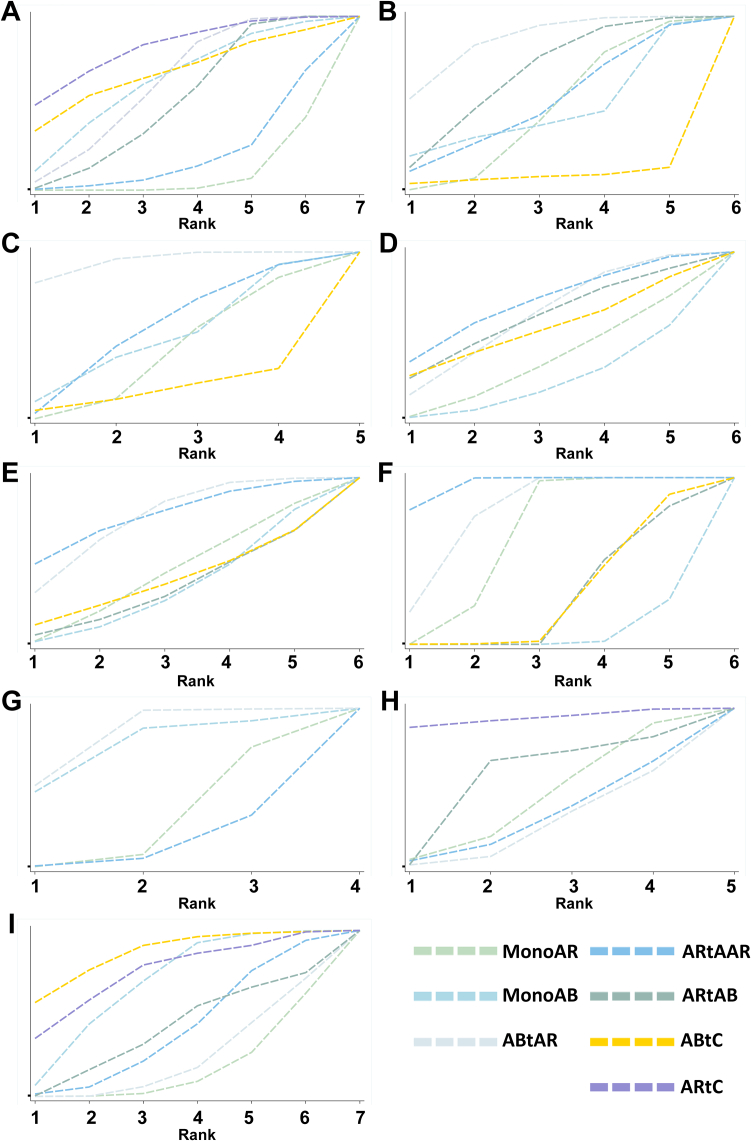
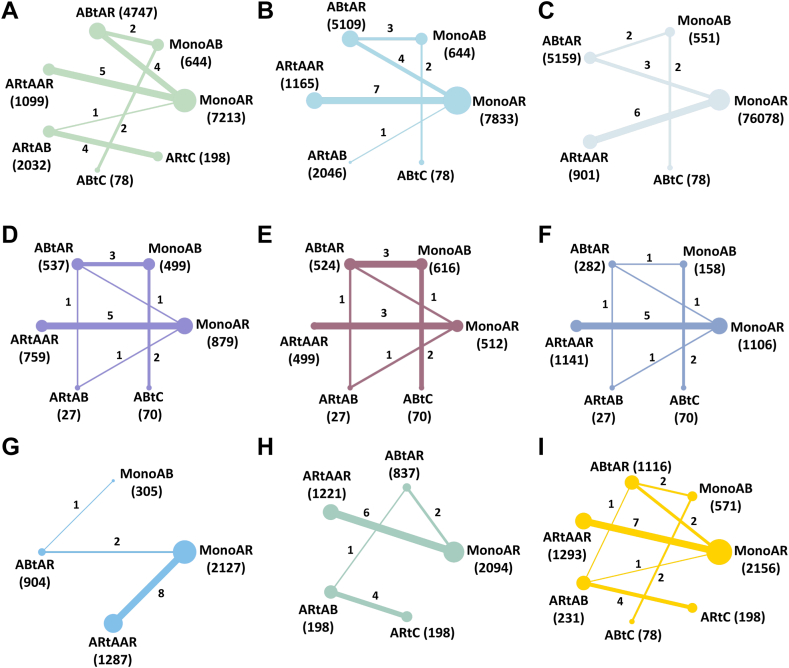
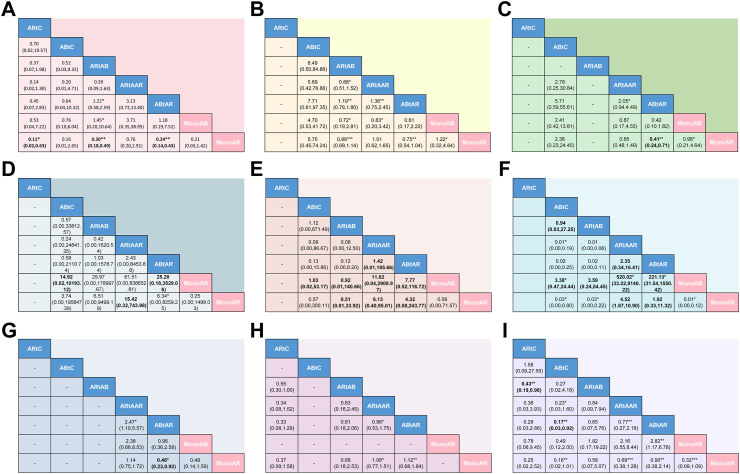
In this network meta-analysis, we searched the PubMed, EMBASE, Web of Science, the Cochrane Library, and ClinicalTrials.gov from inception to September 19, 2023 to identify randomised controlled trials comparing sequential treatments for women with PMO. The identified trials were screened by reading the title and abstract, and only randomised clinical trials involving sequential anti-osteoporotic treatments and reported relevant outcomes for PMO were included. The main outcomes included vertebral fracture risk, the percentage change in bone mineral density (BMD) in different body parts, and all safety indicators in the stage after switching treatment. A frequentist network meta-analysis was performed using the multivariate random effects method and evaluated using the surface under the cumulative ranking curve (SUCRA). Certainty of evidence was assessed using the Confidence in the Network Meta-Analysis (CINeMA) framework. This study is registered with PROSPERO: CRD42022360236.
A total of 19 trials comprising 18,416 participants were included in the study. Five different sequential treatments were investigated as the main interventions and compared to the corresponding control groups. The intervention groups in this study comprised the following treatment switch protocols: switching from an anabolic agent (AB) to an anti-resorptive agent (AR) (ABtAR), transitioning from one AR to another AR (ARtAAR), shifting from an AR to an AB (ARtAB), switching from an AB to a combined treatment of AB and AR (ABtC), and transitioning from an AR to a combined treatment (ARtC). A significant reduction in the incidence of vertebral fractures was observed in ARtC, ABtAR and ARtAB in the second stage, and ARtC had the lowest incidence with 81.5% SUCRA. ARtAAR and ABtAR were two effective strategies for preventing fractures and improving BMD in other body parts. Especially, ARtAAR could improve total hip BMD with the highest 96.1% SUCRA, and ABtAR could decrease the risk of total fractures with the highest 94.3% SUCRA. Almost no difference was observed in safety outcomes in other comparisons.
Our findings suggested that the ARtAAR and ABtAR strategy are the effective and safe sequential treatment for preventing fracture and improving BMD for PMO. ARtC is more effective in preventing vertebral fractures.
The National Natural Science Foundation of China (82170900, 81970762), the Hunan Administration of Traditional Chinese Medicine, and the Hunan Province High-level Health Talents "225" Project.
绝经后骨质疏松症(PMO)女性的序贯抗骨质疏松治疗很重要,但不同类型药物的使用顺序令人困惑且存在争议。因此,我们进行了一项网状Meta分析,以比较现有序贯治疗的疗效和安全性,探索骨质疏松症长期管理的最有效策略。
在这项网状Meta分析中,我们检索了PubMed、EMBASE、Web of Science、Cochrane图书馆和ClinicalTrials.gov,检索时间从创建至2023年9月19日,以识别比较PMO女性序贯治疗的随机对照试验。通过阅读标题和摘要对识别出的试验进行筛选,仅纳入涉及序贯抗骨质疏松治疗并报告了PMO相关结局的随机临床试验。主要结局包括椎体骨折风险、不同身体部位骨密度(BMD)的百分比变化以及换药后阶段的所有安全指标。使用多变量随机效应方法进行频率学派网状Meta分析,并使用累积排名曲线下面积(SUCRA)进行评估。使用网状Meta分析置信度(CINeMA)框架评估证据的确定性。本研究已在PROSPERO注册:CRD42022360236。
本研究共纳入19项试验,18416名参与者。研究了五种不同的序贯治疗作为主要干预措施,并与相应的对照组进行比较。本研究中的干预组包括以下治疗转换方案:从促合成代谢药物(AB)转换为抗吸收药物(AR)(AB转AR)、从一种AR转换为另一种AR(AR转AR)、从AR转换为AB(AR转AB)、从AB转换为AB与AR的联合治疗(AB转联合治疗)以及从AR转换为联合治疗(AR转联合治疗)。在第二阶段,AR转联合治疗、AB转AR和AR转AB组的椎体骨折发生率显著降低,AR转联合治疗的发生率最低,SUCRA为81.5%。AR转AR和AB转AR是预防骨折和改善其他身体部位BMD的两种有效策略。特别是,AR转AR可改善全髋BMD,SUCRA最高为96.1%,AB转AR可降低总骨折风险,SUCRA最高为94.3%。其他比较中的安全性结局几乎没有差异。
我们的研究结果表明,AR转AR和AB转AR策略是预防骨折和改善PMO患者BMD的有效且安全的序贯治疗方法。AR转联合治疗在预防椎体骨折方面更有效。
中国国家自然科学基金(82170900、81970762)、湖南省中医药管理局以及湖南省高层次卫生人才“225”工程。