Ouyang Ganlu, Shu Pei, Xue Yinyin, Luo Feng, Li Yan
Department of Medical Oncology, Cancer Center, West China Hospital, Sichuan University, Chengdu, Sichuan, People's Republic of China.
Lung Cancer Center, West China Hospital, Sichuan University, Chengdu, Sichuan, People's Republic of China.
Onco Targets Ther. 2024 Jan 30;17:79-84. doi: 10.2147/OTT.S442685. eCollection 2024.
Cellular-mesenchymal to epithelial transition factor (c-MET) alterations have significant therapeutic implications in non-small cell lung cancer (NSCLC). Although MET fusion is a rare genomic event, advances in detection technologies have enabled the identification of various MET fusion partner genes. However, standard therapeutic options for MET fusion in NSCLC cases remain undefined. This report presents a novel fusion variant, EML4-MET, encompassing exons 1 to 13 of EML4 and exons 15 to 21 of MET, including the entire MET kinase domain, and discusses the response of this case to savolitinib treatment.
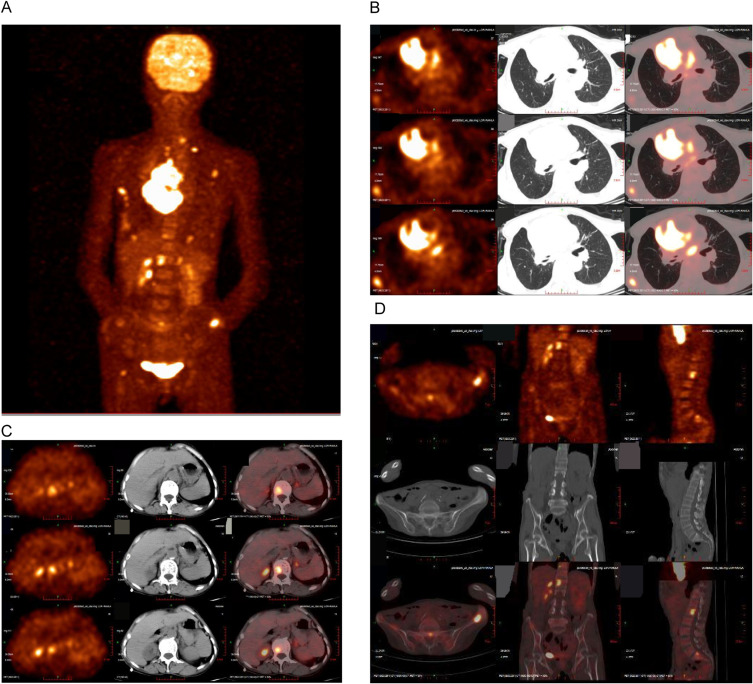
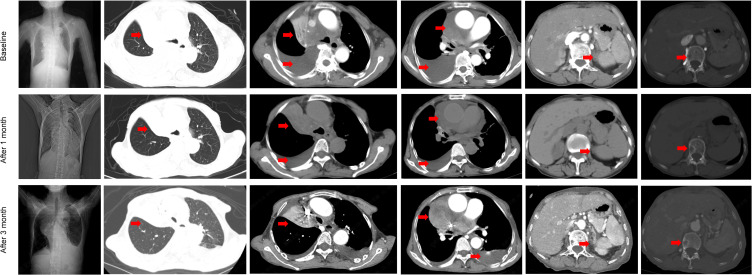
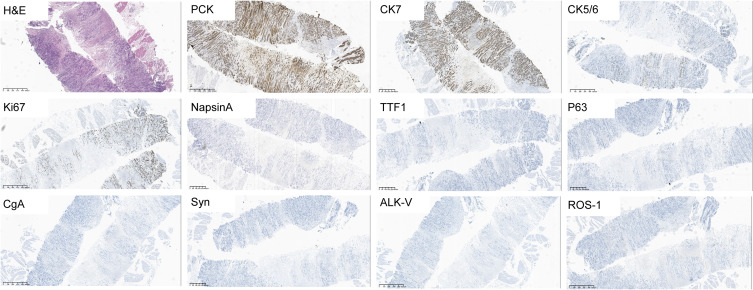
A 65-year-old woman was diagnosed with advanced poorly differentiated lung carcinoma. Molecular profiling of circulating tumor DNA (ctDNA), carried out by next-generation sequencing (NGS), identified a novel EML4-MET fusion. The patient was administered the MET receptor tyrosine kinase inhibitor savolitinib at 400 mg daily. One month later, computed tomography (CT) revealed some lesions with volume reduction. However, COVID-19 diminished the efficacy of savolitinib. Regrettably, the patient succumbed to respiratory and circulatory failure due to disease progression in March 2023.
This case uncovers a new type of MET fusion and expands the range of potential MET fusion targets in NSCLC. The patient responded to savolitinib, suggesting a reference basis for the treatment of similar cases with EML4-MET fusion in the future. Additional research is warranted to assess the biological significance of the EML4-MET fusion in NSCLC.
细胞间充质向上皮转化因子(c-MET)改变在非小细胞肺癌(NSCLC)中具有重要的治疗意义。尽管MET融合是一种罕见的基因组事件,但检测技术的进步已能够识别各种MET融合伙伴基因。然而,NSCLC病例中MET融合的标准治疗方案仍不明确。本报告介绍了一种新的融合变体,EML4-MET,它包含EML4的第1至13外显子和MET的第15至21外显子,包括整个MET激酶结构域,并讨论了该病例对赛沃替尼治疗的反应。
一名65岁女性被诊断为晚期低分化肺癌。通过下一代测序(NGS)对循环肿瘤DNA(ctDNA)进行分子谱分析,发现了一种新的EML4-MET融合。患者每天接受400mg的MET受体酪氨酸激酶抑制剂赛沃替尼治疗。一个月后,计算机断层扫描(CT)显示一些病灶体积缩小。然而,COVID-19降低了赛沃替尼的疗效。遗憾的是,患者于2023年3月因疾病进展死于呼吸和循环衰竭。
本病例发现了一种新型的MET融合,扩大了NSCLC中潜在MET融合靶点的范围。患者对赛沃替尼有反应,为未来治疗类似的EML4-MET融合病例提供了参考依据。有必要进行更多研究来评估EML4-MET融合在NSCLC中的生物学意义。