Klein Benjamin, Reynolds Mack B, Xu Bin, Gharaee-Kermani Mehrnaz, Gao Yiqing, Berthier Celine C, Henning Svenja, Loftus Shannon N, McNeely Kelsey E, Victory Amanda M, Dobry Craig, Hile Grace A, Ma Feiyang, Turnier Jessica L, Gudjonsson Johann E, O'Riordan Mary X, Kahlenberg J Michelle
Division of Rheumatology, Department of Internal Medicine, University of Michigan, Ann Arbor.
Department of Microbiology and Immunology, University of Michigan, Ann Arbor.
bioRxiv. 2024 Jan 26:2024.01.23.576771. doi: 10.1101/2024.01.23.576771.
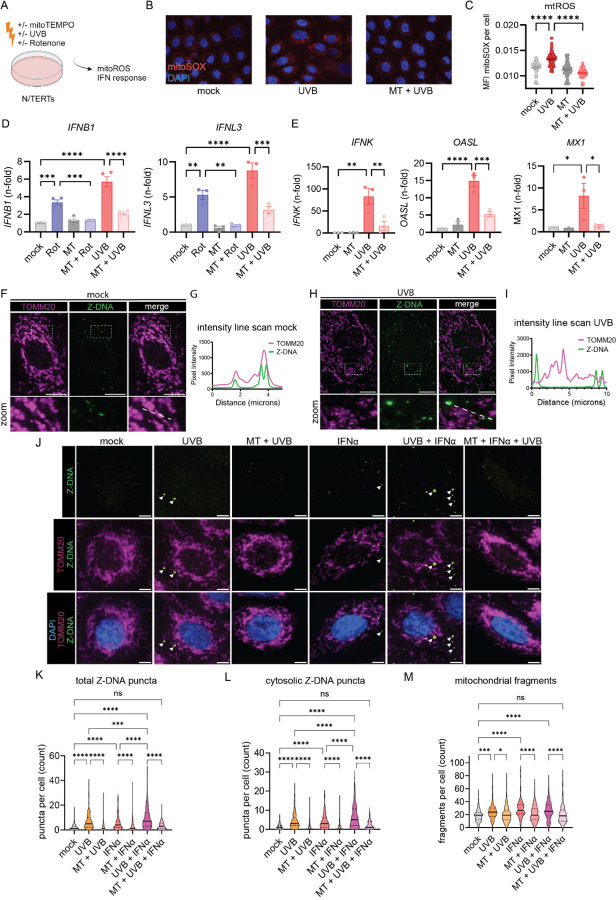
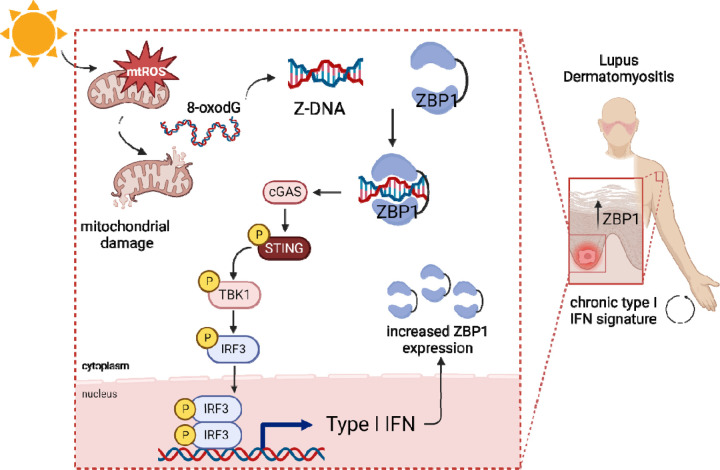
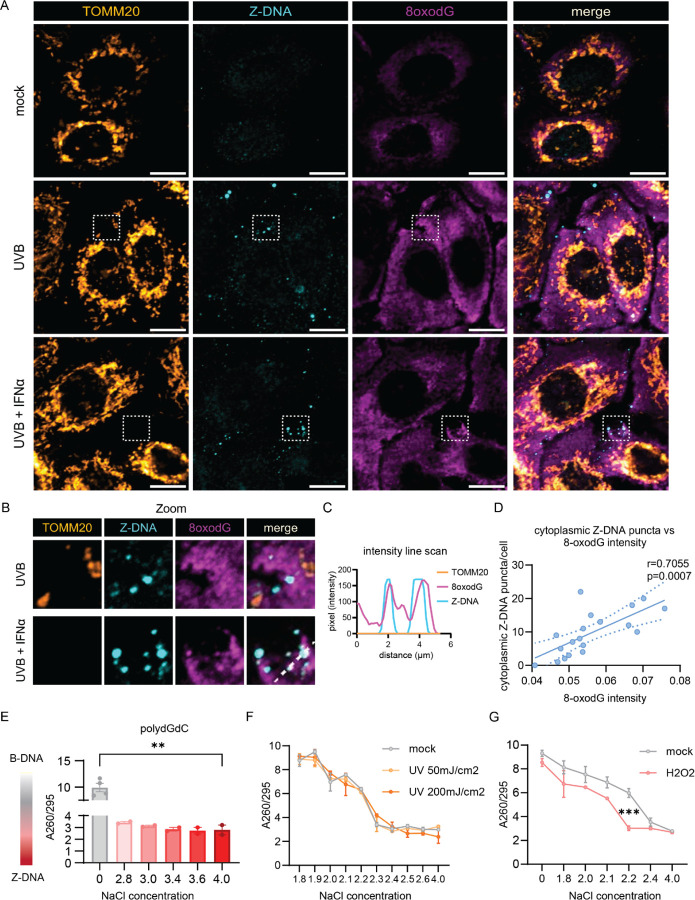
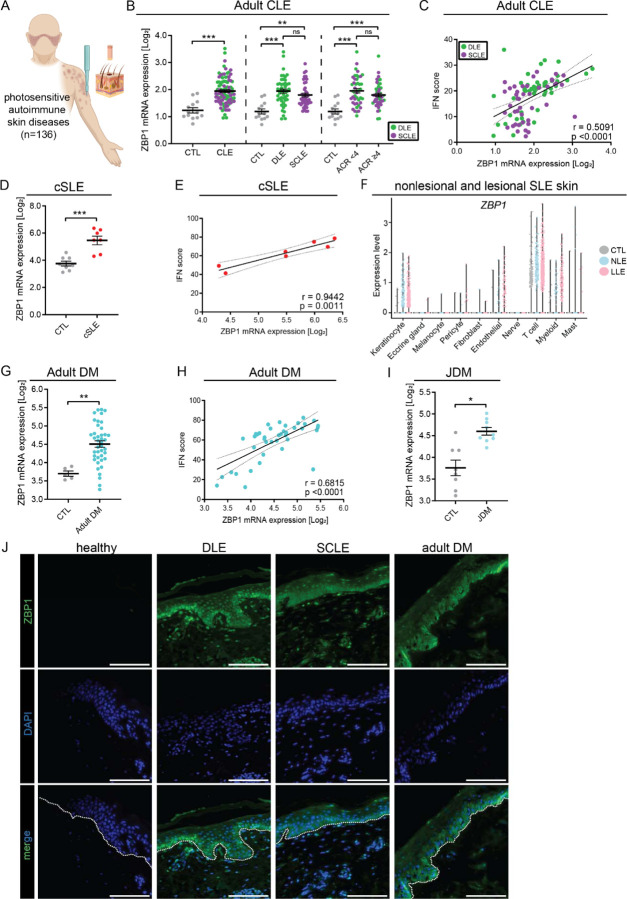
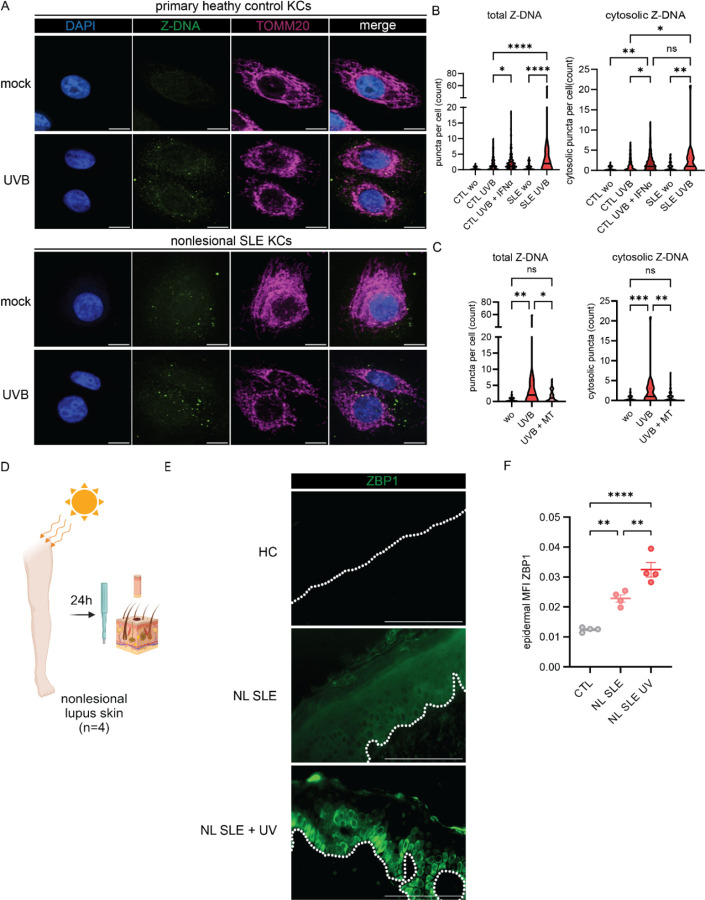
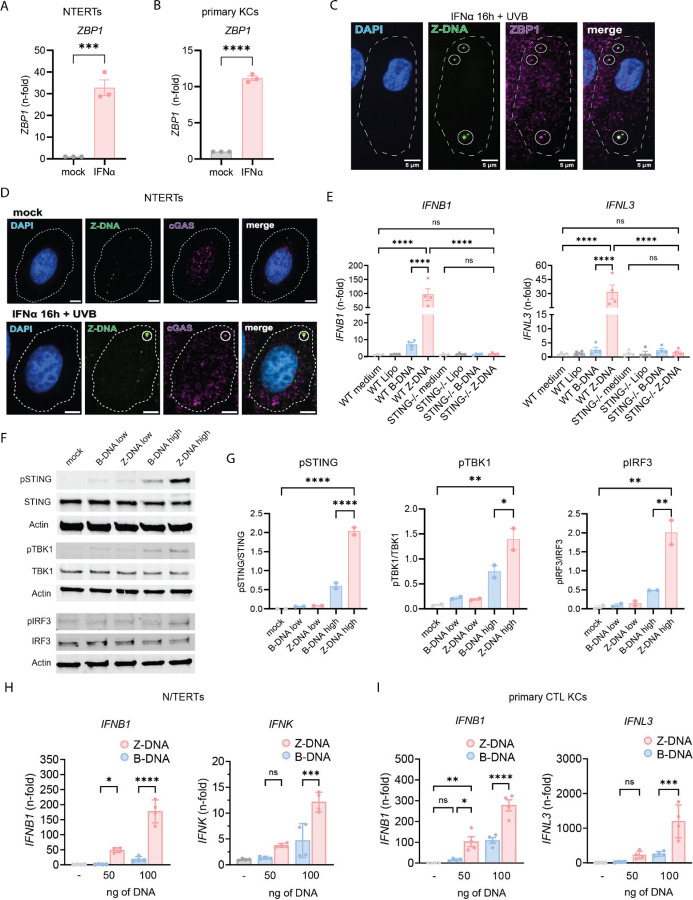
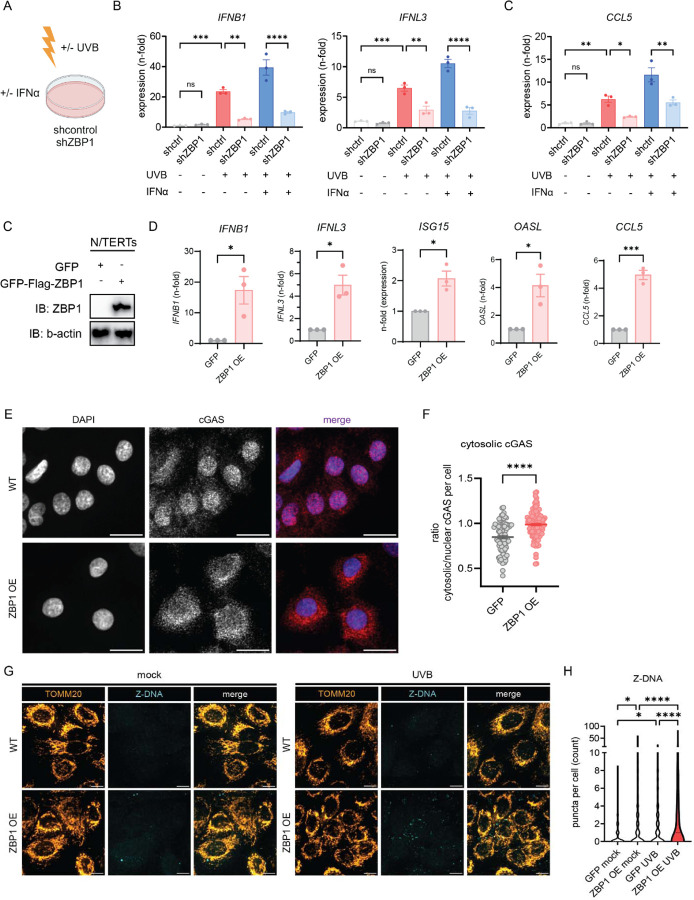
Photosensitivity is observed in numerous autoimmune diseases and drives poor quality of life and disease flares. Elevated epidermal type I interferon (IFN) production primes for photosensitivity and enhanced inflammation, but the substrates that sustain and amplify this cycle remain undefined. Here, we show that IFN-induced Z-DNA binding protein 1 (ZBP1) stabilizes ultraviolet (UV)B-induced cytosolic Z-DNA derived from oxidized mitochondrial DNA. ZBP1 is significantly upregulated in the epidermis of adult and pediatric patients with autoimmune photosensitivity. Strikingly, lupus keratinocytes accumulate extensive cytosolic Z-DNA after UVB, and transfection of keratinocytes with Z-DNA results in stronger IFN production through cGAS-STING activation compared to B-DNA. ZBP1 knockdown abrogates UV-induced IFN responses, whereas overexpression results in a lupus-like phenotype with spontaneous Z-DNA accumulation and IFN production. Our results highlight Z-DNA and ZBP1 as critical mediators for UVB-induced inflammation and uncover how type I IFNs prime for cutaneous inflammation in photosensitivity.
在多种自身免疫性疾病中都观察到了光敏性,它会导致生活质量下降和疾病发作。表皮I型干扰素(IFN)产生增加引发光敏性并加剧炎症,但维持和放大这一循环的底物仍不明确。在此,我们表明IFN诱导的Z-DNA结合蛋白1(ZBP1)可稳定源自氧化线粒体DNA的紫外线(UV)B诱导的胞质Z-DNA。在患有自身免疫性光敏性的成人和儿童患者的表皮中,ZBP1显著上调。引人注目的是,狼疮角质形成细胞在UVB照射后会积累大量胞质Z-DNA,与B-DNA相比,用Z-DNA转染角质形成细胞会通过cGAS-STING激活产生更强的IFN。敲低ZBP1可消除紫外线诱导的IFN反应,而过表达则会导致具有自发Z-DNA积累和IFN产生的狼疮样表型。我们的研究结果突出了Z-DNA和ZBP1作为UVB诱导炎症的关键介质,并揭示了I型IFN如何引发光敏性中的皮肤炎症。