Department of Hematology, Faculty of Medical Sciences, Tarbiat Modares University, Tehran, Iran.
ATMP department, Breast cancer research center, Motamed cancer institute, ACECR, P.O. BOX:15179/64311, Tehran, Iran.
Cell Commun Signal. 2024 Feb 8;22(1):105. doi: 10.1186/s12964-023-01433-5.
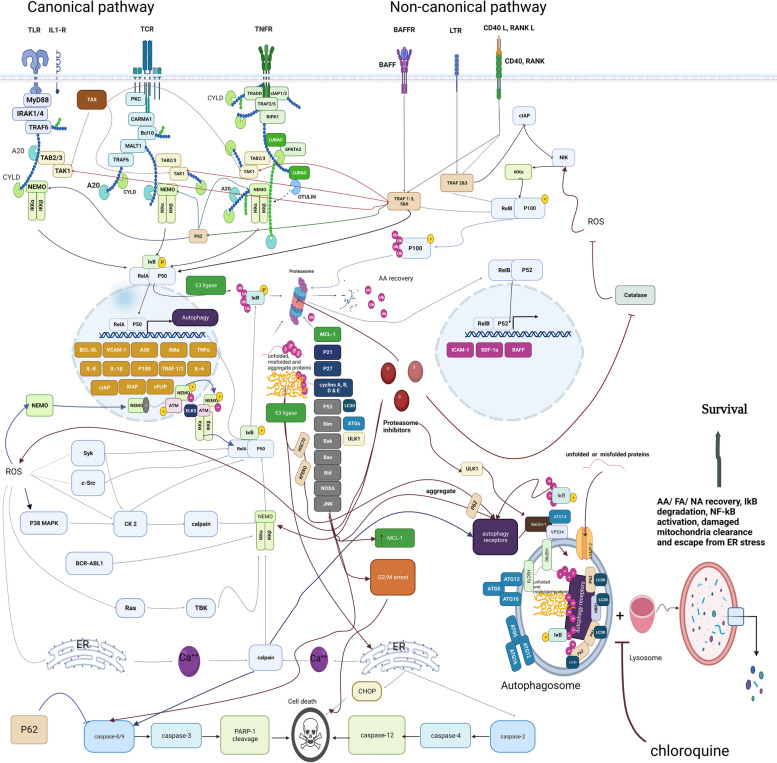
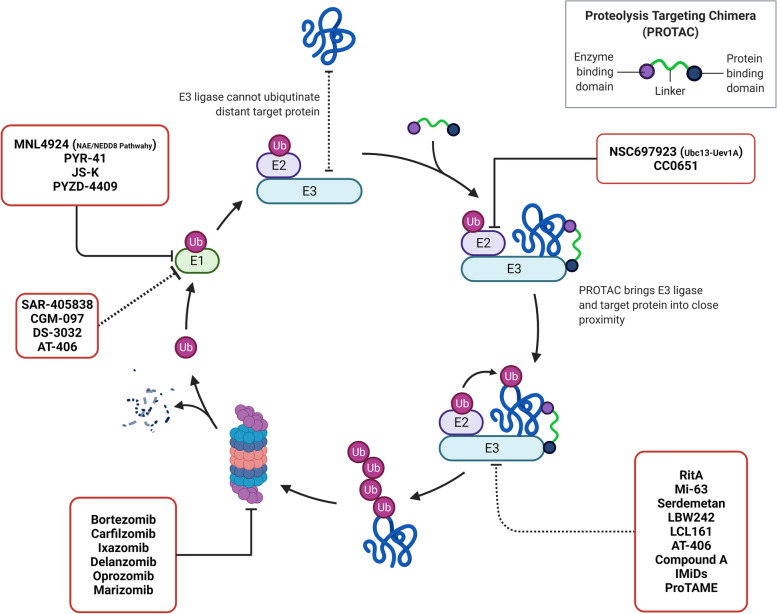
The current scientific literature has extensively explored the potential role of proteasome inhibitors (PIs) in the NF-κB pathway of leukemia and lymphoma. The ubiquitin-proteasome system (UPS) is a critical component in regulating protein degradation in eukaryotic cells. PIs, such as BTZ, are used to target the 26S proteasome in hematologic malignancies, resulting in the prevention of the degradation of tumor suppressor proteins, the activation of intrinsic mitochondrial-dependent cell death, and the inhibition of the NF-κB signaling pathway. NF-κB is a transcription factor that plays a critical role in the regulation of apoptosis, cell proliferation, differentiation, inflammation, angiogenesis, and tumor migration. Despite the successful use of PIs in various hematologic malignancies, there are limitations such as resistant to these inhibitors. Some reports suggest that PIs can induce NF-κB activation, which increases the survival of malignant cells. This article discusses the various aspects of PIs' effects on the NF-κB pathway and their limitations. Video Abstract.
目前的科学文献广泛探讨了蛋白酶体抑制剂(PI)在白血病和淋巴瘤的 NF-κB 通路中的潜在作用。泛素-蛋白酶体系统(UPS)是真核细胞中调节蛋白降解的关键组成部分。PI,如 BTZ,用于靶向血液系统恶性肿瘤的 26S 蛋白酶体,从而防止肿瘤抑制蛋白的降解、激活内在的线粒体依赖性细胞死亡,并抑制 NF-κB 信号通路。NF-κB 是一种转录因子,在调节细胞凋亡、细胞增殖、分化、炎症、血管生成和肿瘤迁移方面发挥着关键作用。尽管 PIs 在各种血液系统恶性肿瘤中的应用取得了成功,但也存在一些局限性,例如对这些抑制剂的耐药性。一些报道表明,PI 可以诱导 NF-κB 的激活,从而增加恶性细胞的存活。本文讨论了 PIs 对 NF-κB 通路的影响及其局限性的各个方面。视频摘要。