Department of Biochemical Sciences "Alessandro Rossi Fanelli", Sapienza University of Rome, Laboratory affiliated to Istituto Pasteur Italia-Fondazione Cenci Bolognetti P.Le A. Moro 5, Rome, 00185, Italy.
Cell Commun Signal. 2024 Feb 8;22(1):104. doi: 10.1186/s12964-023-01429-1.
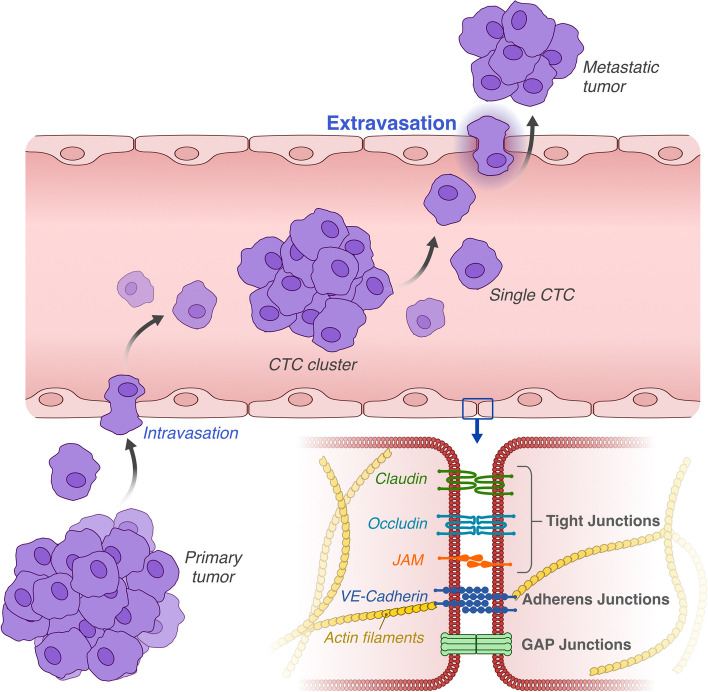
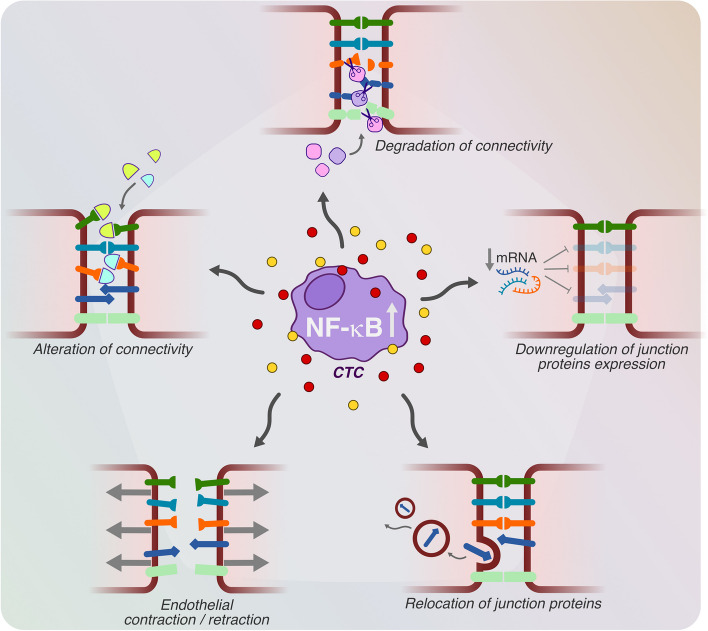
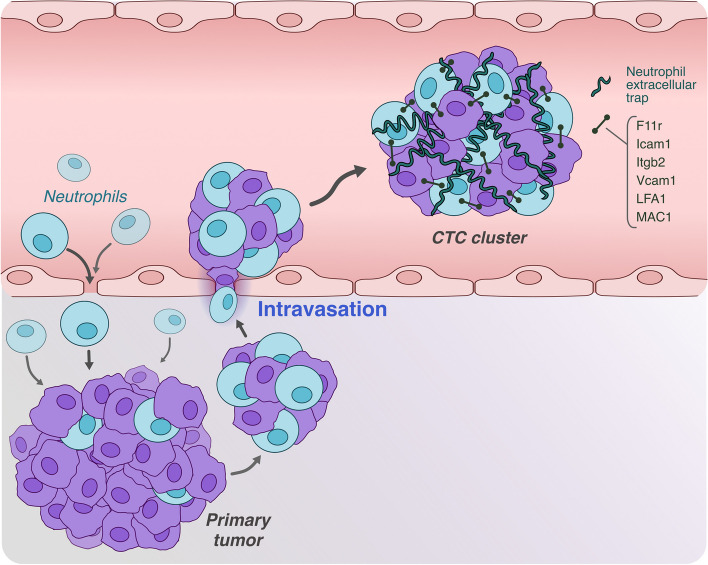
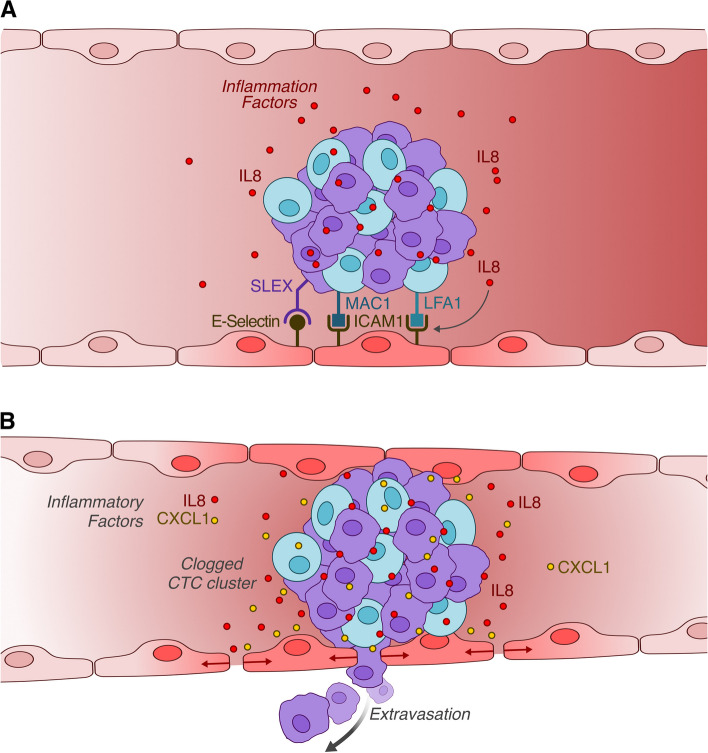
Extravasation is a fundamental step in the metastatic journey, where cancer cells exit the bloodstream and breach the endothelial cell barrier to infiltrate target tissues. The tactics cancer cells employ are sophisticated, closely reflecting those used by the immune system for tissue surveillance. Remarkably, tumor cells have been observed to form distinct associations or clusters with immune cells where neutrophils stand out as particularly crucial partners. These interactions are not accidental; they are critical for cancer cells to exploit the immune functions of neutrophils and successfully extravasate. In another strategy, tumor cells mimic the behavior and characteristics of immune cells. They release a suite of inflammatory mediators, which under normal circumstances, guide the processes of endothelium reshaping and facilitate the entry and movement of immune cells within tissues. In this review, we offer a new perspective on the tactics employed by cancer cells to extravasate and infiltrate target tissues. We delve into the myriad mechanisms that tumor cells borrow, adapt, and refine from the immune playbook. Video Abstract.
外渗是转移过程中的一个基本步骤,在此过程中,癌细胞从血液中逸出并突破内皮细胞屏障,浸润靶组织。癌细胞采用的策略非常复杂,与免疫系统用于组织监测的策略密切相关。值得注意的是,已经观察到肿瘤细胞与免疫细胞形成明显的关联或簇,其中中性粒细胞是特别关键的伙伴。这些相互作用并非偶然;它们对于癌细胞利用中性粒细胞的免疫功能并成功外渗至关重要。在另一种策略中,肿瘤细胞模仿免疫细胞的行为和特征。它们释放出一系列炎症介质,在正常情况下,这些介质指导内皮重塑过程,并促进免疫细胞在组织内的进入和运动。在这篇综述中,我们提供了一个新的视角来观察癌细胞外渗和浸润靶组织所采用的策略。我们深入研究了肿瘤细胞从免疫系统中借用、适应和完善的无数机制。视频摘要。