A*STAR Infectious Diseases Labs (A*STAR ID Labs), Agency for Science, Technology and Research, Singapore, 138648, Singapore.
Singapore Immunology Network (SIgN), Agency for Science, Technology and Research, Singapore, 138648, Singapore.
EMBO Mol Med. 2024 Mar;16(3):641-663. doi: 10.1038/s44321-024-00028-y. Epub 2024 Feb 8.
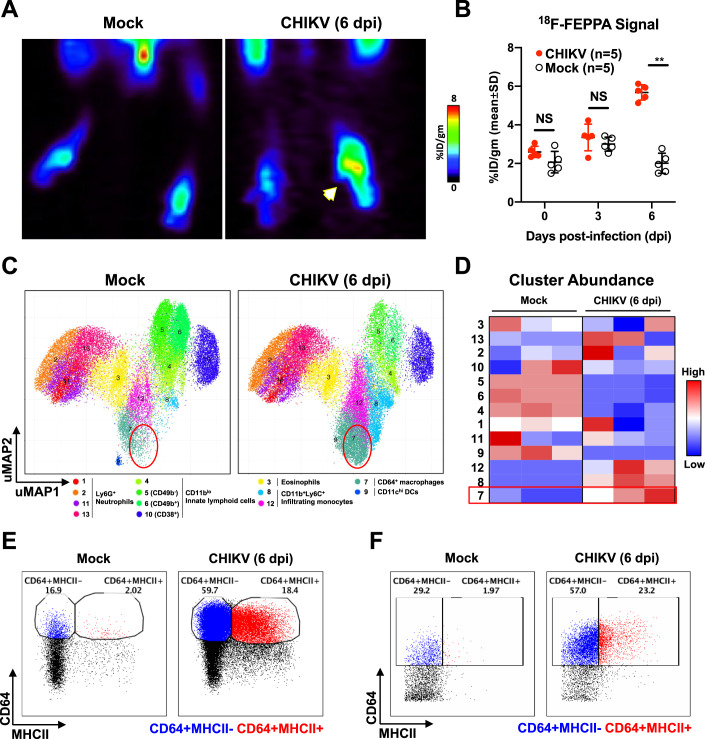
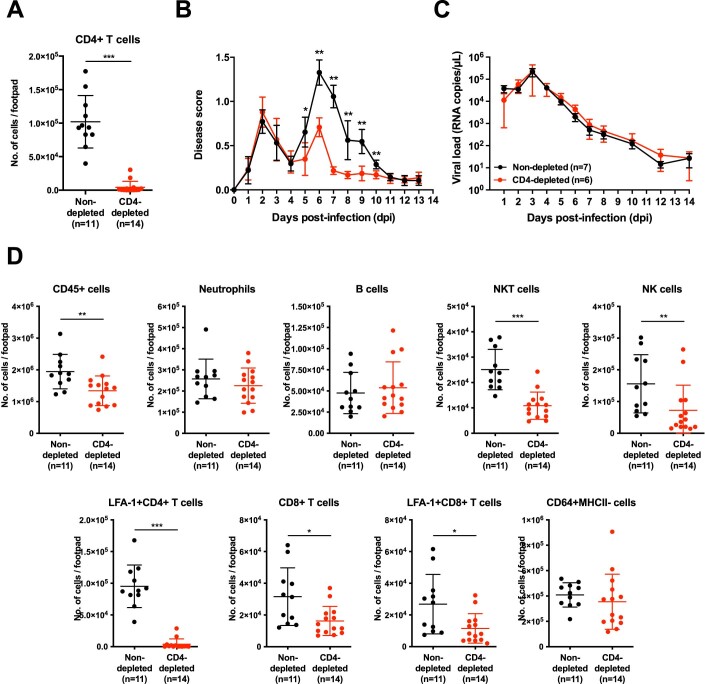
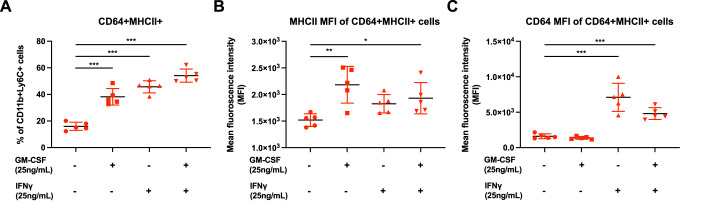
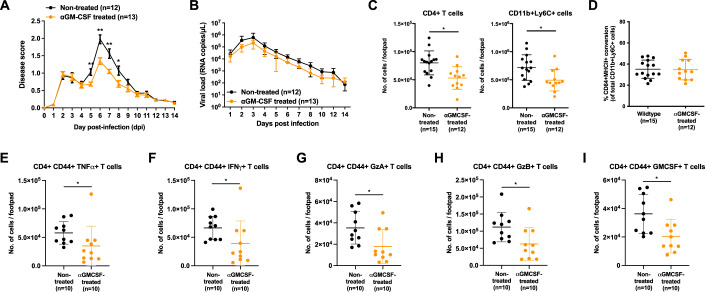
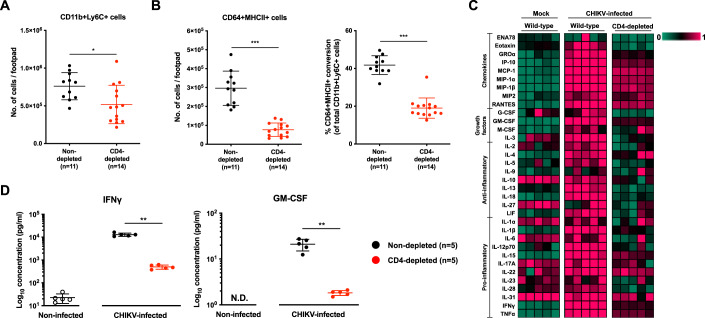
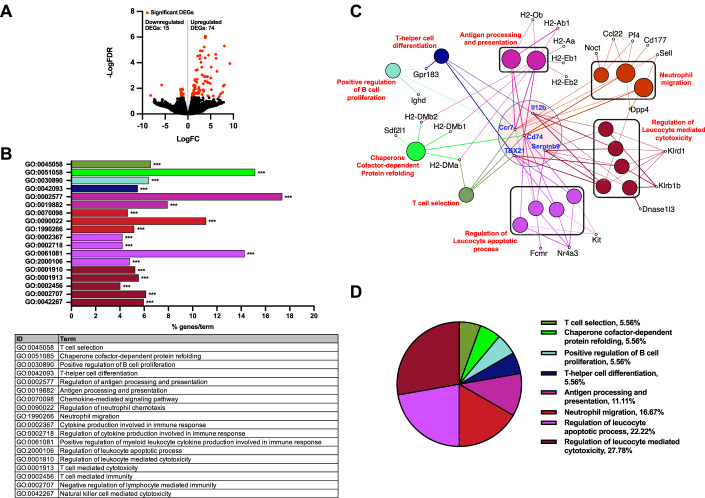
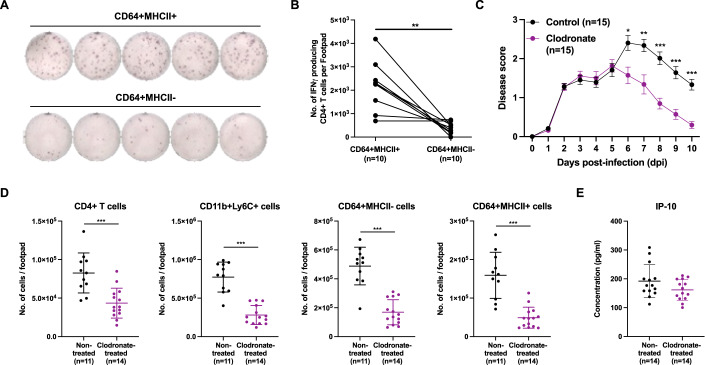
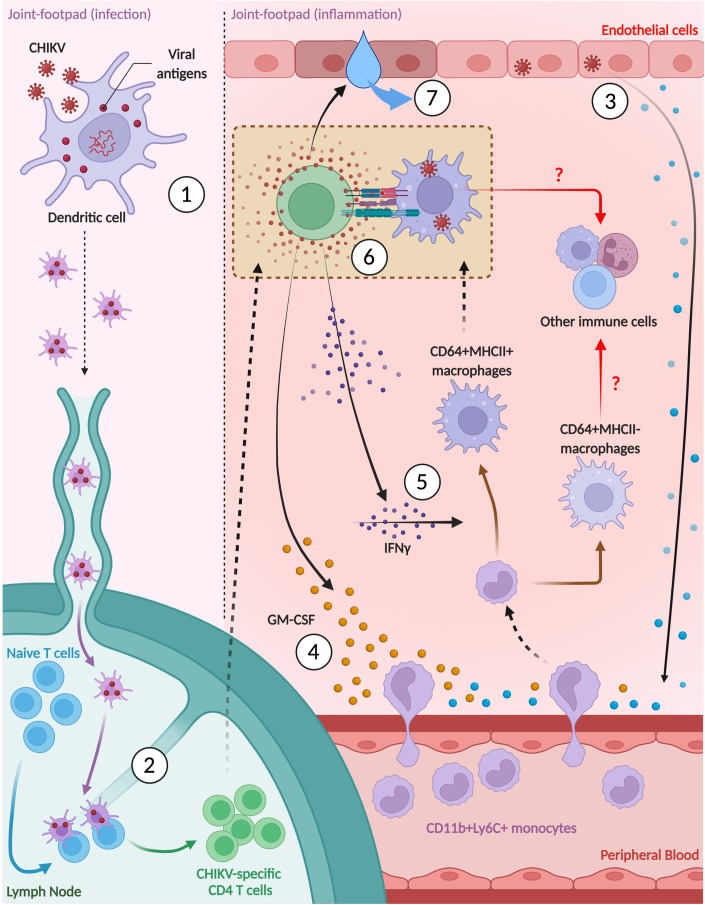
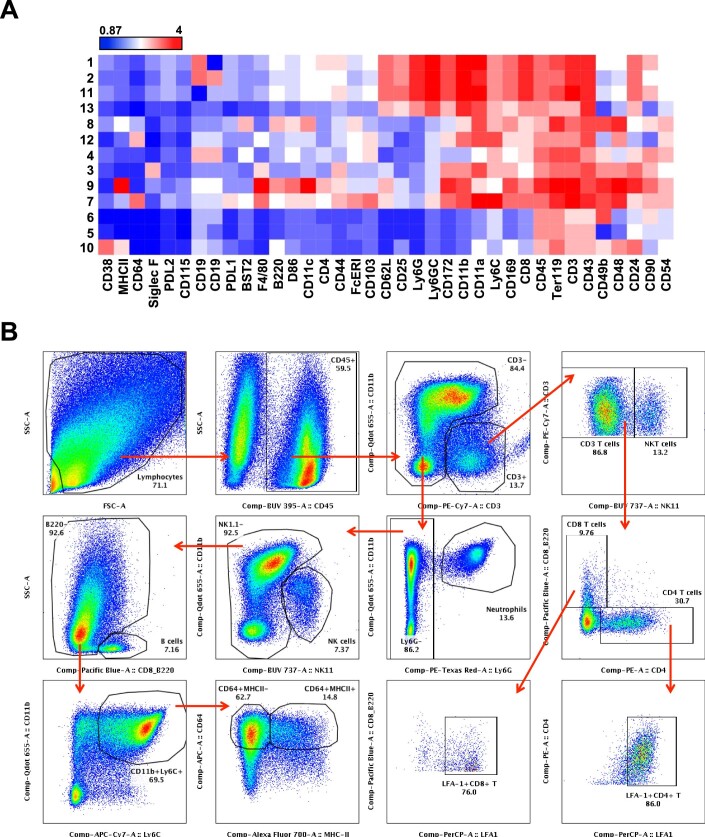
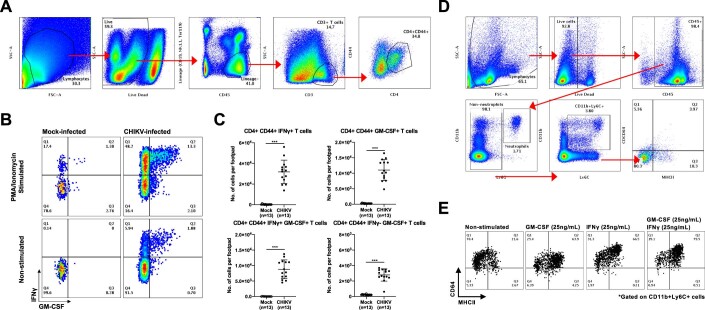
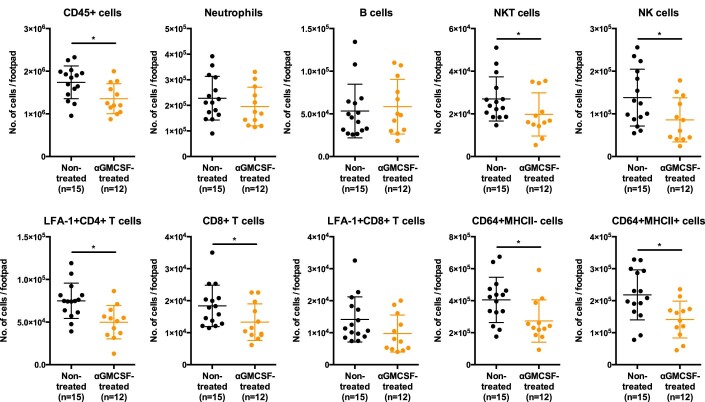
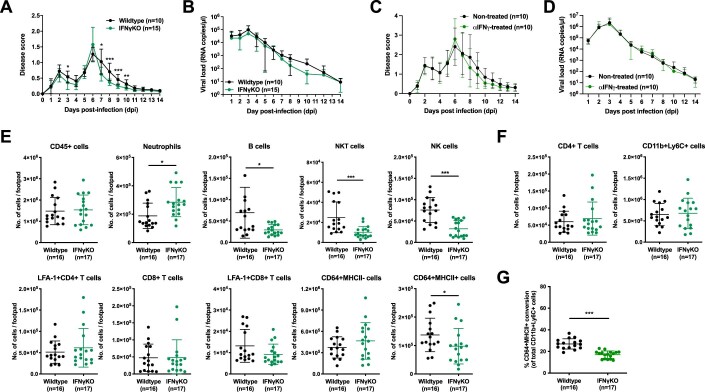
Communications between immune cells are essential to ensure appropriate coordination of their activities. Here, we observed the infiltration of activated macrophages into the joint-footpads of chikungunya virus (CHIKV)-infected animals. Large numbers of CD64MHCII and CD64MHCII macrophages were present in the joint-footpad, preceded by the recruitment of their CD11bLy6C inflammatory monocyte precursors. Recruitment and differentiation of these myeloid subsets were dependent on CD4 T cells and GM-CSF. Transcriptomic and gene ontology analyses of CD64MHCII and CD64MHCII macrophages revealed 89 differentially expressed genes, including genes involved in T cell proliferation and differentiation pathways. Depletion of phagocytes, including CD64MHCII macrophages, from CHIKV-infected mice reduced disease pathology, demonstrating that these cells play a pro-inflammatory role in CHIKV infection. Together, these results highlight the synergistic dynamics of immune cell crosstalk in driving CHIKV immunopathogenesis. This study provides new insights in the disease mechanism and offers opportunities for development of novel anti-CHIKV therapeutics.
免疫细胞之间的通讯对于确保其活动的适当协调至关重要。在这里,我们观察到活化的巨噬细胞浸润到感染基孔肯雅病毒(CHIKV)的动物的关节足垫中。大量的 CD64MHCII 和 CD64MHCII 巨噬细胞存在于关节足垫中,其前体细胞 CD11bLy6C 炎性单核细胞被募集。这些髓样细胞亚群的募集和分化依赖于 CD4 T 细胞和 GM-CSF。对 CD64MHCII 和 CD64MHCII 巨噬细胞的转录组和基因本体分析显示了 89 个差异表达的基因,包括参与 T 细胞增殖和分化途径的基因。从感染 CHIKV 的小鼠中耗尽吞噬细胞(包括 CD64MHCII 巨噬细胞)可降低疾病病理学,表明这些细胞在 CHIKV 感染中发挥促炎作用。总之,这些结果突出了免疫细胞串扰在驱动 CHIKV 免疫发病机制中的协同动态。这项研究为疾病机制提供了新的见解,并为开发新型抗 CHIKV 治疗方法提供了机会。