Nelson Jamie M, Johnson Elizabeth, Kiesow Becky, McCrory Bernadette, Ma Jiahui
Billings Clinic, Collaborative Science and Innovation Department, Billings, MT, United States.
Mark and Robyn Jones College of Nursing, Montana State University, Bozeman, MT, United States.
Front Pharmacol. 2024 Jan 25;15:1309072. doi: 10.3389/fphar.2024.1309072. eCollection 2024.
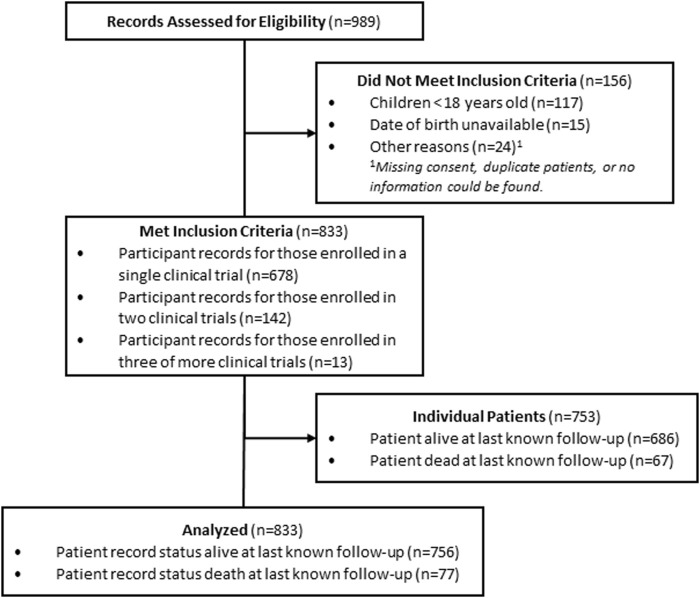
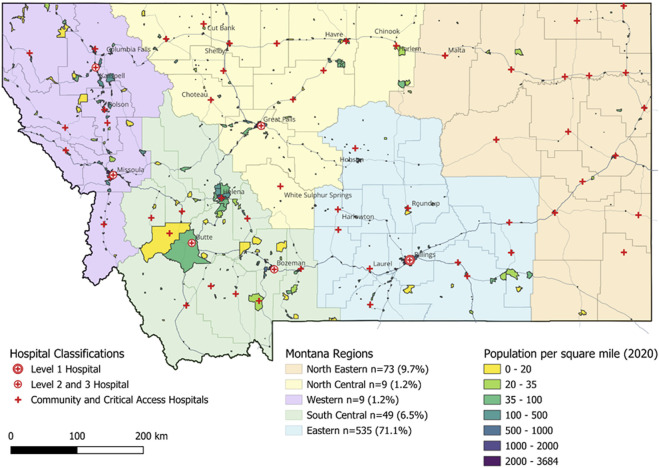
Clinical trials investigating the safety and efficacy of experimental drugs and devices are the cornerstone of medicinal advancement. Enrolling sufficient participants in these trials is vital to ensure adequate statistical power and generalizability. Clinical trial participation is particularly low among certain populations, including medically underserved communities (i.e., rural areas) and Black, Indigenous, and People of Color (BIPOC). A retrospective study design was used to understand patient outcomes and access/barriers to clinical trial participation in the rural northwest United States. A quantitatively focused retrospective chart review was conducted for adult participants enrolled in at least one clinical trial in a single northwest health system between 1999 and 2022. Descriptive and inferential statistical analyses were performed to assess trial outcomes at a significance level 0.05. The retrospective chart review yielded 833 clinical trial records with 753 individual enrolled participants. The all-cause relative frequency of death at last known follow-up amongst clinical trial participants was 8.90% (n = 67). Based on logistic regression, the death was significantly associated with the participants' age at initial trial screening ( = 0.09, -value <0.001), those that resided in non-metro areas ( = -0.86, -value = 0.045), and those that lived in Northeastern Montana ( = 1.27, -value = 0.025). Additionally, death at last known follow-up was significantly associated with enrollment in 2021-2022 ( = -1.52, -value <0.001), enrolled in more than one study ( = 0.84, -value = 0.023), in internationally sponsored trials ( = -2.08, -value <0.001), in Phase I ( = 5.34, -value <0.001), in Phase II trials ( = 1.37, -value = 0.013), diabetes as a primary trial target ( = -2.04, -value = 0.003). As decentralized trial design and remote or virtual elements of traditional trials become normative, representation of rural and frontier populations is imperative to support the generalizability of trial data encouraged by the FDA.
研究实验性药物和器械安全性与有效性的临床试验是医学进步的基石。在这些试验中招募足够的参与者对于确保足够的统计效力和普遍性至关重要。在某些人群中,包括医疗服务不足的社区(即农村地区)以及黑人、原住民和有色人种(BIPOC),临床试验参与率特别低。本研究采用回顾性研究设计,以了解美国西北部农村地区患者参与临床试验的结果以及参与的途径/障碍。对1999年至2022年间在单一西北部卫生系统中至少参与一项临床试验的成年参与者进行了以定量为主的回顾性病历审查。进行描述性和推断性统计分析,以在0.05的显著性水平下评估试验结果。回顾性病历审查产生了833条临床试验记录,有753名个体参与试验。在最后一次已知随访时,临床试验参与者的全因死亡相对频率为8.90%(n = 67)。基于逻辑回归分析,死亡与参与者初次试验筛查时的年龄显著相关(β = 0.09,p值<0.001),与居住在非都市地区的参与者显著相关(β = -0.86,p值 = 0.045),与居住在蒙大拿州东北部的参与者显著相关(β = 1.27,p值 = 0.025)。此外,最后一次已知随访时的死亡与2021 - 2022年参与试验显著相关(β = -1.52,p值<0.001),与参与多项研究显著相关(β = 0.84,p值 = 0.023),与国际资助的试验显著相关(β = -2.08,p值<0.001),与I期试验显著相关(β = 5.34,p值<0.001),与II期试验显著相关(β = 1.37,p值 = 0.013),与以糖尿病作为主要试验靶点显著相关(β = -2.04,p值 = 0.003)。随着分散式试验设计以及传统试验的远程或虚拟元素变得常态化,农村和偏远地区人群的代表性对于支持美国食品药品监督管理局(FDA)所鼓励的试验数据的普遍性至关重要。