Ji Tong, Ji Yuan, Meng Xiangli, Wang Qi
School of Chemistry and Chemical Engineering, Harbin Institute of Technology, Harbin 150001, China.
Polymers (Basel). 2024 Feb 1;16(3):416. doi: 10.3390/polym16030416.
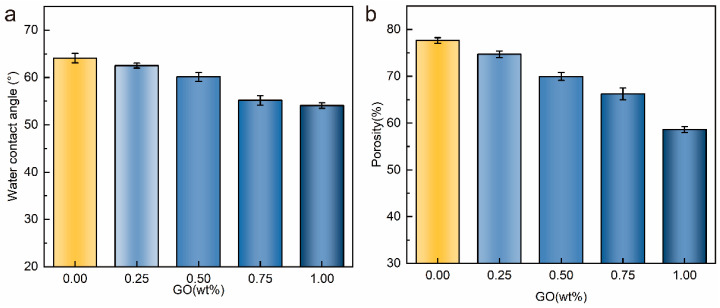
Temperature-responsive separation membranes can significantly change their permeability and separation properties in response to changes in their surrounding temperature, improving efficiency and reducing membrane costs. This study focuses on the modification of polyvinylidene fluoride (PVDF) membranes with amphiphilic temperature-responsive copolymer and inorganic nanoparticles. We prepared an amphiphilic temperature-responsive copolymer in which the hydrophilic poly(N-isopropyl acrylamide) (PNIPAAm) was side-linked to a hydrophobic polyvinylidene fluoride (PVDF) skeleton. Subsequently, PVDF-g-PNIPAAm polymer and graphene oxide (GO) were blended with PVDF to prepare temperature-responsive separation membranes. The results showed that temperature-responsive polymers with different NIPAAm grafting ratios were successfully prepared by adjusting the material ratio of NIPAAm to PVDF. PVDF-g-PNIPAAm was blended with PVDF with different grafting ratios to obtain separate membranes with different temperature responses. GO and PVDF-g-PNIPAAm formed a relatively stable hydrogen bond network, which improved the internal structure and antifouling performance of the membrane without affecting the temperature response, thus extending the service life of the membrane.
温度响应分离膜能够根据周围温度的变化显著改变其渗透性和分离性能,提高效率并降低膜成本。本研究重点关注用两亲性温度响应共聚物和无机纳米粒子对聚偏氟乙烯(PVDF)膜进行改性。我们制备了一种两亲性温度响应共聚物,其中亲水性聚(N-异丙基丙烯酰胺)(PNIPAAm)侧链连接到疏水性聚偏氟乙烯(PVDF)骨架上。随后,将PVDF-g-PNIPAAm聚合物和氧化石墨烯(GO)与PVDF共混以制备温度响应分离膜。结果表明,通过调整NIPAAm与PVDF的材料比例,成功制备了具有不同NIPAAm接枝率的温度响应聚合物。将不同接枝率的PVDF-g-PNIPAAm与PVDF共混,得到具有不同温度响应的分离膜。GO与PVDF-g-PNIPAAm形成了相对稳定的氢键网络,在不影响温度响应的情况下改善了膜的内部结构和抗污染性能,从而延长了膜的使用寿命。