Keremane Manjunath, Singh Khushwant, Ramadugu Chandrika, Krueger Robert R, Skaggs Todd H
USDA ARS, National Clonal Germplasm Repository for Citrus and Dates, Riverside, CA 92507, USA.
Department of Botany and Plant Sciences, University of California Riverside, Riverside, CA 92521, USA.
Plants (Basel). 2024 Jan 30;13(3):411. doi: 10.3390/plants13030411.
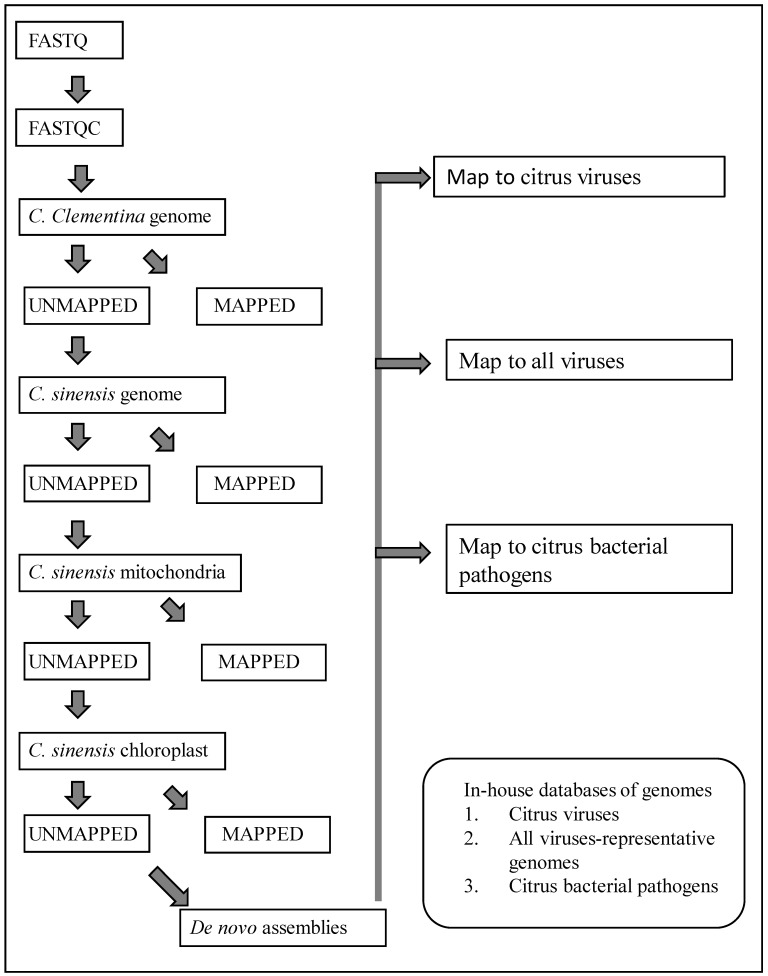
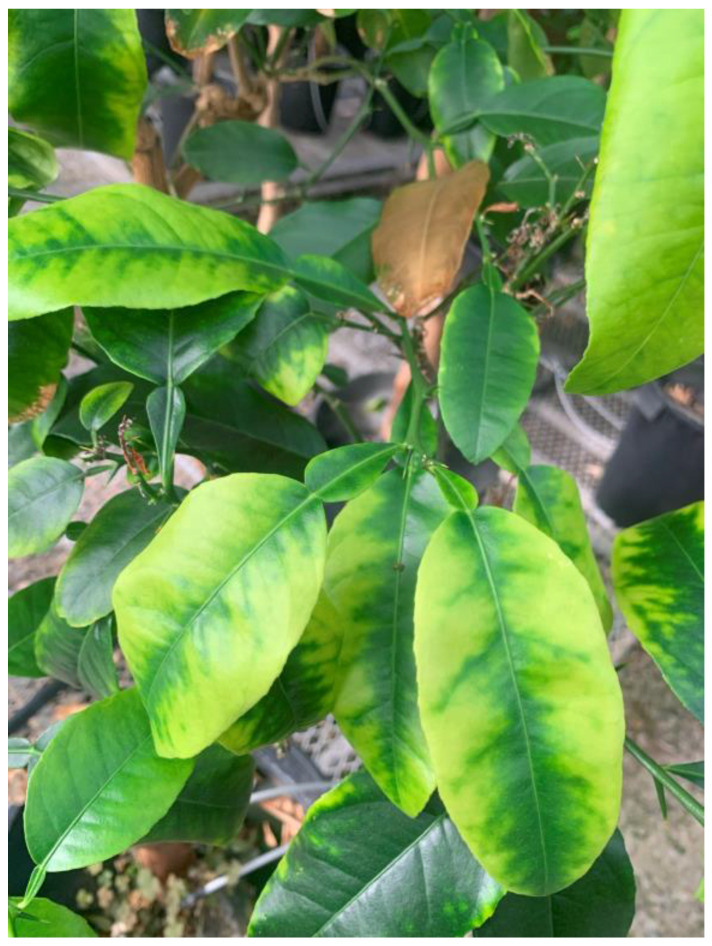
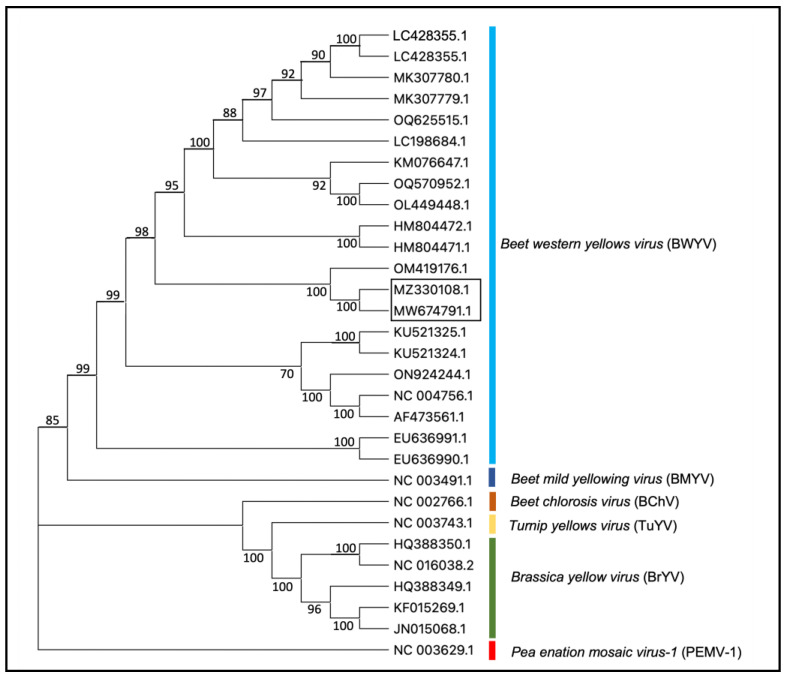
Citrus is affected by many diseases, and hence, the movement of citrus propagative materials is highly regulated in the USA. Currently used regulatory pathogen detection methods include biological and laboratory-based technologies, which are time-consuming, expensive, and have many limitations. There is an urgent need to develop alternate, rapid, economical, and reliable testing methods for safe germplasm exchange. Citrus huanglongbing (HLB) has devastated citrus industries leading to an increased need for germplasm exchanges between citrus growing regions for evaluating many potentially valuable hybrids for both HLB resistance and multilocational performance. In the present study, Next-Generation Sequencing (NGS) methods were used to sequence the transcriptomes of 21 test samples, including 15 well-characterized pathogen-positive plants. A workflow was designed in the CLC Genomics Workbench software, v 21.0.5 for bioinformatics analysis of the sequence data for the detection of pathogens. NGS was rapid and found to be a valuable technique for the detection of viral and bacterial pathogens, and for the discovery of new citrus viruses, complementary to the existing array of biological and laboratory assays. Using NGS methods, we detected beet western yellows virus, a newly reported citrus virus, and a variant of the citrus yellow vein-associated virus associated with the "fatal yellows" disease.
柑橘受到多种病害的影响,因此,在美国,柑橘繁殖材料的流通受到严格监管。目前使用的监管病原体检测方法包括基于生物学和实验室的技术,这些方法耗时、昂贵且有许多局限性。迫切需要开发替代的、快速、经济且可靠的检测方法,以实现安全的种质交换。柑橘黄龙病(HLB)已对柑橘产业造成严重破坏,这导致柑橘种植区之间对种质交换的需求增加,以便评估许多具有潜在价值的杂交品种对HLB的抗性和多地点表现。在本研究中,使用下一代测序(NGS)方法对21个测试样本的转录组进行测序,其中包括15株特征明确的病原体阳性植株。在CLC Genomics Workbench软件v 21.0.5中设计了一个工作流程,用于对序列数据进行生物信息学分析,以检测病原体。NGS速度快,被发现是检测病毒和细菌病原体以及发现新的柑橘病毒的一种有价值的技术,可作为现有一系列生物学和实验室检测的补充。使用NGS方法,我们检测到一种新报道的柑橘病毒——甜菜西方黄化病毒,以及一种与“致命黄化”病相关的柑橘黄脉相关病毒变体。