Giannicola Giuseppe, Amura Andrea, Prigent Sebastien, Zoccali Carmine, Sessa Pasquale
Department of Anatomical, Histological, Forensic Medicine and Orthopedics Sciences, "Sapienza" University of Rome, Piazzale Aldo Moro 3, 00185 Rome, Italy.
Department of Orthopedics and Traumatology, A.O. San Camillo-Forlanini, Circonvallazione Gianicolense 87, 00100 Rome, Italy.
Healthcare (Basel). 2024 Feb 3;12(3):396. doi: 10.3390/healthcare12030396.
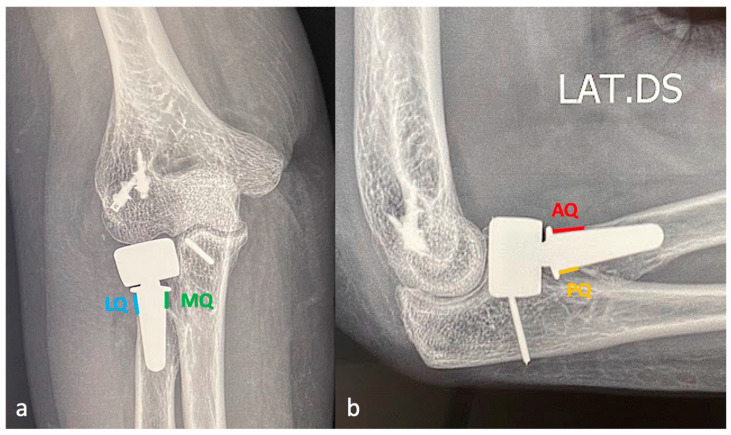
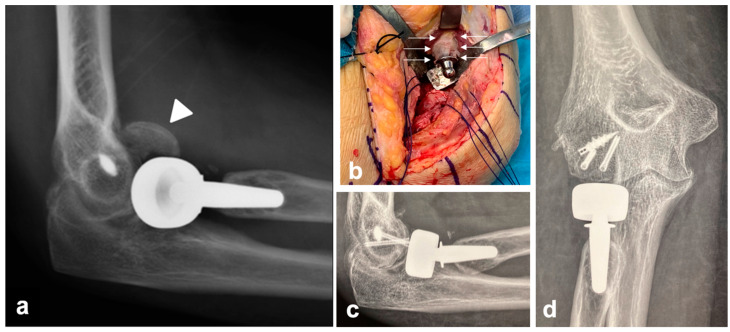
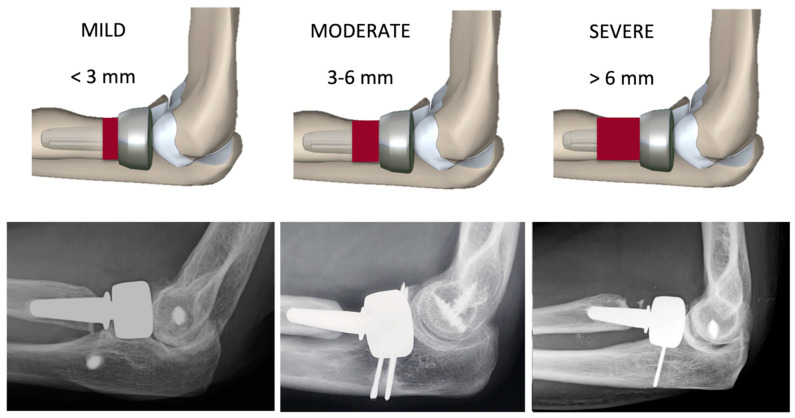
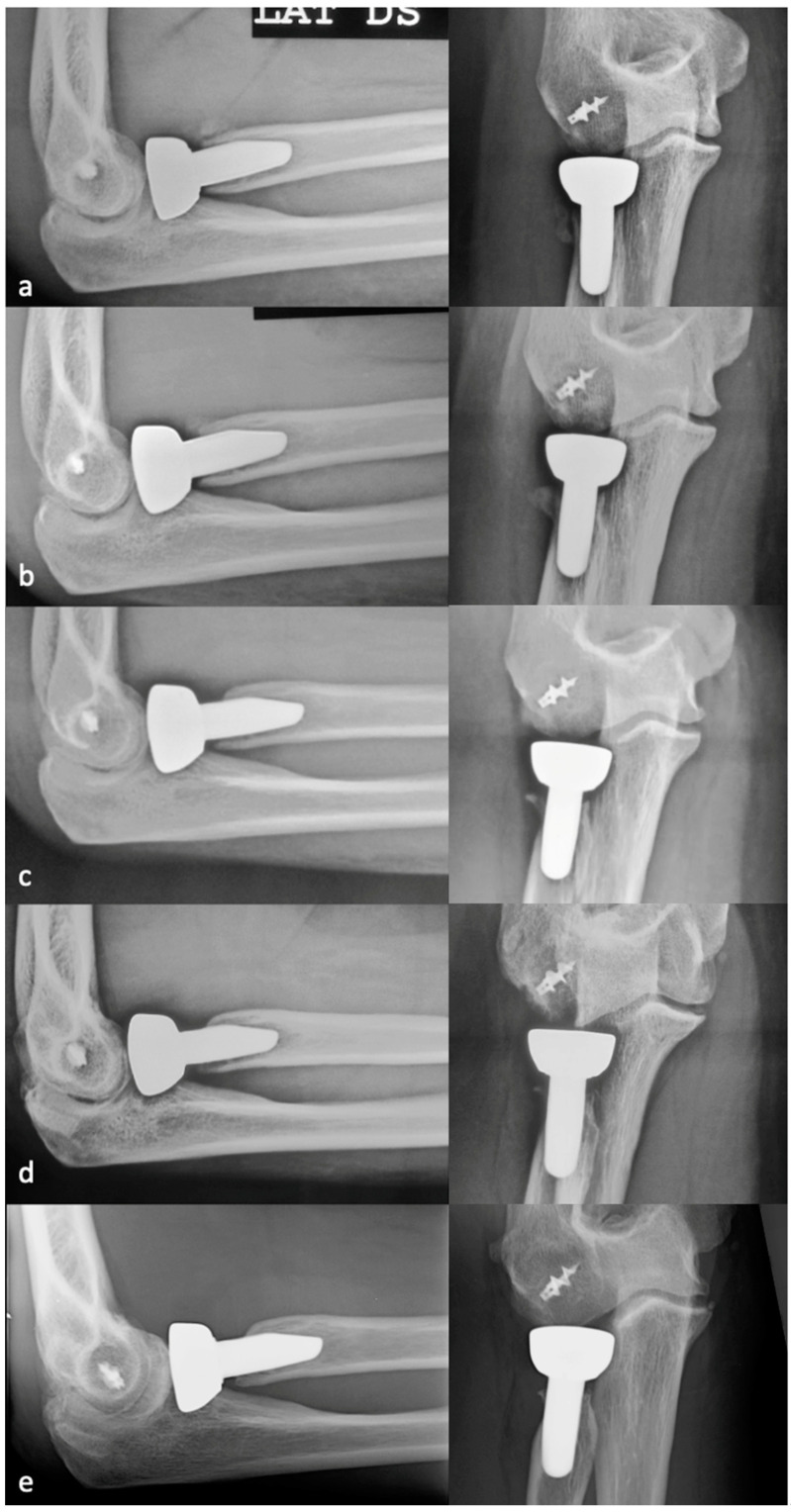
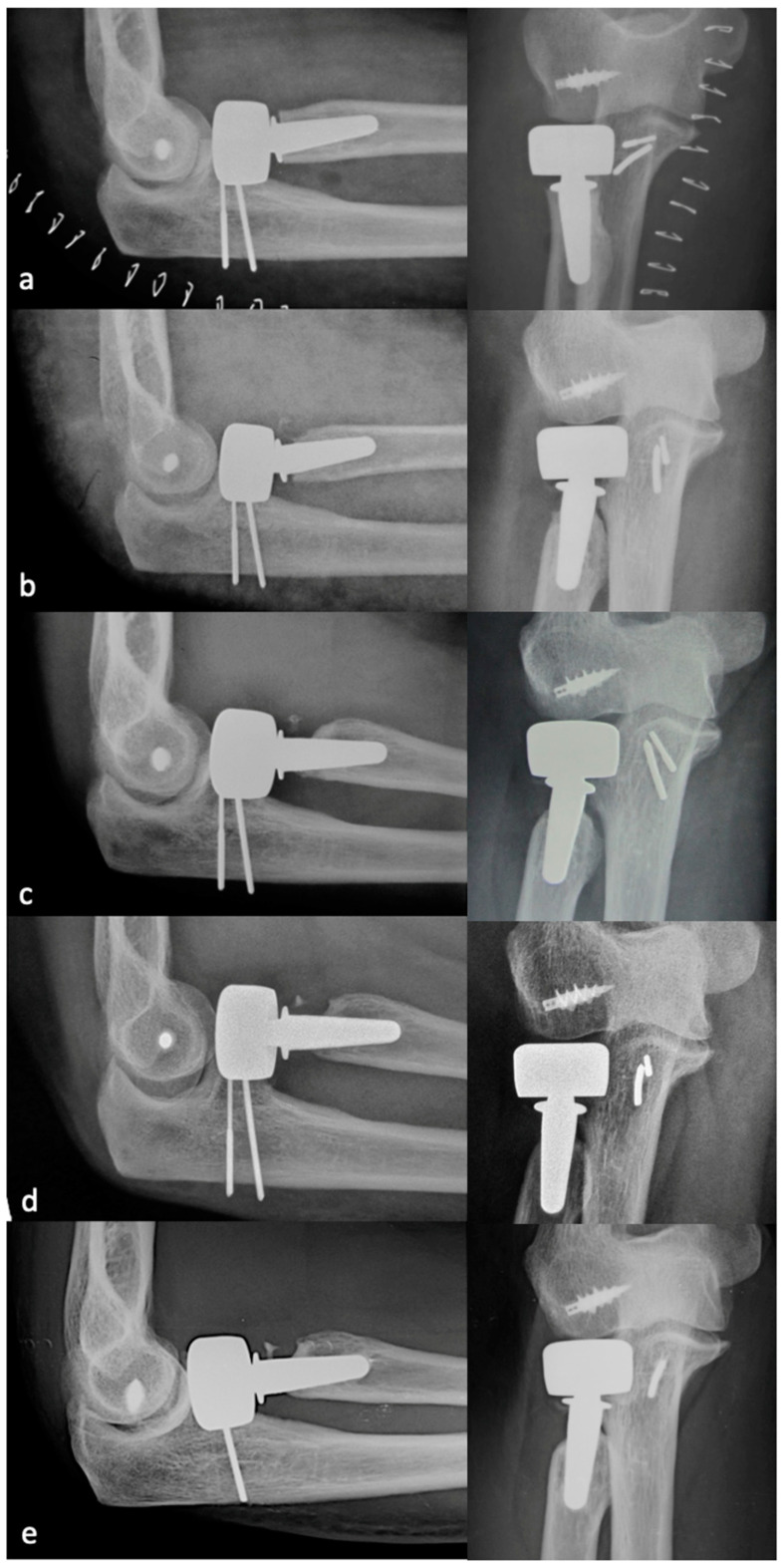
Stress shielding (SS) around press-fit radial head arthroplasty (RHA) was recently reported as a cause of a new type of proximal radial neck resorption (PRNR). Very few studies have analyzed this phenomenon. No comprehensive classification is currently available. We thus decided to clinically and radiographically analyze 97 patients who underwent a press-fit RHA and who were followed up for a mean period of 72 months (range: 2-14 years). PRNR in the four quadrants of the radial neck was assessed. We designed a novel SS classification based on (1) the degree of resorption of the length of the radial neck and (2) the number of neck quadrants involved on the axial plane. The mean PRNR (mPRNR) was calculated as the mean resorption in the four quadrants. mPRNR was classified as mild (<3 mm), moderate (3 to 6 mm), and severe (>6 mm). Eighty-four percent of the patients presented PRNR. mPRNR was mild in 33% of the patients, moderate in 54%, and severe in 13%. In total, 6% of the patients with mild mPRNR displayed resorption in one quadrant, 18% displayed resorption in two quadrants, 4% displayed resorption in three quadrants, and 72% displayed resorption in four quadrants. All four quadrants were always involved in moderate or severe mPRNR, with no significant differences being detected between quadrants ( = 0.568). mPRNR has no apparent effect on the clinical results, complications, or RHA survival in the medium term. However, longer-term studies are needed to determine the effects of varying degrees of PRNR on implant failure.
近期有报道称,压配式桡骨头置换术(RHA)周围的应力遮挡(SS)是一种新型近端桡骨颈吸收(PRNR)的原因。很少有研究分析过这一现象。目前尚无全面的分类方法。因此,我们决定对97例行压配式RHA且平均随访72个月(范围:2 - 14年)的患者进行临床和影像学分析。评估桡骨颈四个象限的PRNR情况。我们基于(1)桡骨颈长度的吸收程度和(2)轴平面上受累颈象限的数量设计了一种新的SS分类方法。计算平均PRNR(mPRNR),即四个象限的平均吸收情况。mPRNR分为轻度(<3 mm)、中度(3至6 mm)和重度(>6 mm)。84%的患者出现PRNR。33%的患者mPRNR为轻度,54%为中度,13%为重度。总体而言,轻度mPRNR患者中,6%的患者一个象限出现吸收,18%的患者两个象限出现吸收,4%的患者三个象限出现吸收,72%的患者四个象限出现吸收。中度或重度mPRNR时,四个象限均受累,各象限之间未检测到显著差异( = 0.568)。中期来看,mPRNR对临床结果、并发症或RHA生存率无明显影响。然而,需要进行长期研究以确定不同程度的PRNR对植入物失败的影响。